
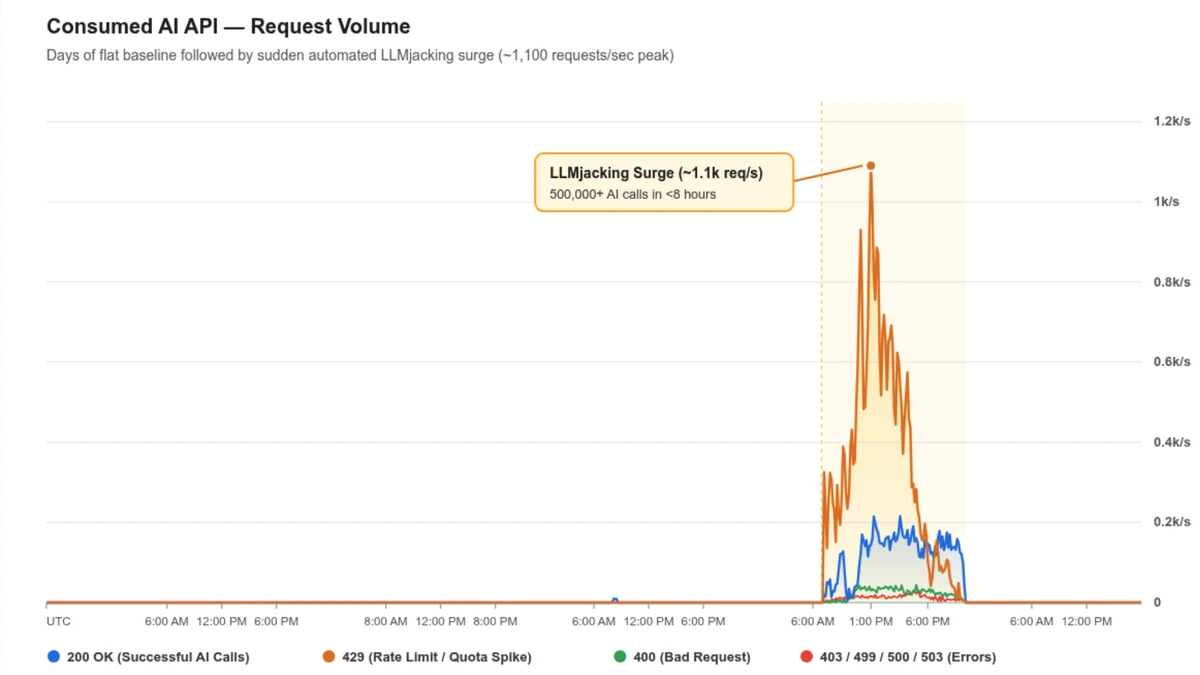
Google’s Threat Intelligence Group (GTIG) and Mandiant have warned that criminals are hijacking enterprise access to large language models and reselling it, leaving some victims with cloud bills of up to $1 million. The tactic, which Google calls LLMjacking, produced fraudulent charges of more than $100,000 in a single day in individual incidents the team investigated in 2026.
“Unlike the gradual resource consumption associated with cryptojacking, LLMJacking can generate large spikes in fraudulent cloud charges in a matter of hours,” Google wrote in its report, published November 2. Mandiant responded to multiple incidents across financial services, retail, technology and transportation, affecting organizations in North America, South America and Asia Pacific.
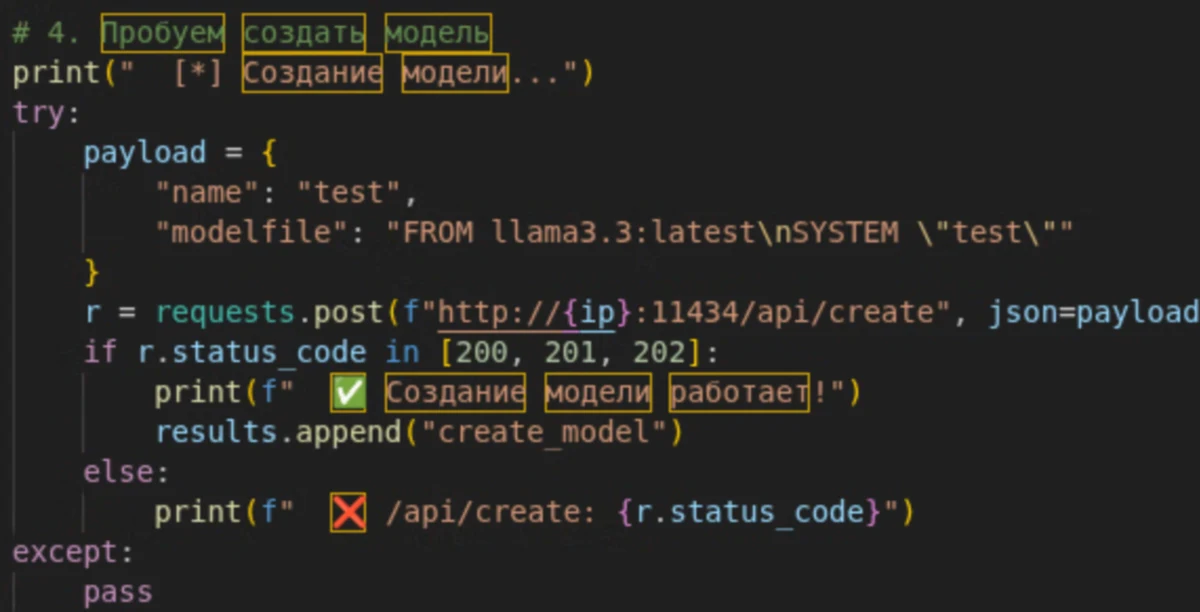
How the Attacks Work
The most common way in is not the AI model itself, but ordinary cloud credentials. Attackers used exposed or stolen cloud identity tokens, including IAM credentials, service account keys, GitHub personal access tokens and active session tokens, to establish a foothold. In one case, a cluster Google tracks as UNC6993 compromised a cloud instance in mid-2026 through a misconfigured service account key and used that access to reach an LLM API.
UNC6993 also ran a session hijacking page that pretended to be an application portal for a group of LLM users. The page tricked visitors into pasting a raw JSON payload containing an active access token, bypassing password and multifactor authentication controls. Other attackers harvested exposed corporate LLM API keys from public GitHub repositories, then validated the stolen keys with minimal single token requests to stay under detection thresholds.
Once inside, attackers escalated privileges, created unauthorized accounts and injected SSH keys. In one intrusion, a follow-on group exploited a vulnerability in the LiteLLM gateway, CVE-2026-40217, to elevate standard virtual keys into full PROXY_ADMIN master credentials, giving it deep control of the victim’s environment.
The Resale Business
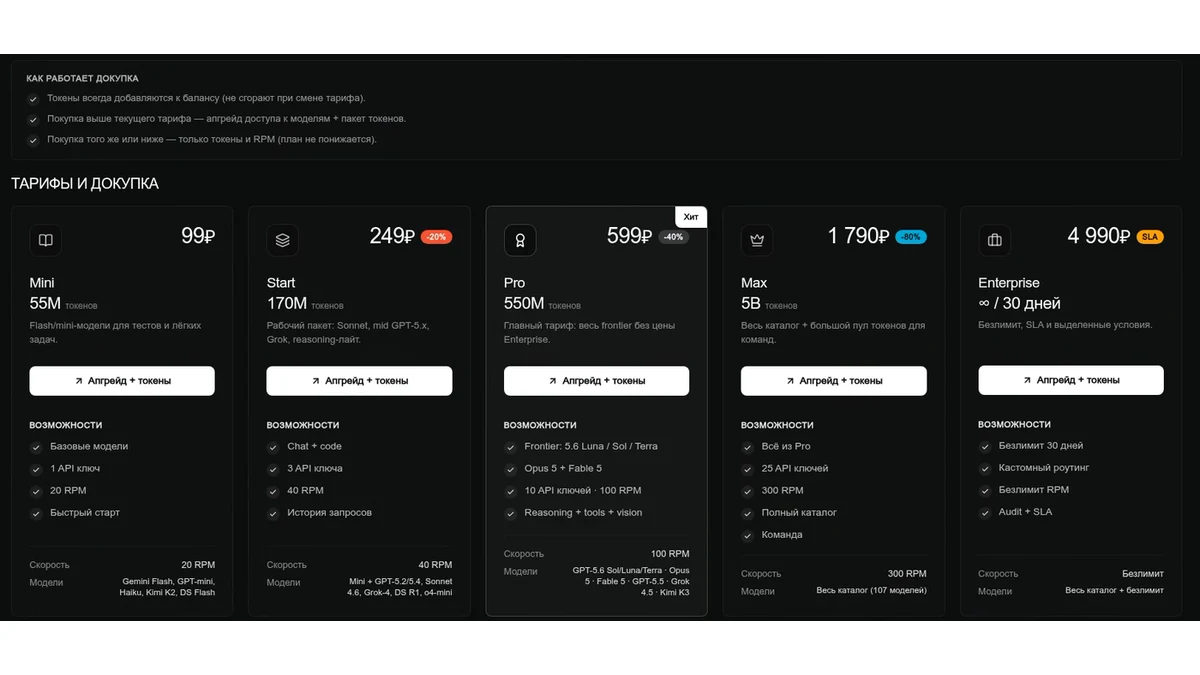
What makes LLMjacking different from older cloud theft is the business model. Instead of using the stolen access themselves, criminals feed it into what GTIG calls LLM Mixers, illicit routing gateways that proxy, aggregate and resell unauthorized LLM access to underground subscribers.
The clearest example in the report is a service called Jet Night. It offers an unlimited token plan for about $60 a month with claimed access to frontier models, a level of service that would typically cost between $100 and $250 a month. In one case, an actor using stolen third-party API keys made more than 500,000 LLM API calls in under eight hours to power the service, passing nearly $1 million in token costs to the victim organization. “Given Jet Night’s per-token costs to users are so far below typical market rates GTIG believes the service relies on stolen keys to operate profitably,” Google wrote.
Attackers also enabled managed generative platforms on victim accounts, subscribed them to pay-as-you-go agreements with premium models, and ran high volume inference streams. To dodge rate limits, one group used a “burn and rotate” strategy, continuously creating and deleting short lived service accounts while watching the provider’s billing interface to track the financial impact.
Why It Matters
GTIG expects threat actors to increasingly prioritize LLMjacking over traditional resource theft like cryptojacking, driven by the immediate, high margin monetization the underground mixers enable. As enterprises put higher tier models and agentic workflows into production, the report warns, criminals will refine automated reconnaissance to target exposed API tokens and exploit vulnerabilities in model routing software.
“Locking down these resources will not only protect organizations from runaway costs, but also protect the broader community from a deluge of cheap, autonomous attacks,” John Hultquist, chief analyst at GTIG, told The Register.
Google’s main defensive advice is to treat any unexpected activation of AI services as a critical security event. In several incidents Mandiant investigated, LLM services were not even enabled at the time of compromise, and the attackers switched them on themselves. Billing alerts, spending caps on AI services, tightly scoped keys and monitoring for sudden spikes in model use are the practical defenses.
Sources
- Google Threat Intelligence Group and Mandiant, “The Rise of LLMJacking: How Threat Actors Monetize Compromised Cloud and Model Resources,” Google Cloud Blog, November 2, 2026
- Infosecurity Magazine, “LLMJacking is Costing Some Businesses Up to $1m,” November 3, 2026
- AI Cyber Brief, “Google and Mandiant: stolen cloud AI access is being resold, with victims billed up to $1 million,” November 6, 2026




[…] Fireworks said the evidence indicates links to a financially motivated cybercriminal group aimed at selling tokens from unauthorized access to large language models to illicit routing gateways, activity known as LLMjacking. Google’s Threat Intelligence Group and Mandiant described the same tactic in a report published November 2, warning that stolen cloud access is being resold while victims are billed up to $1 million. […]