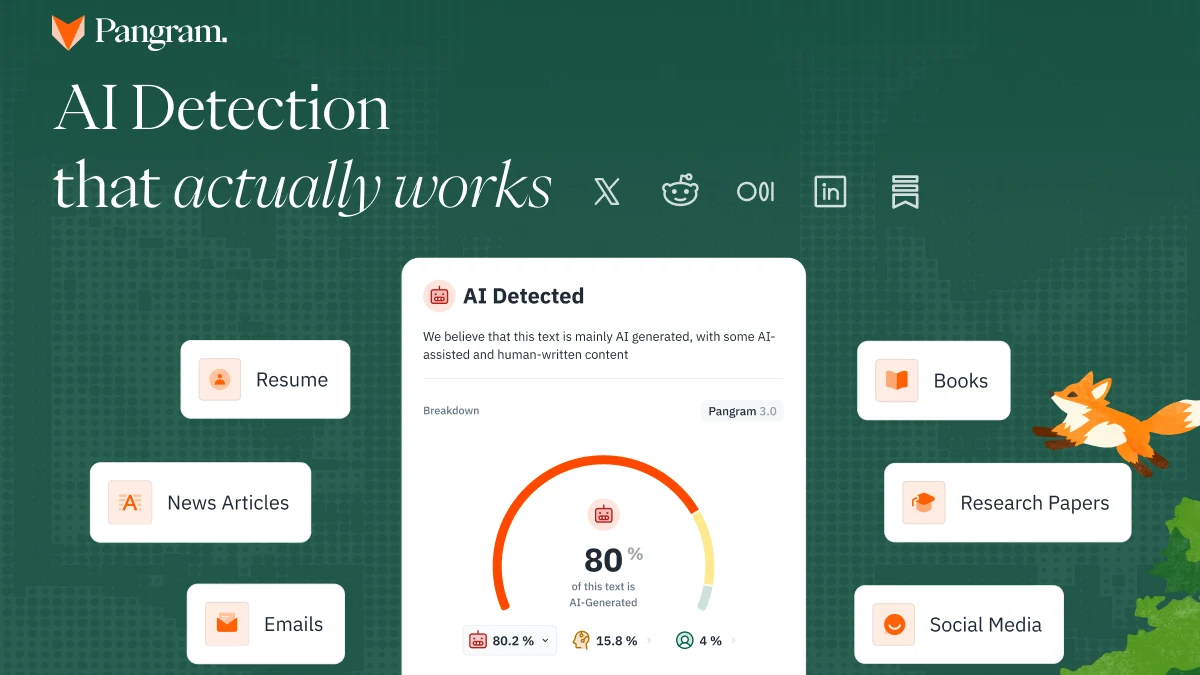
AI-detection startup Pangram on Wednesday launched Pangram Image 1.0, its model for detecting AI-generated images, alongside a companion video model called Image Flash 1.0, expanding beyond the AI text detection the company is best known for. The launch was first reported by Pirate Wires and announced on Pangram’s official blog on November 4.
What Was Announced?
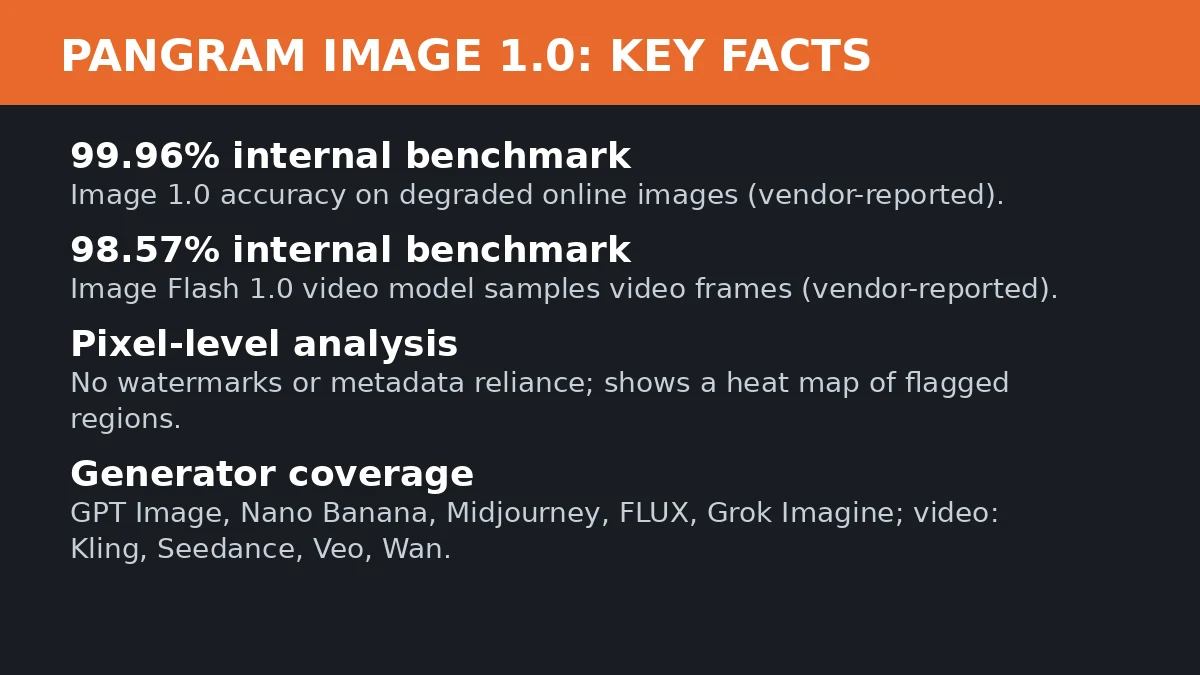
Image 1.0 is designed to handle the degraded quality of AI images as they circulate online, getting compressed, screenshotted, and re-uploaded across social platforms. Pangram says the model scored 99.96% on an internal benchmark, according to CEO Max Spero, who co-founded the company with CTO Bradley Emi. The video model, Image Flash 1.0, works by sampling frames from a video and scored 98.57% on one internal benchmark. Both accuracy figures come from Pangram’s own testing, not from independent evaluations.
Rather than relying on watermarks or metadata, Image 1.0 analyzes images pixel by pixel and shows a heat map of the regions it flags as AI-generated. The model covers image generators including OpenAI’s GPT Image, Google’s Nano Banana, Midjourney, FLUX, and Grok Imagine, plus frames from video models such as Kling, Seedance, Veo, and Wan.
Why Move Beyond Text
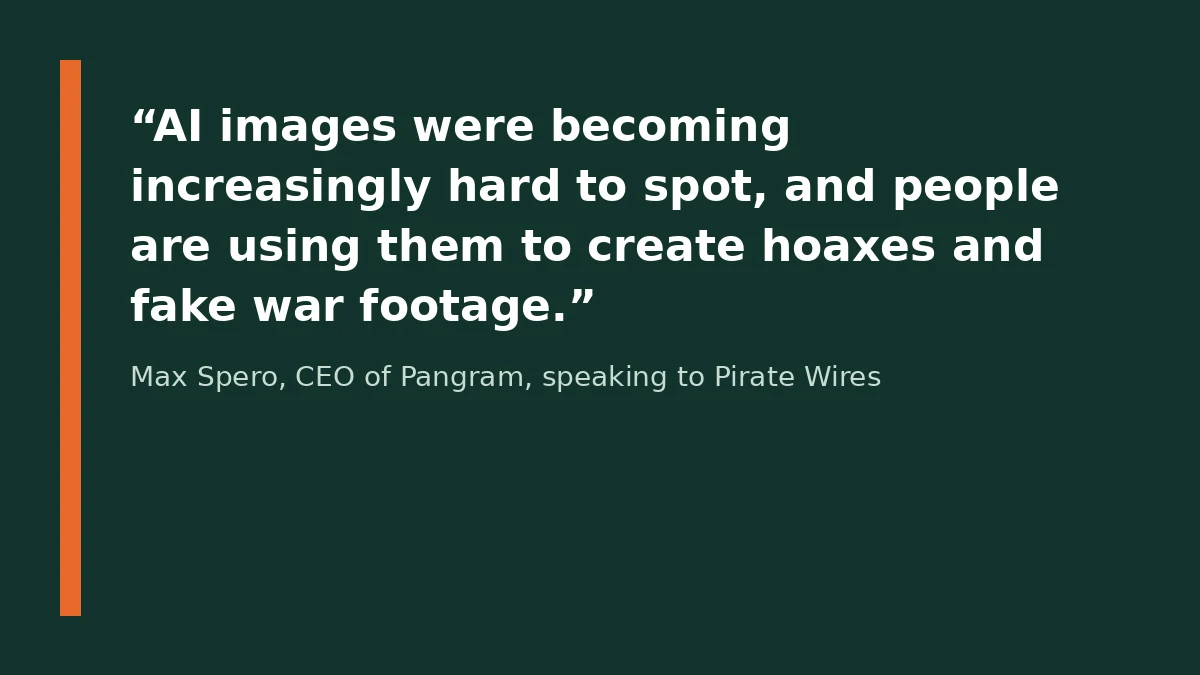
“AI images were becoming increasingly hard to spot, and people are using them to create hoaxes and fake war footage,” Spero told Pirate Wires, explaining why the company began working on image detection at the start of 2026. He also pointed to e-commerce platforms such as Amazon, where advertisements increasingly use AI-generated imagery.
When Pangram benchmarked existing image detectors, Spero said most reached only 80% to 95% accuracy, and claimed rivals such as TruthScan, whose detectors have been on the market since 2025 or earlier, fall short of the new bar. Pangram says it deliberately waits to release only what it considers state-of-the-art by a large margin.
Key Features and Details
Pangram Image grew out of a research preview the company released in July 2026 alongside its Pangram 4 text model. That launch coincided with a $9 million funding round led by Menlo Ventures, bringing the company’s total funding to nearly $13 million. The company was founded about three years ago by Stanford AI and machine learning graduates Spero and Emi, not long after ChatGPT’s release upended questions about what it means to know whether a human did the writing.
The image model is available through Pangram’s web dashboard for free and paid users, with API access and Chrome extension integration planned. Pangram is openly publishing its methodology and engaging with the research community, a stance it also takes with its flagship text detector.
Why It Matters
AI-generated imagery has become central to misinformation campaigns, from hoaxes to fabricated war footage, and the World Economic Forum’s AI governance discussions increasingly treat provenance and detection as infrastructure. Pixel-level detection that survives compression is one of the few technical answers that does not depend on voluntary watermarks, which most generators still do not apply consistently. The catch is familiar: every published accuracy figure so far is Pangram’s own, and the real test will be independent evaluation on images the model has never seen.