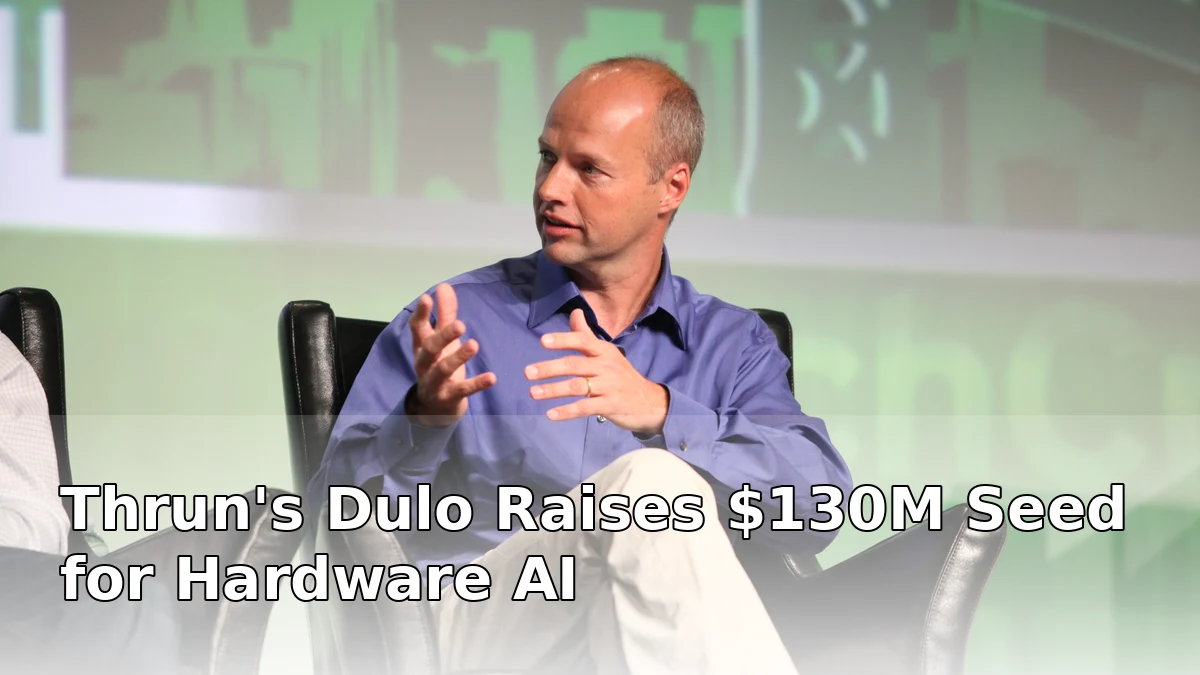
Google AI pioneer Sebastian Thrun has quietly raised one of the largest seed rounds in robotics history. His new startup, Dulo, has closed a $130 million seed financing to build what it calls an Engineering Superintelligence, according to The Information, which broke the news on October 29. The round was confirmed the same day by co-founder Adrian Aoun in a public post, turning a week of speculation into a confirmed bet that foundation models can do for hardware what they did for language and software.
What was announced
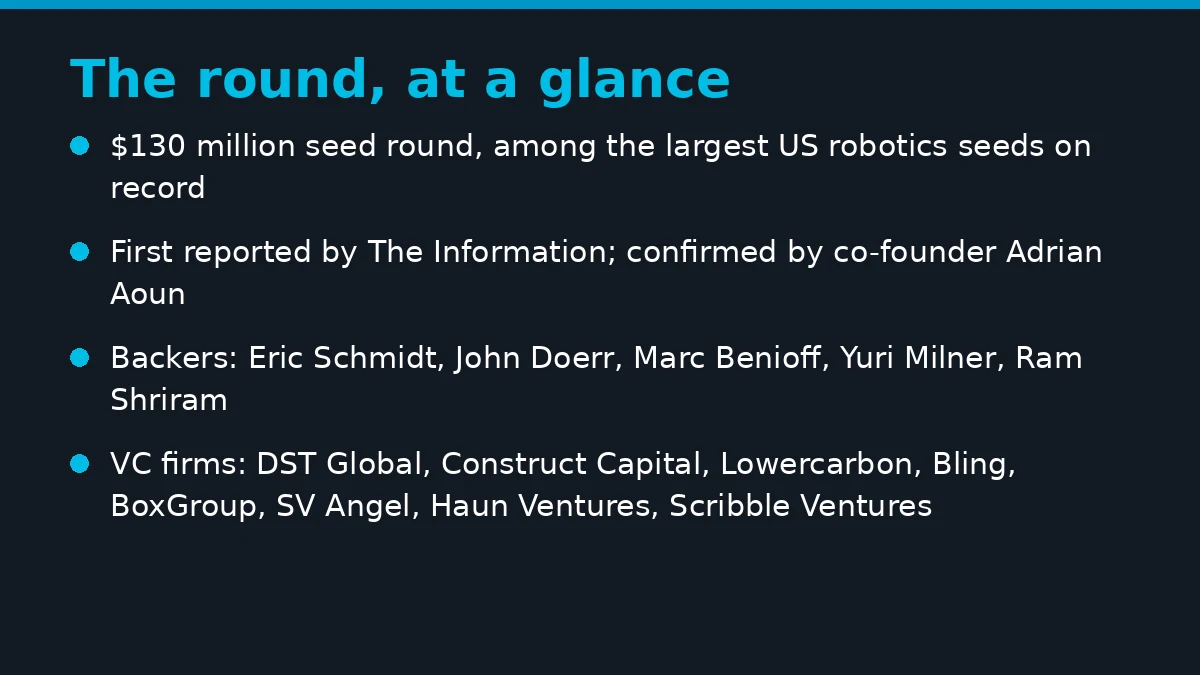
The Information reported on October 29 that Dulo had raised $130 million in seed funding from an unusually star-studded investor list. Aoun, who co-founded the company with Thrun earlier this year, confirmed the financing on LinkedIn, writing: “Earlier this year Sebastian Thrun and I co-founded Dulo on a mission to create an Engineering Superintelligence, building foundation models for hardware design,” per Pulse2.
The backer roster reads like a roll call of Silicon Valley’s old guard and new money alike: former Google CEO Eric Schmidt, Kleiner Perkins chairman John Doerr, Salesforce CEO Marc Benioff, Yuri Milner, and Google’s first investor Ram Shriram participated as individuals, alongside firms including DST Global, Construct Capital, Lowercarbon Capital, Bling Capital, BoxGroup, SV Angel, Haun Ventures, and Scribble Ventures, according to SiliconANGLE. No valuation or lead investor was disclosed. Dealroom notes that at $130 million, the seed ranks above the 99th percentile for all-time seed rounds in US robotics by funding amount.
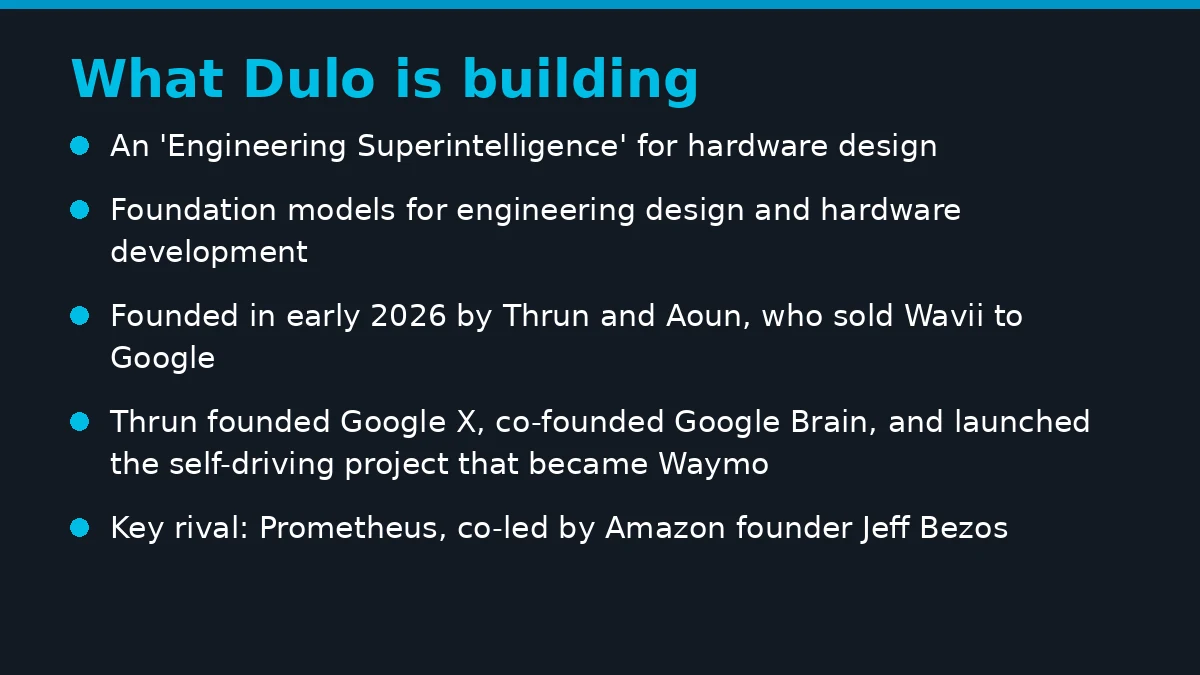
What Dulo is building
Dulo is developing foundation models optimized specifically for hardware design tasks: engineering design and verification, simulation, and eventually manufacturing workflows. The company’s one-page website states it is building “foundation models for hardware design,” and Thrun listed robotics among Dulo’s focus areas in August, SiliconANGLE reports. The pitch is that the transformer-era playbook that transformed language and code can be extended into the physical engineering world, enabling what Aoun calls “manufacturing at lightspeed.”
The company surfaced from stealth at the Actuate robotics conference in San Francisco, with a team drawn from Waymo, Google Brain, and Stanford SAIL, according to AI Weekly. Its most prominent venture-backed rival is Prometheus Inc., an engineering AI startup co-led by Amazon founder Jeff Bezos. Dulo has not specified which types of hardware its models will target or when a product will be available, per TokenPost.
Why it matters
Thrun’s track record gives the bet unusual credibility: he founded Google X, co-founded Google Brain, and launched the self-driving project that became Waymo, while Aoun sold his natural-language startup Wavii to Google for over $30 million. A $130 million seed for a pre-product company signals that investors believe physical engineering is the next frontier where scale and data advantages will compound, just as they did in language. The open questions, as Dealroom puts it, are whether Dulo’s models can improve real engineering workflows and whether it can turn that into manufacturing adoption.
Sources
- The Information: Sebastian Thrun Raises $130 Million for AI Engineering Startup Dulo (Oct 29, 2026)
- SiliconANGLE: Google X co-founder Sebastian Thrun raises $130M for AI engineering startup Dulo (Oct 30, 2026)
- Pulse2: Dulo Raises $130 Million Seed Funding To Build Engineering Superintelligence (Oct 31, 2026)
- Dealroom: Waymo pioneer Thrun’s hardware-design startup Dulo raises $130M seed (Oct 29, 2026)
- TokenPost: Dulo Raises $130 Million in Seed Funding for Hardware Design AI (Oct 31, 2026)