The U.S. Securities and Exchange Commission said on Friday that the use of artificial intelligence will be one of the key areas its examiners focus on when inspecting Wall Street firms in the fiscal year 2027, which began on October 1. AI joins private assets and tokenized securities on the regulator’s priority list for the year, according to Reuters.
The announcement puts the country’s top markets watchdog squarely in the middle of the AI debate: not as a promoter of the technology, but as the agency that will check how banks, brokers and asset managers actually use it.
What the SEC announced
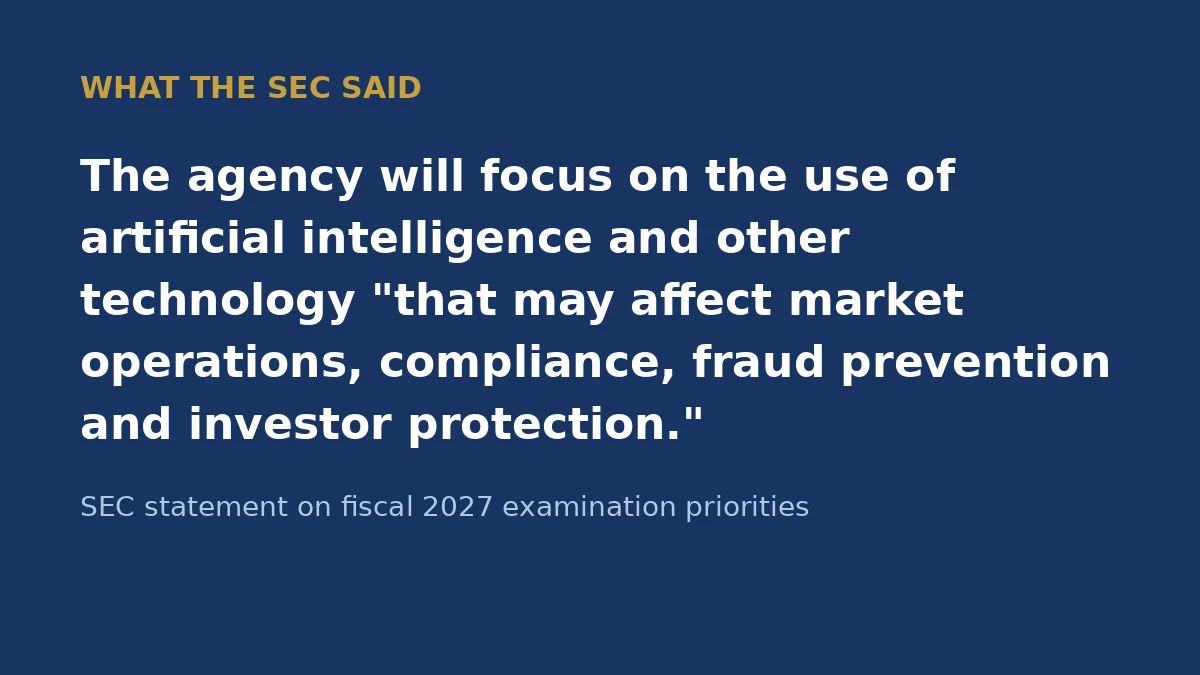
In a statement outlining its examination priorities, the agency said that in the federal government’s 2027 fiscal year, priority areas for examiners would include private funds and private credit. It also plans to focus on the use of artificial intelligence and other technology “that may affect market operations, compliance, fraud prevention and investor protection,” as well as risks tied to changes in market structure, including the tokenization of securities.
Graphic: GPTOnline, using the U.S. SEC seal (public domain).
The SEC’s examinations division inspects SEC-regulated firms such as investment advisers, broker-dealers and stock exchanges, and it can refer findings of wrongdoing to the agency’s enforcement division. An examination priority does not by itself mean new rules, but it signals where the agency’s inspectors will spend their time and what questions firms should expect.
Why AI made the list
Wall Street firms now use AI across trading, research, customer service and compliance, and regulators have been trying to catch up. By naming AI explicitly, the SEC is telling firms that how they deploy models, oversee automated decisions and guard against errors or misuse will be under the microscope this year.
The move also lands against a shifting regulatory backdrop. The agency last year de-emphasized scrutiny of the cryptocurrency sector, and last month it unveiled a five-year exemption to allow companies to offer blockchain-based or tokenized stocks. Tokenization, which turns traditional securities into digital tokens that can trade around the clock, is now itself an exam priority because of the risks that come with changing market structure.
Private assets and the retail push
The other headline priority, private funds and private credit, reflects a major policy shift. The Trump administration has moved to expand access to private assets for retirement savers and retail investors, potentially offering higher returns but also exposing everyday Americans to more risk.
Critics warn that ordinary investors may not see the expected higher returns on such assets, may not understand the fees involved, and may not realize the assets are often hard to price and cannot be immediately redeemed for cash. The SEC’s focus suggests examiners will be watching how firms market and manage these products as they reach a broader audience.
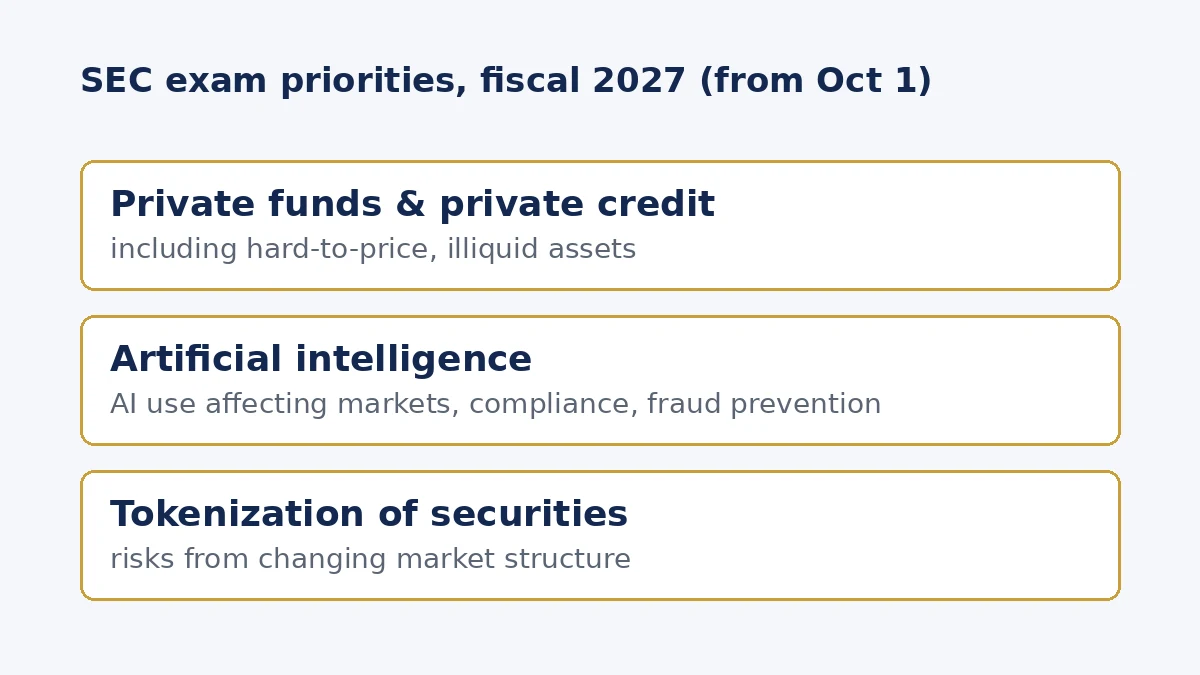
Graphic: GPTOnline, using the U.S. SEC seal (public domain).
Why it matters
For the AI industry, the SEC’s announcement is a reminder that adoption on Wall Street comes with oversight. Firms selling AI tools to financial institutions, as well as banks and brokers building their own systems, can now expect examiners to ask pointed questions about governance, testing and investor protection. As AI becomes infrastructure for the financial system, the regulators who police that system are making clear they intend to understand it.