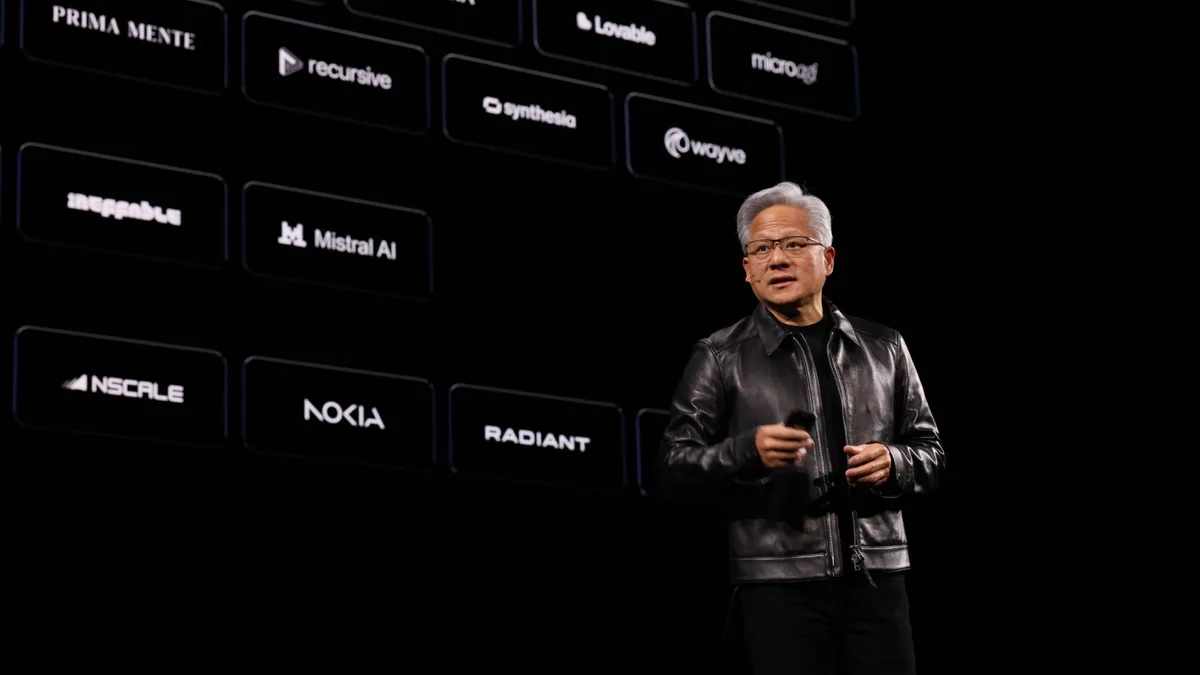
NVIDIA opened its GTC Berlin keynote on Wednesday with a safety-first pitch for the agentic era: a new OpenShell Reference Architecture designed to let enterprises build, run, observe and enforce AI agents at industrial scale. Founder and CEO Jensen Huang announced the platform at the Tempodrom in Berlin alongside a second headline product, DSX POD, a factory-built modular AI factory design that cuts deployment time from six months to 14 days.
What Was Announced?
The NVIDIA OpenShell Reference Architecture extends NVIDIA’s open-source OpenShell secure runtime software into a full-stack industrial design for agent development and operations, according to NVIDIA’s official announcement. The stack maps each job in an agent’s life to silicon: agents “think” on Vera Rubin infrastructure running enterprise workloads including closed and open models built with NVIDIA Nemotron, “act” on Vera CPUs that operate the agent harness and tool use, and are “governed” on BlueField-4 DPUs running NVIDIA Sentry, a unified security framework for continuous out-of-band monitoring of agent behavior and in-silicon policy enforcement.
The numbers NVIDIA is putting behind it: Vera Rubin NVL72 infrastructure delivers 30x higher throughput per megawatt on agentic workloads; Vera CPUs deliver 2x the performance of x86 processors with greater energy efficiency; and Sentry can quarantine an agent that tries to move outside its software boundary in milliseconds while boosting agent capacity by up to 20%. The design extends to the edge across retail, healthcare, manufacturing, robotics, software development and telecommunications with RTX Spark, DGX Spark and DGX Station systems.
“AI capability and safety must advance together,” Huang said. “With the OpenShell Reference Architecture, agents can think on Rubin, act on Vera and be governed on BlueField.”
The partner list is the number that matters most. NVIDIA says Anthropic, OpenAI, Google Cloud, Meta, Microsoft, AWS, Cisco, CrowdStrike, Dell Technologies, HPE, IBM, SAP, ServiceNow, Siemens, Palantir, Palo Alto Networks, Perplexity, SpaceX Super Intelligence and others are working with the architecture. ServiceNow announced the general availability of ServiceNow Arc, a personal long-running AI agent whose actions are governed at runtime by the ServiceNow Super Intelligence Control Tower and enforced by NVIDIA OpenShell. NVIDIA says the architecture is available now.
DSX POD: AI Factories in 14 Days
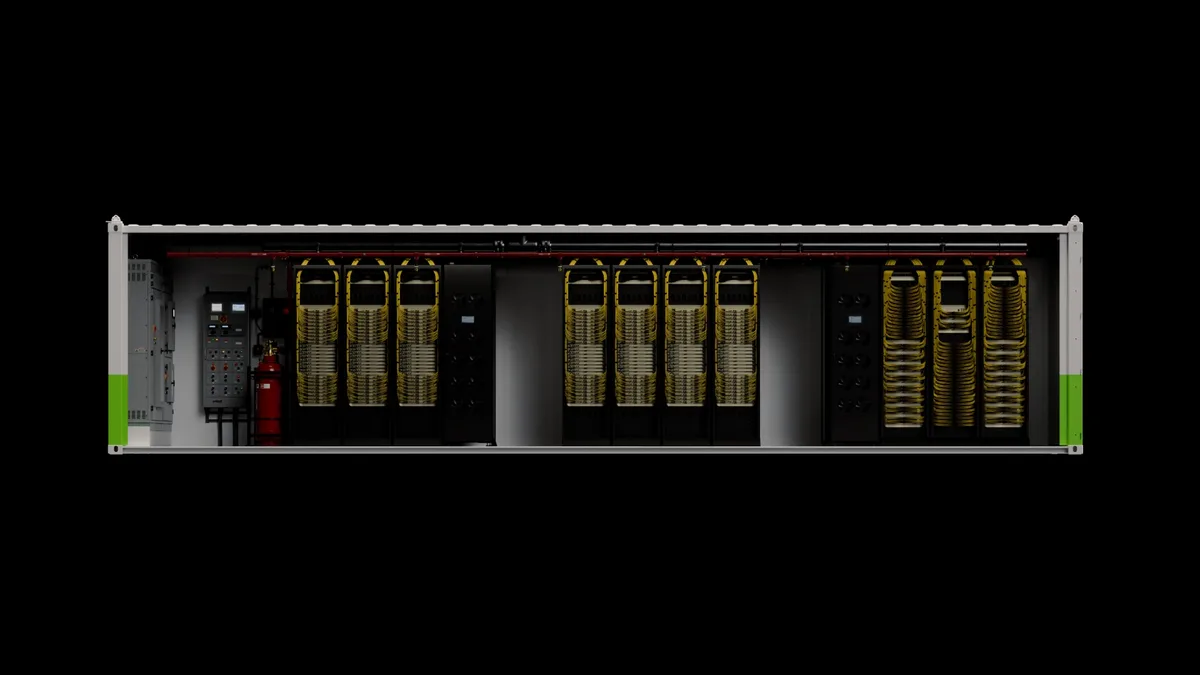
Huang also introduced DSX POD, a reference design for complete Vera Rubin AI factories built by partners inside modular containers, integrated and validated before delivery. Factory-built units arrive ready to connect to a prepared site’s power, cooling and networking, cutting deployment time from six months to as little as 14 days, according to NVIDIA’s announcement.
“An AI factory creates value when it starts producing tokens, not when construction is complete,” Huang said.
Partners including Dell Technologies, HPE, Lenovo, Schneider Electric, Vertiv, Foxconn, Crusoe and Anduril will deliver DSX POD factories worldwide in early 2027. Huang also pointed to the DSX AI Factory Platform, which NVIDIA says can cut water use for cooling by up to 100% and deliver the same AI output with up to 30% less power.
Agent Knowledge Foundation
The keynote also introduced the NVIDIA Agent Knowledge Foundation, a set of models and libraries for connecting agents to enterprise data, whether unstructured documents or structured databases, NVIDIA said. It bundles Nemotron tools for parsing documents, embedding queries and reranking results with new NVIDIA Kumo models for predictions from structured data.
“Ultimately, what turns these super agents, these agents into super agents, is that you give them access to your company’s knowledge,” Huang said.
Why It Matters
Huang framed the agent as five elements: a model, a harness that orchestrates its work and memory, a sandbox that isolates the harness, plus knowledge and tools. Because such agents can touch files, networks and services, their privileges must stay minimal and be monitored dynamically, he argued, and NVIDIA’s answer treats safety as an engineering property of the compute stack rather than a policy afterthought.
For Europe, the keynote caps a weeklong tour through Paris, London, Stockholm and Dublin during which NVIDIA committed nearly $10 billion to the continent’s technology ecosystem and more than 12,000 partners, part of a broader push to build sovereign AI capacity close to home.