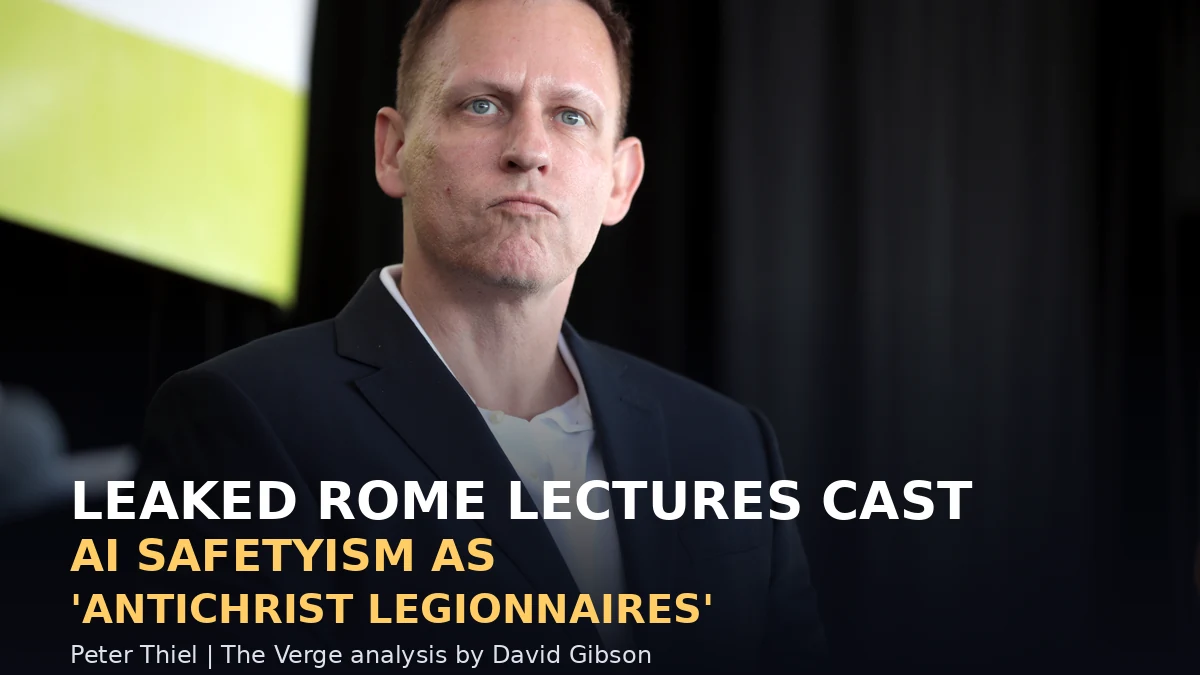
In leaked lectures delivered in Rome this year, billionaire investor and Palantir co-founder Peter Thiel painted effective altruism and AI “safetyism” as the “legionnaires of the Antichrist,” called Bill Gates a “Mr. Hyde” figure, and described AI risk researcher Eliezer Yudkowsky as “more Luddite than Greta,” according to an analysis of the lectures published in The Verge by Religion News Service writer David Gibson.
What Was Reported?
Gibson’s piece, published October 21 and featured on Techmeme, dissects the Rome iteration of Thiel’s private lecture series on the Antichrist. In Gibson’s account, Thiel, who once funded Yudkowsky’s work, said he is now “embarrassed” by the association and called today’s AI-safety advocates “deranged.”
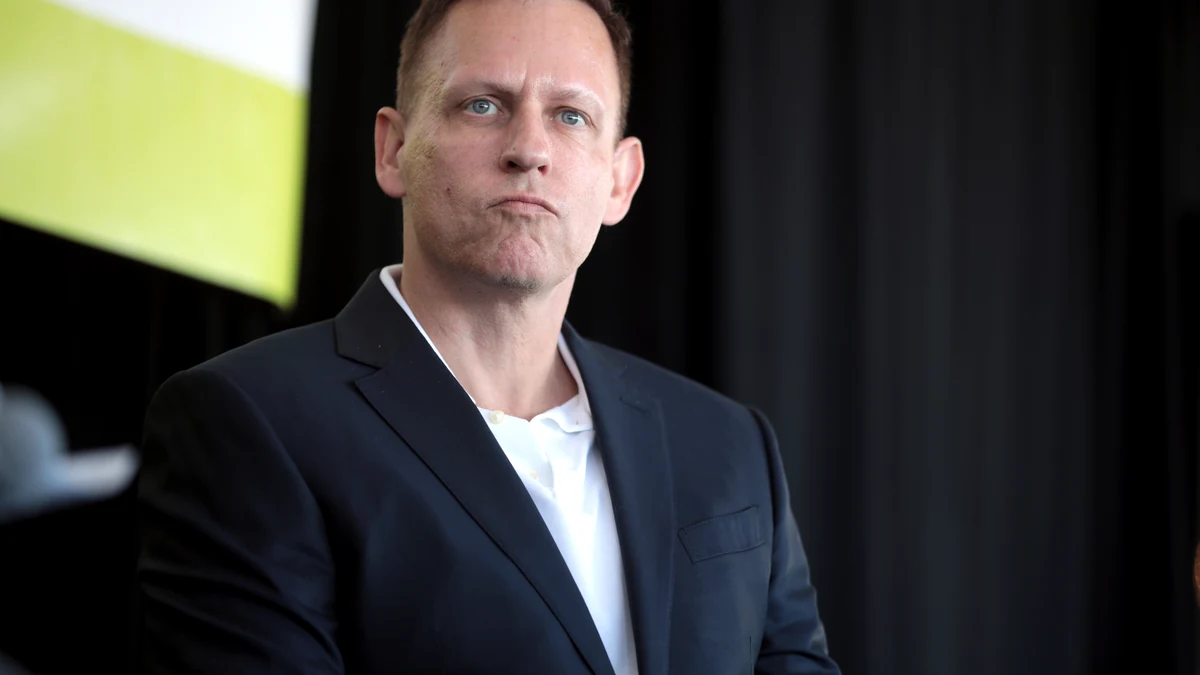
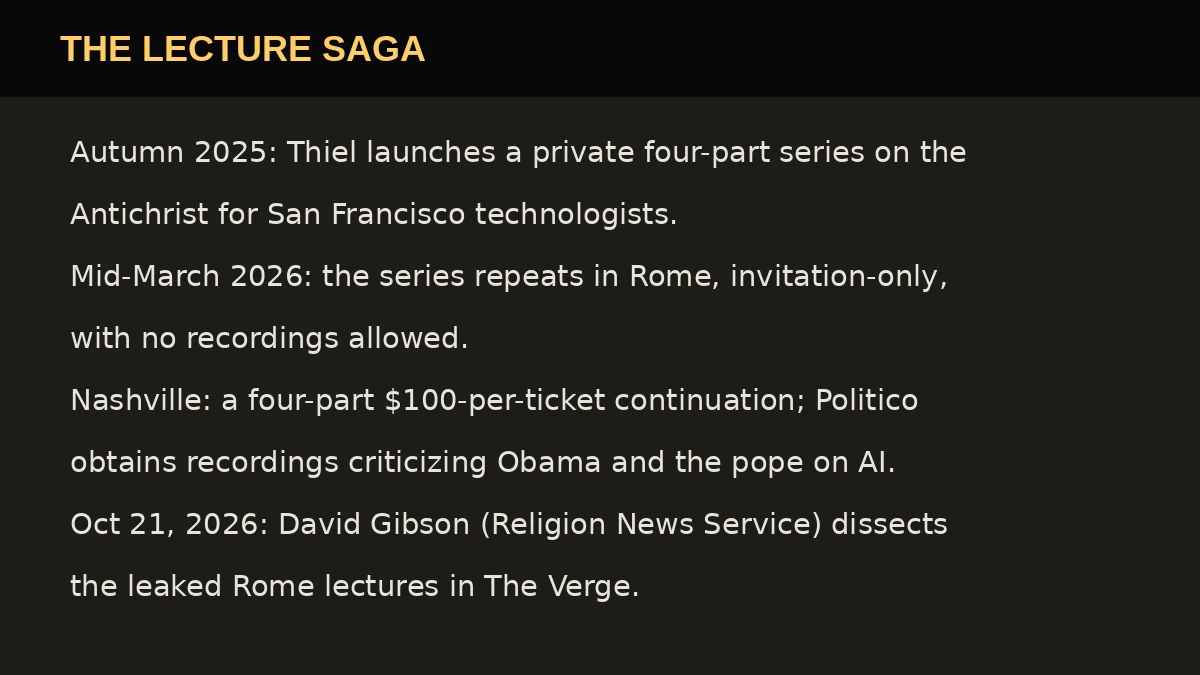
The lectures are part of a series Thiel began in autumn 2025 in San Francisco, organized by the ACTS 17 Collective, then repeated in mid-March 2026 in Rome as an invitation-only, closed-door event with no recordings allowed. A four-part, $100-per-ticket continuation followed in Nashville, where Politico’s Decoded newsletter obtained recordings of Thiel attacking former President Barack Obama and Pope Leo XIV over AI.
Why This Matters for AI
The central thread of the talks, as reported across outlets covering them, is that government attempts to regulate AI are not merely misguided but morally condemned. “Many people know that AI is politically unpopular, and want to leverage that to boost their own popularity,” Thiel told Nashville attendees, singling out Obama and the pope, per the Politico reporting.
That framing lands at a sensitive moment. The AI industry is split between accelerationists who view regulation as an existential drag on progress and safety advocates who argue for guardrails on frontier models. Thiel is among the most influential figures in the first camp: a co-founder of PayPal and Palantir, an early Facebook investor, and a major political donor whose network reaches deep into the current US administration.
Gibson’s analysis matters because it translates a closed-door theological argument into the public debate over AI governance. Thiel’s thesis, as summarized, is that the biblical Antichrist will not arrive as a tyrant but as a comforting administrator who exploits fear of AI, climate change and war to impose centralized control in the name of “peace and safety.” In that cosmology, anyone demanding AI regulation, from Greta Thunberg to AI-safety researchers, becomes a “legionnaire” preparing the way for centralized power.
Reactions and Context
The Rome lectures drew sharp pushback from Catholic institutions. Two Catholic universities publicly disowned the event, and Fr. Paolo Benanti, who advises the Vatican on AI, described the teaching as a sustained act of heresy against the liberal consensus. Pope Leo XIV targeted AI in his first encyclical, associating the AI era with “new forms of dehumanization” and an “idolatry of profit that sacrifices the weak,” setting up the confrontation Thiel leaned into in Nashville.
Whether one treats the lectures as theology, political performance or a signal of where Silicon Valley’s most powerful anti-regulation voice is heading, the throughline is consistent: Thiel’s worldview now casts the AI safety movement itself as the obstacle to civilizational survival. As the AI regulation debate moves from academic papers to legislation, that argument is likely to echo well beyond a sold-out lecture hall.