Artificial intelligence startup ASI has raised $325 million in a Series C funding round that values the Boston-based company at $3 billion, Reuters reported on October 20, as investors continue to back AI software built for the physical world instead of chatbots.
What Was Announced?
The round was led by Spark Capital, with participation from affiliates of Citadel Securities, Meritech Capital and Craft Ventures, among others. Citybiz, which also covered the raise, noted additional participation from Energy Impact Partners and Andreessen Horowitz.
ASI said it will use the proceeds to expand deployments across energy, logistics and military environments, and to add to its research and engineering teams in Boston. The company develops simulation and monitoring software that helps operators forecast disruptions hours, days or weeks in advance across complex systems such as air traffic, power grids and military operations.
AI for Physical Assets, Not Words
Unlike the large language model labs dominating AI headlines, ASI builds systems meant to manage and control physical assets. Founder and CEO Phillip Buckendorf drew the contrast directly:
“While the broader tech ecosystem spent hundreds of billions teaching AI to manipulate words and generate text, ASI is deeply focused on AI systems that can manage and control physical assets,” Buckendorf said.
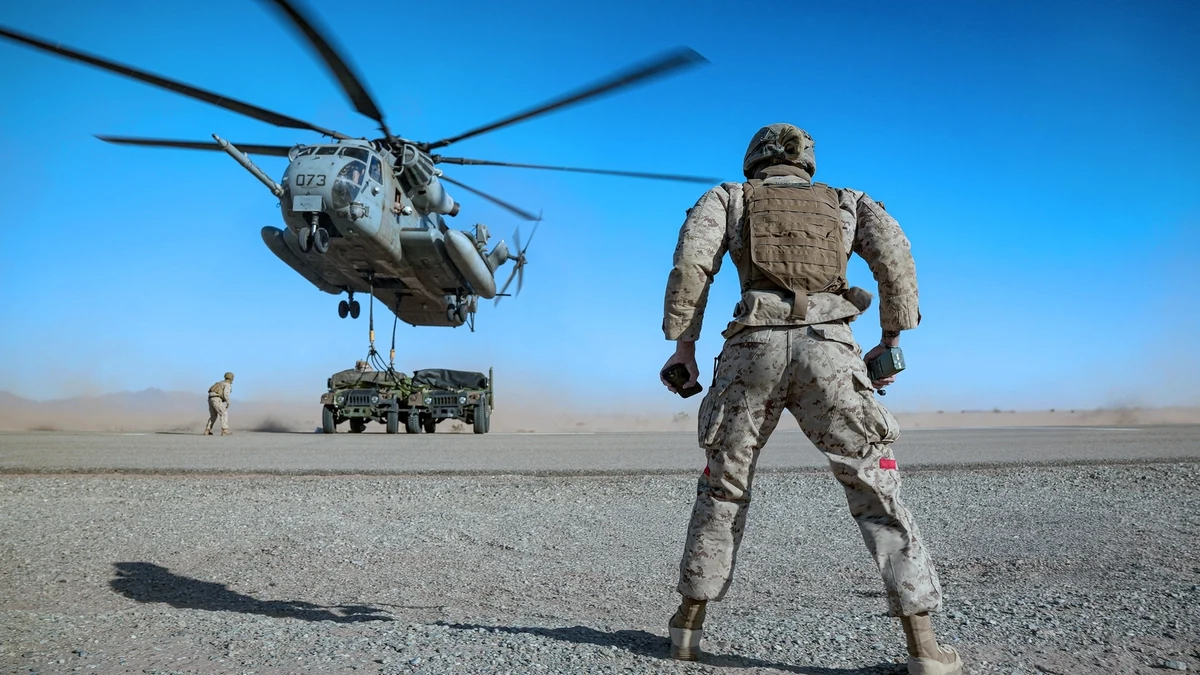
Image: ASI
According to the company, its platform combines continuous simulations, multidimensional monitoring and optimization techniques to model how interconnected infrastructure systems may behave over periods ranging from hours to weeks. Its approach mixes deterministic modeling, which evaluates outcomes under defined conditions, with probabilistic modeling, which accounts for uncertainty. The goal is to let operators assess scenarios before problems cascade into real outages.
Big Government Contracts Behind the Raise
The funding follows a string of major public-sector wins that give the raise unusual substance for a startup. In October, ASI secured a five-year, $99 million U.S. Army contract to support scaled command-and-control solutions, the company announced. In June, the Federal Aviation Administration selected ASI for a 12-year, $875 million contract to modernize the national airspace system.
Image: ASI
The company’s own materials name the FAA, Delta Air Lines, United Airlines, National Grid and the U.S. Army among its customers. ASI is headquartered in Boston with offices in Washington, DC, Denver and Europe, and says it is backed by investors including Andreessen Horowitz, Spark Capital and Bloomberg Beta.
Why It Matters
The round is another data point in a clear investor shift: capital is flowing toward AI that operates in the real world, from factory floors to air traffic control, rather than toward another chatbot. ASI’s pitch is that the most consequential industries still run on decades-old software built for analysts looking backward, and that AI engines which model physical reality can let operators see further and act sooner. With a $3 billion valuation and two of the largest government AI contracts in the sector, ASI is now one of the best-funded bets on that thesis.