Former OpenAI chief research officer Bob McGrew has a new target: the factory floor. On October 20, his startup Arda Industries emerged from stealth with $232 million in total funding, including a $160 million Series A that values the company at $1.5 billion. The round was co-led by Altimeter, Accel and Khosla Ventures, with Founders Fund, XYZ Venture Capital, 8VC, SVAngel and Felicis also participating.
Arda builds AI software that turns a product design into a working assembly line, and keeps that line current as the design changes. Its AI agent works from a product’s CAD files and other design artifacts, so a design change can reach the factory floor without halting production.
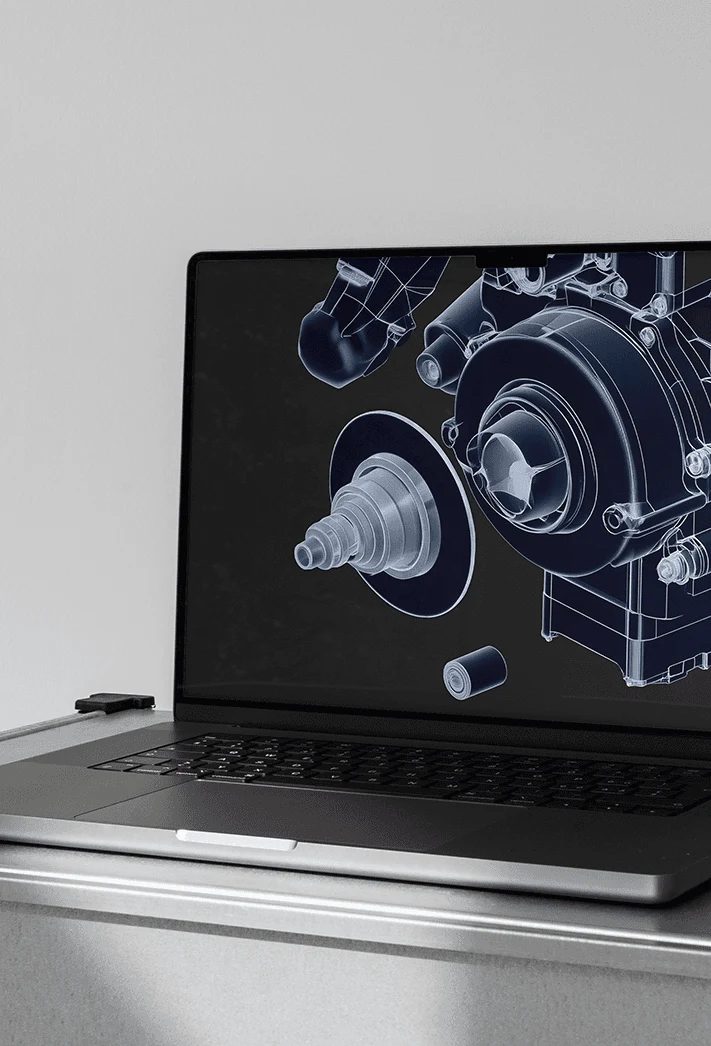
The pitch targets a gap that has persisted for decades. Hardware now changes at a software pace: phones get a new generation every year, and only about a quarter of the parts carry over from one model to the next. Yet while a human worker can learn new instructions in a day, programming conventional automation for a single station can take three to six months and cost close to $1 million. A new phone stays at full-rate production for only about four months, Arda notes, which means by the time an automated line is ready, the product has already moved on.
Already Deployed at Anduril
Arda is not starting from zero. Defense technology company Anduril Industries is already using Arda’s product as part of its ArsenalOS manufacturing software. The two companies began working together before Arda was incorporated, with Anduril serving as the company’s first design partner and customer.
The early results are striking. Anduril found that in many cases, Arda turns days of work into hours, and hours of work into minutes: basic work instructions that once took 10 hours can now be created in 15 minutes, while more complex engineering workflows that previously took up to 30 hours now take roughly 2.5 hours.
“Our manufacturing engineers are doing two hard things at once. They’re keeping up with design teams that iterate constantly, and they’re scaling production to meet demand,” said Matt Grimm, co-founder and COO of Anduril. “Arda helps them get design changes onto the floor faster and catch potential issues sooner. We would be behind on our production goals without it.”
Why Factories Can’t Keep Up
McGrew frames the problem as a mismatch of speeds. “I kept asking: why can we design the next generation of products in America, but not build them here? When a product changes every year, the factory has to be able to change with it,” he said in the company’s announcement. “Today, U.S. manufacturers designing innovative consumer hardware products at scale can only make them in Asia. Imagine a fully automated version of Shenzhen in West Texas, that’s what we want to make possible.”
Manufacturing engineers are also scarce in the U.S., the company notes, and hiring needs often outpace the available talent. Arda’s answer is leverage: give each senior engineer, in its words, the productivity of a team of junior engineers.
A Team From OpenAI and Palantir
The founding team reads like a reunion of two of tech’s most influential companies. McGrew led product and engineering at Palantir through its first decade, then joined OpenAI when it was still a small nonprofit lab, leading its research team from 2018 to 2024 and leaving as Chief Research Officer in September 2024.
His co-founders are Augustus Odena, Arda’s Chief AI Officer, who co-founded Adept and previously worked at Google Brain and Meta’s TBD Lab; Alex Mark, Arda’s CTO, a former Palantir engineering leader; and Jakob Frick, who previously worked at Palantir and SpaceXAI. The wider team includes software engineers from Palantir, manufacturing engineers from Tesla, and AI researchers from MIT, the company says.
What’s Next: Robotics
Arda is already prototyping the next step: AI agents that program robots to carry out its assembly plans, station by station. Traditional automation requires custom equipment and lengthy engineering work for each assembly step, and adapting it to a design change can take months. Arda’s goal is to make robotic assembly lines as quick to adapt to new designs as a human-staffed line is today, which would make it possible to assemble fast-changing consumer electronics in the U.S.
The company is starting in defense and the data center supply chain, two of the most active parts of American manufacturing, and plans to move into consumer electronics next. With $232 million in the bank and a marquee customer already live, Arda has bought itself the runway to find out whether software can finally make the factory as flexible as the design studio.
Sources
- Arda Emerges from Stealth to Speed Up American Manufacturing, Business Wire press release, October 20, 2026
- arda.ai, Arda Industries official site