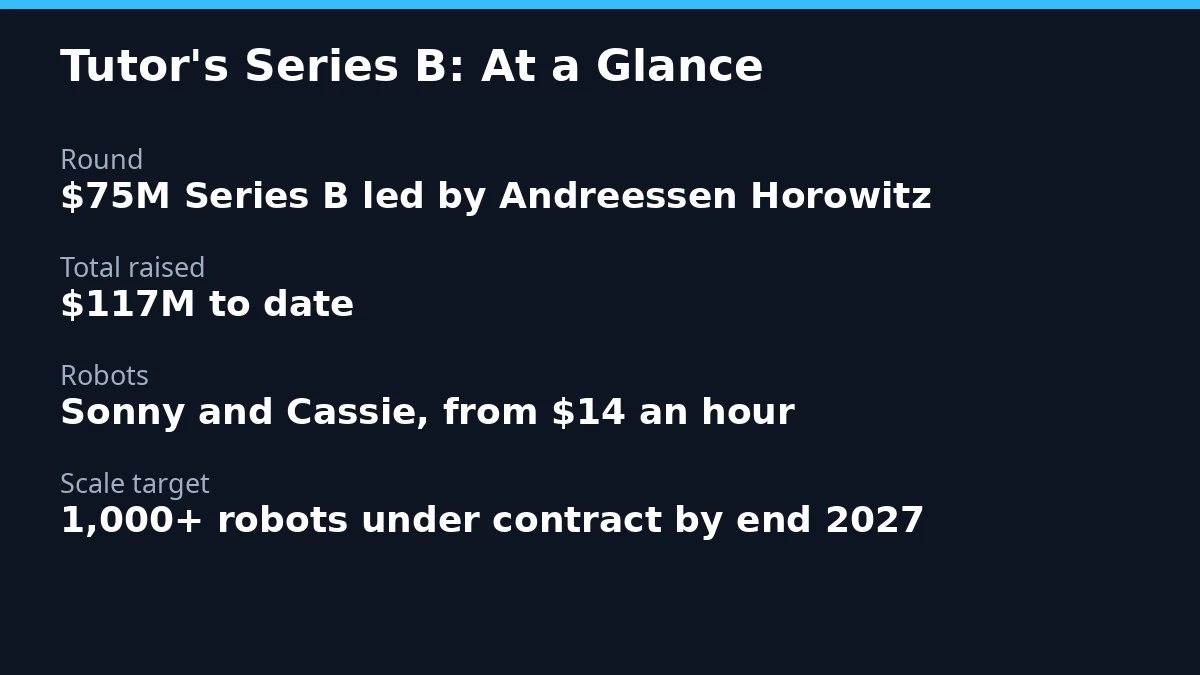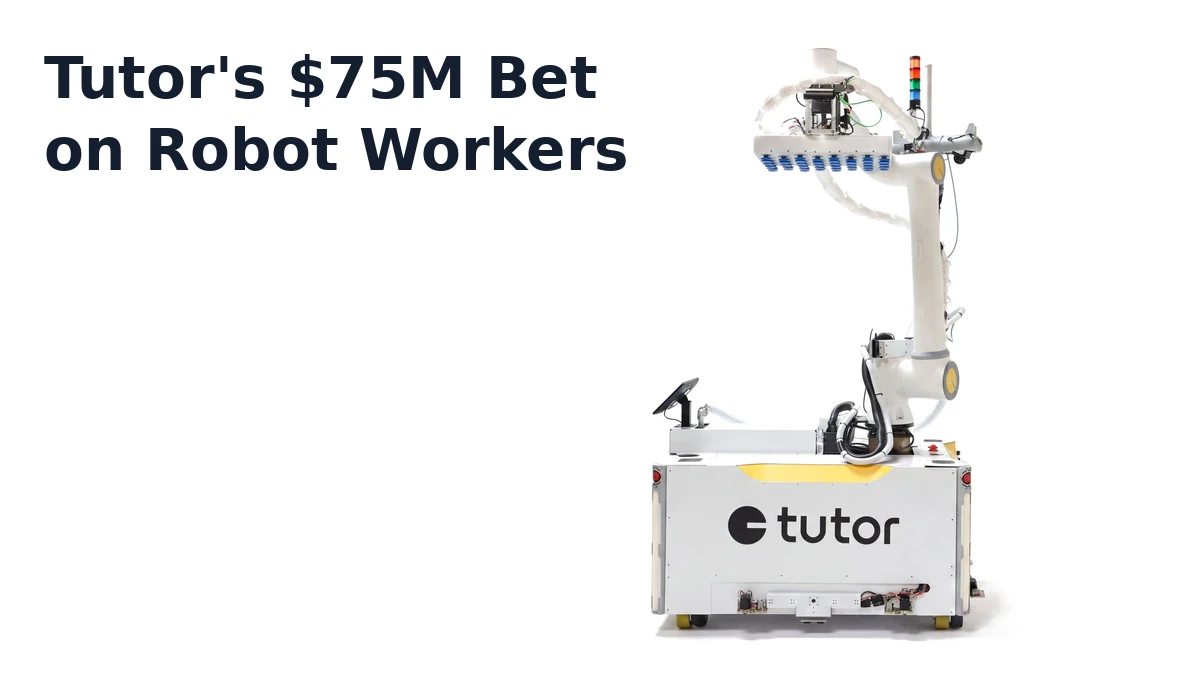
Tutor Intelligence, the robotics research and deployment company founded out of MIT CSAIL, has raised a $75 million Series B led by Andreessen Horowitz, bringing its total capital raised to $117 million, the company announced on November 2 in a press release. Union Square Ventures and Neo, which led the company’s Series A and seed rounds respectively, also participated.
The Watertown, Massachusetts company will use the funding to train frontier robot foundation models and to manufacture and deploy its Sonny and Cassie robots, which run the company’s models and work jobs across the United States. Tutor says all of its robot systems are built in and deployed from the United States.
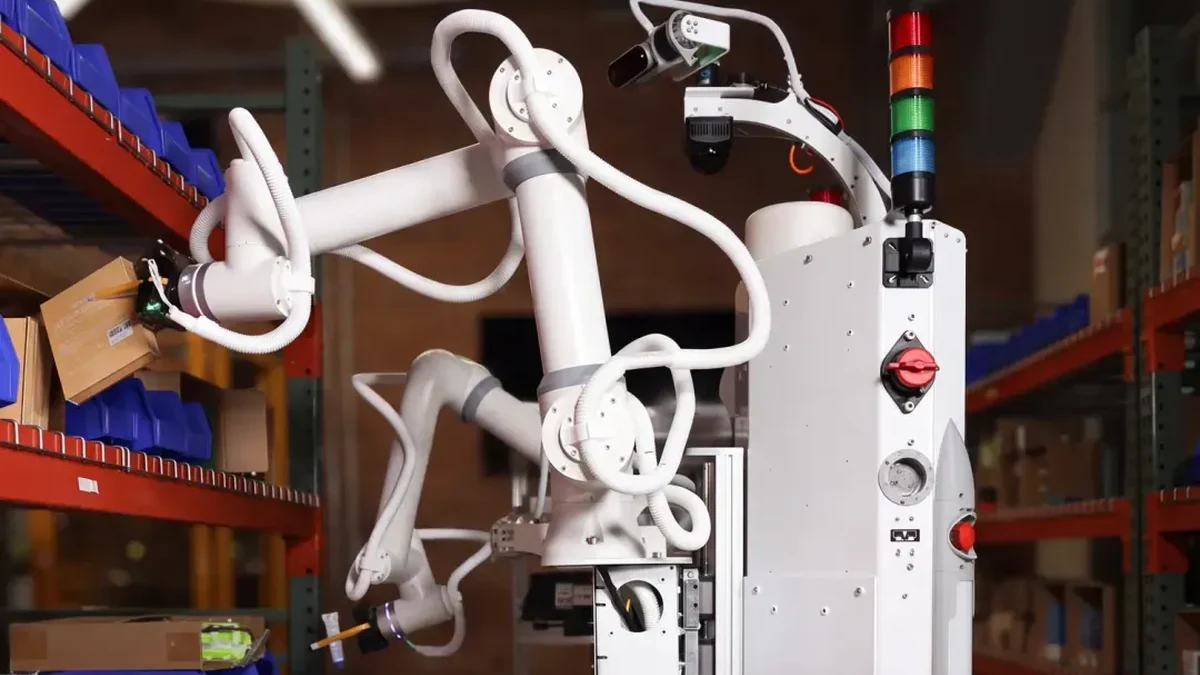
Sonny, Tutor’s two-armed robot, picking items in a warehouse. Image: Tutor Intelligence.
Two robots, one full stack
Sonny is Tutor’s two-armed robot for general dexterity, with a first job in e-commerce fulfillment. It can autonomously navigate brownfield warehouses, pick arbitrary items out of racking and deliver completed orders to packout, at rates of up to 100 picks an hour. Cassie is the company’s workhorse single-armed robot for pallets and cases, proven in production with millions of bulk picks in factories and warehouses.
Tutor’s business model is the part the company wants to change: rather than selling machines, it sells robot work by the hour or by each item picked, Daily AI Brief reported, with pricing starting at $14 an hour per Tutor’s website. That shifts customer spending from capital expenditure to operating expenditure, which Andreessen Horowitz argues makes the offering viable for small and mid-market manufacturers, not just large logistics operators.
The secret sauce is what Tutor calls its network of intelligence. The company deploys fleets of internet-connected robots into production environments, where they do real work for real customers with input from remote human operators known as “tutors.” That real-world data trains better frontier models, including Tutor’s Turing and Ti0 model series, which makes the robots capable of more work and wider deployment. “Tutor was founded to close the gap between what robots can do and what people can do,” the company said.
“By offering a full-stack platform spanning robots, models and deployments, Tutor is building a network of intelligence in which each new deployment strengthens the entire fleet, making robots smarter, cheaper and easier to deploy over time,” said Raghu Raghuram, general partner at Andreessen Horowitz and the former CEO of VMware, in the announcement.
Ambitious scale-up targets
Tutor plans to have more than 1,000 robots under contract by the end of 2027, Andreessen Horowitz said in its own investment announcement, with its first two robots aimed at warehousing and logistics. The round comes as investors pour money into physical AI: recent raises include $100 million rounds for Foundry Robotics and GenRobot AI, underscoring how competitive the race for general-purpose robot workers has become.
Tutor’s edge, its backers argue, is vertical integration: the company designs and manufactures the hardware, trains its own foundation models and works directly with end customers, from family-owned manufacturers to Fortune 50 logistics firms. Co-founders Josh Gruenstein and Alon Kosowsky-Sachs met as undergraduates at MIT.
Why it matters
Robot foundation models are following the LLM playbook: train on data at scale, and capability compounds. Tutor’s full-stack approach, where every deployment feeds the next generation of models, is a bet that the company with the most robots in real factories wins the model race. The $75 million round gives it the capital to test that thesis at fleet scale, and the $14-an-hour price point will find out whether mid-market manufacturers are ready to hire robots by the shift.