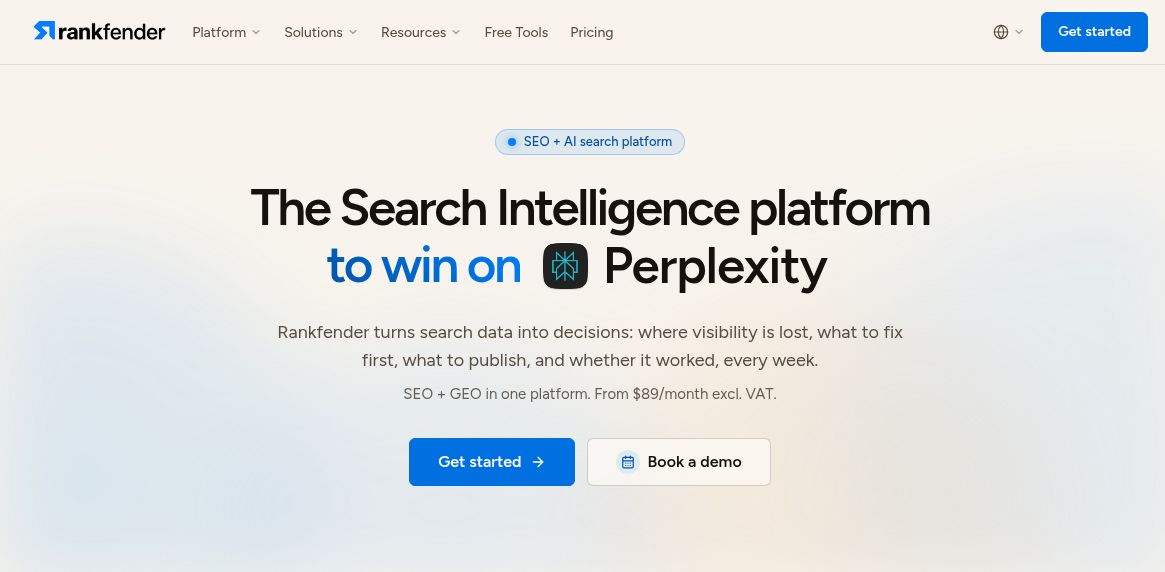
Rankfender brings SEO research, AI-answer monitoring and content work into one service. It is aimed at website owners and marketing teams that want to investigate where their brand appears, identify gaps and decide what to improve. Version 3.0 adds conventional search research to its existing AI-visibility workflow.
What changed in Rankfender 3.0?
The official changelog dates version 3.0 to November 2026, without an exact release day. It describes:
- On-demand Google rank checks: check keyword positions using credits and record whether AI Overviews or AI Mode appear.
- Keyword Explorer: research volume, difficulty, related searches and ranking pages.
- Domain research: investigate backlinks and historical search visibility for your site or a competitor.
- A combined Search tab: view Google and Bing performance together.
- Article repurposing: adapt an article into social posts, a newsletter or outreach copy.
A separate November entry introduces connections to ChatGPT, Claude and other assistants. The vendor describes read-only access by default, confirmation for actions and separate publishing permission. Check the permissions you grant before connecting a production website.
What its AI visibility checks actually measure
According to the AI visibility documentation, Rankfender sends buyer questions to supported models and records brand mentions, competitors, tone and cited sources. You can add brand aliases and inspect full answers rather than relying only on a summary score.
The method matters: these are API-based checks. The documentation says Perplexity uses live web sources, while the other listed models answer without web browsing. Results can therefore differ from a signed-in consumer chatbot with browsing, memory or another model version. Treat a score as a measurement of the questions and conditions checked, not your brand’s visibility everywhere.
A practical way to evaluate it
Imagine you run appointment-booking software for independent salons. The following is an evaluation plan, not a test performed with Rankfender:
- Choose a narrow question set. Include needs such as “booking software for a two-person salon” and “appointment tools with deposit collection.” Keep questions that name your brand separate.
- Read the answers. Note which brands appear and whether any cited page actually supports the recommendation. A mention without useful context may be less valuable than a precise answer to a purchase question.
- Investigate one gap. If your deposit policy is unclear, improve the relevant page with accurate terms and examples. Do not add a feature your product lacks just because competitors mention it.
- Keep a dated record. Record the question, model, answer and page change. Repeat comparable checks and examine your own qualified traffic or inquiries alongside the tool’s scores.
A better score after an edit does not establish that the edit caused it. Models, retrieval and competing pages can change too. Use the evidence to prioritize useful work rather than chase every fluctuation.
Pricing, credits and access
The pricing page lists these monthly subscription prices in US dollars, excluding VAT:
- Essential: $89 per month.
- Professional: $199 per month.
- Business: $499 per month.
- Agencies: custom pricing.
Pay-as-you-go access provides Essential features for one project. Packs start at $11 for 100 credits, excluding VAT, and purchased credits do not expire. Budget for setup as well as checks: the page lists 80 credits for a new project and 25 for an AI visibility check, so the smallest pack does not cover both.
There is no subscription trial. The separate free checker offers a limited introduction; the public read-only demo displays Rankfender’s own project without signup. Neither demonstrates performance on your own site.
Limitations to check before paying
The public website is not fully synchronized: homepage copy still references version 2.3, while the changelog describes 3.0. Keyword allowances also differ between the changelog and pricing table. Confirm the current allowance for your intended plan rather than building a budget around either figure.
Human review remains necessary for generated content, suggested fixes and publishing actions. Rankfender can organize research and checks, but cannot guarantee higher rankings, citations or sales.
It is worth considering when you want to connect search research with a repeatable editorial workflow. For another approach to answer monitoring, see our Notra overview.
Based on public documentation checked November 8, 2026. This overview is not a hands-on product test.
Image credit: screenshot of Rankfender’s official homepage, captured November 8, 2026. It shows the public marketing website, not a tested account or the version 3.0 dashboard.