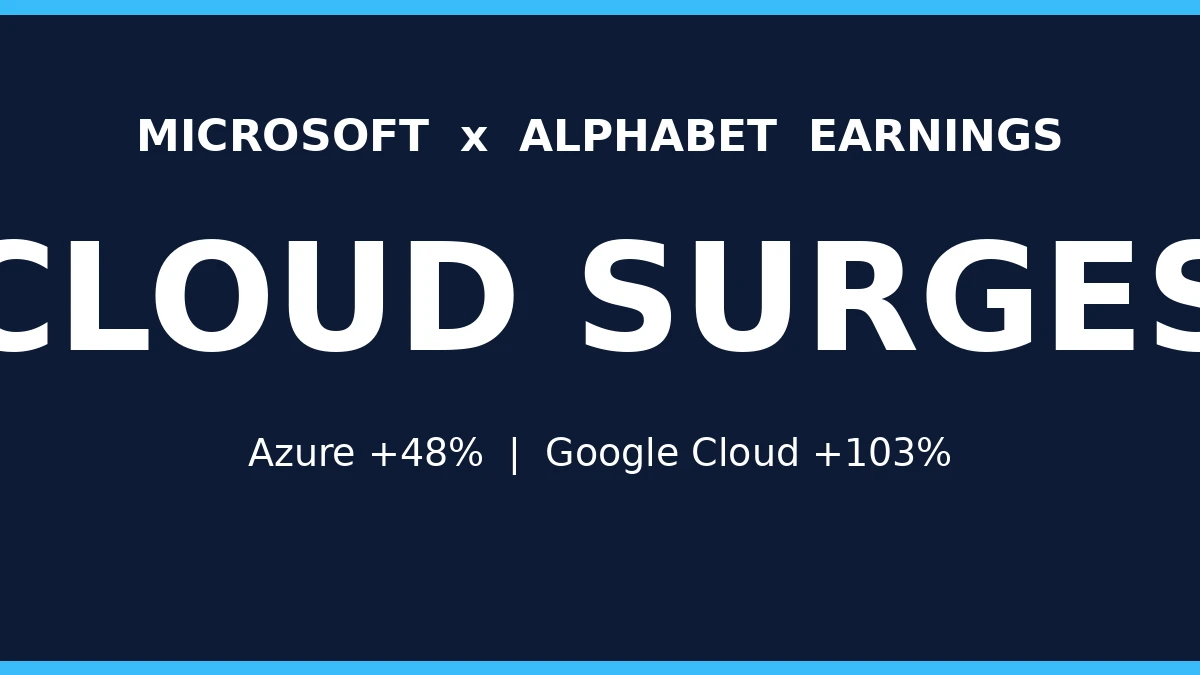
Microsoft and Alphabet reported September quarter results on October 28, delivering the clearest verdict yet on the AI spending boom: customers are buying cloud and AI computing fast, but the bill for building it is landing very differently at the two companies. Microsoft beat expectations on the strength of Azure, while Alphabet’s cloud business doubled even as heavy infrastructure spending pushed its free cash flow negative. Together, the two reports frame the central question for the AI trade: demand is real, and so is the cost of serving it.
The two companies report on different fiscal calendars for the same three months ended September 30, 2026: Microsoft’s fiscal first quarter of 2027 and Alphabet’s third quarter of 2026.
Microsoft: Azure growth accelerates to 48%
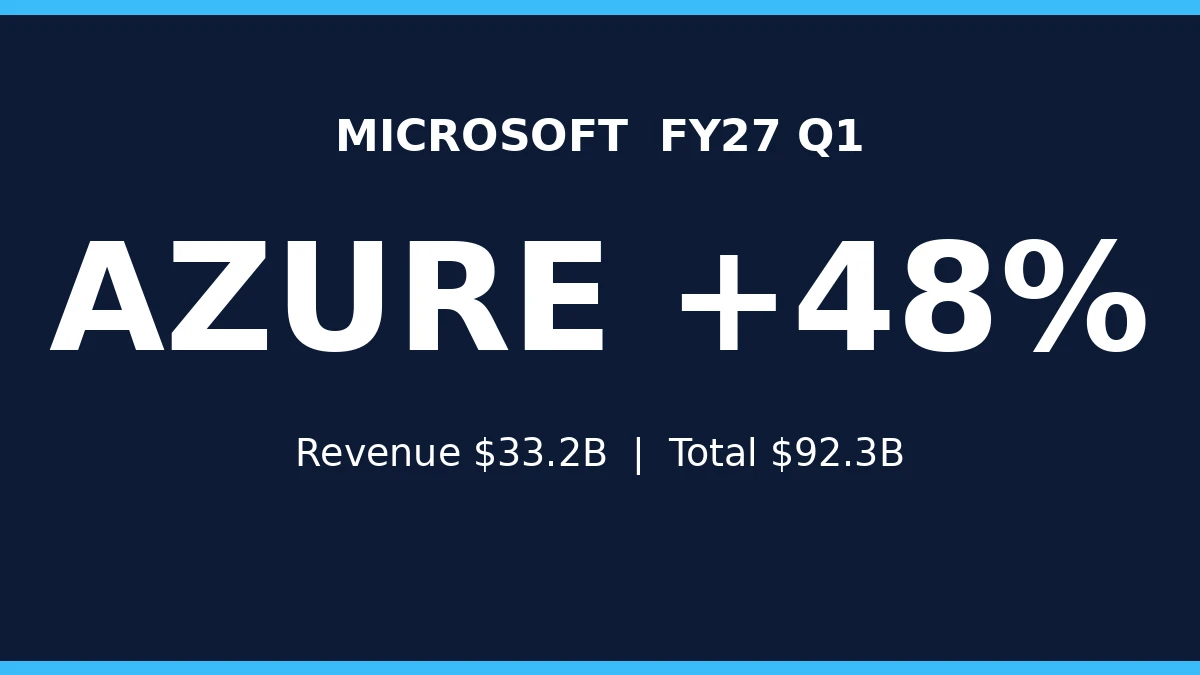
Microsoft reported revenue of $92.3 billion, up 19% from a year earlier, with operating income up 21% to $45.9 billion and net income up 32% to $36.6 billion on a GAAP basis. Adjusted earnings per share, which exclude the impact of Microsoft’s OpenAI investment, came in at $4.89, up 18% and ahead of analyst expectations of about $4.73.
The engine was the cloud. Microsoft Cloud revenue reached $63.9 billion, up 30%, and Azure growth accelerated to 48%, with Azure revenue of $33.2 billion. That beat both Microsoft’s own guidance of 44% to 45% and analyst expectations of about 45%. Commercial remaining performance obligation, contracted revenue not yet booked, rose 73% to $677 billion. Microsoft also reported capital expenditure on property and equipment of $39.4 billion, below the roughly $45.9 billion analysts had expected, and free cash flow of $18.6 billion.
“We are delivering greater capability, choice, control, and cost efficiency for customers across our entire stack,” said Satya Nadella, Microsoft’s chairman and chief executive, in the company’s earnings release. Chief financial officer Amy Hood said results exceeded expectations across revenue, operating income and earnings per share, with Microsoft Cloud growth accelerating to 30%. Microsoft shares rose about 4% in after hours trading after the report.
Graphic: GPTOnline
Alphabet: Google Cloud doubles to $30.7 billion
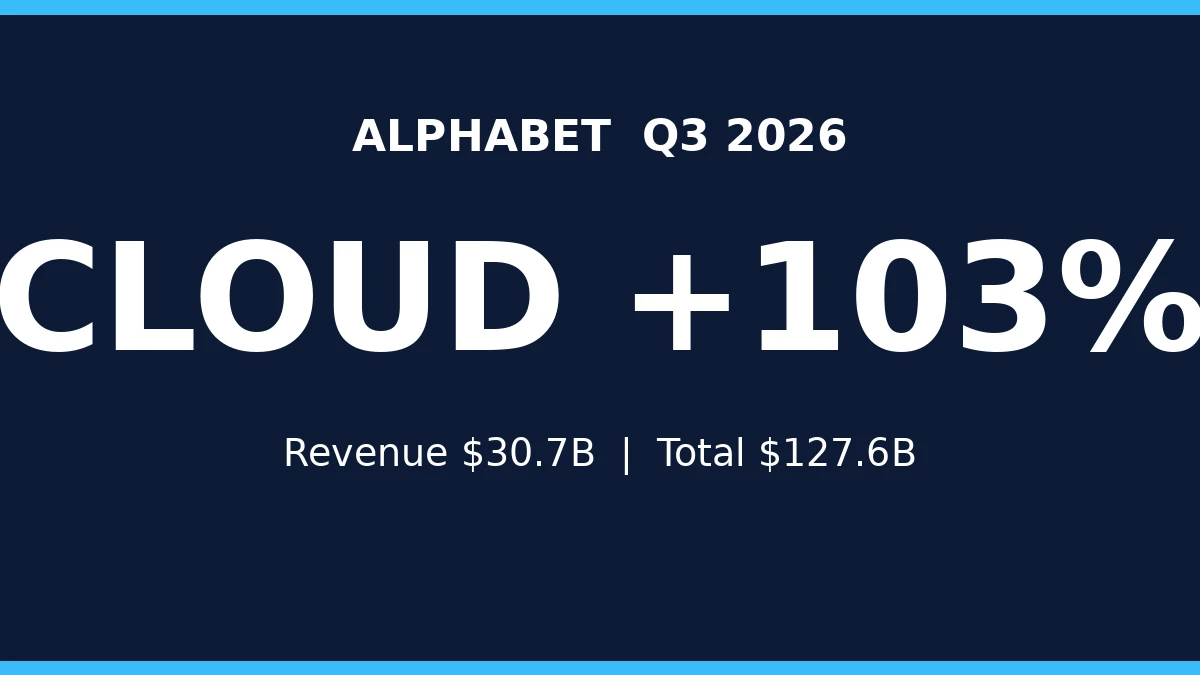
Alphabet reported revenue of $127.6 billion, up 25% from a year earlier, slightly below the $128.2 billion analysts expected. Google Cloud revenue jumped 103% to $30.7 billion, far ahead of expectations of about $29.6 billion, and cloud operating income rose to $11.1 billion from $3.6 billion a year earlier. Alphabet attributed the growth to demand for enterprise AI infrastructure and AI solutions, and said sales of its TPU systems were also a meaningful contributor to revenue growth.
Operating income rose 30% to $40.6 billion, but net income fell to $26.5 billion, or $2.12 per diluted share, from $2.87 a year earlier. The gap is explained by an $8.7 billion loss on equity securities, which swung other income to a negative $8.2 billion from a positive $12.8 billion a year earlier. Google Services revenue reached $96.3 billion, up 11%, with Search at $63.4 billion and YouTube advertising at $11.2 billion, both slightly below expectations.
The spending side is where Alphabet’s report diverged from Microsoft’s. Alphabet spent $51.4 billion on property and equipment in the quarter, and free cash flow fell to negative $9.1 billion, from negative $5.9 billion in the prior quarter. To fund the buildout, Alphabet raised $28.7 billion in senior notes and sold $12.4 billion of stock through its at the market program, and it repurchased no shares in the quarter. Alphabet shares fell sharply in after hours trading.
On the company’s earnings call, chief executive Sundar Pichai said: “Google Cloud revenues grew 103%. Our AI infrastructure and solutions are the major drivers for Cloud growth.” He added that Alphabet’s first party model APIs now process nearly 32 billion tokens per minute, up from 22 billion in the prior quarter, and that the Gemini app has passed one billion users.
Graphic: GPTOnline
Why it matters
Read together, the two reports tell one story with two endings. Azure growth of 48% and Google Cloud growth of 103% show enterprise AI demand is still accelerating, and both companies now disclose TPU and AI infrastructure sales as a real revenue driver, not just a cost center. But the market rewarded the company that paired growth with cash discipline: Microsoft’s capital spending came in below expectations, while Alphabet’s cash burn deepened even as its cloud beat. For AI investors, the next test is no longer whether customers want the capacity. It is whether the companies building it can turn that demand into cash faster than they spend to serve it.
Sources
- Reuters Breakingviews: Google and Microsoft weave tangled AI webs
- Google Blog: Q3 2026 earnings call, remarks from CEO Sundar Pichai
- Securities.io: Microsoft Q1 revenue rises 19% to $92.3 billion as Azure grows 48%
- Securities.io: Alphabet Q3 revenue rises 25% as Google Cloud revenue jumps 103%
- GeekWire: Microsoft Azure revenue surges 48% to $33.2B, beating expectations as cloud and AI demand grows