
Updated October 24, 2026
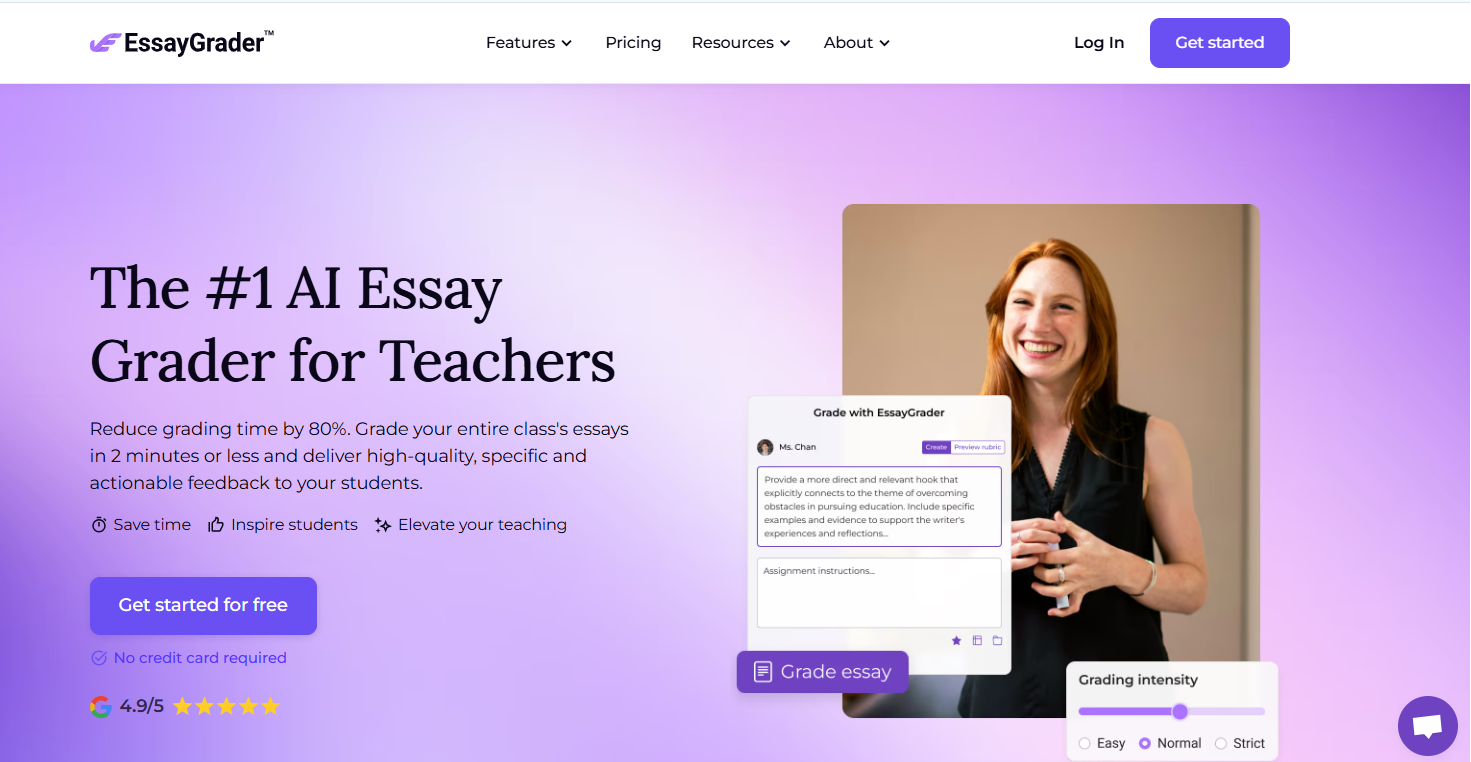
Existing screenshot from EssayGrader’s website; original capture date unrecorded. Its ranking and time-saving claims, portrait and grading preview are historical provider marketing, not independently verified performance or a new product test.
| Name | EssayGrader AI |
|---|---|
| Overview | EssayGrader AI is an intelligent grading assistant for educators, supporting rubric-based assessment and teacher-reviewed feedback. Teachers upload essays from Google Drive, Classroom, Canvas, Dropbox, and Box. The system applies custom or prebuilt rubrics to deliver detailed feedback on content, structure, grammar, and style for the teacher to review. Additionally, built-in plagiarism checks, AI-generated content detection, and performance dashboards help teachers investigate concerns and track writing progress; they do not guarantee originality or learning outcomes. |
| Key features & benefits |
|
| Use cases & applications |
|
| Who uses? | Teachers, professors, teaching assistants and curriculum developers in schools and universities. |
| Pricing |
The current public cards list Basic, Pro, Premium and institutional plans; the former Lite and five-user Team offers are not presented as current options here. The annual selection displays monthly equivalents of US$14.99 for Pro and US$34.99 for Premium; these are not month-to-month prices. An annual total was not displayed in this review. Confirm the billing selection, checkout total and applicable taxes before subscribing. |
| Tags | #AI #EdTech #EssayGrading #LMS #Plagiarism #Rubric #TeacherTools |
| App available? | Web-based platform with Google Classroom, Canvas and Schoology integrations, plus supported cloud-file uploads. Check browser/device requirements; this review did not verify a dedicated mobile app. |
Keep the teacher in control
Choose the assignment rubric, upload an appropriately de-identified submission, then check each proposed score against the cited passage before releasing feedback. The provider’s terms require anonymizing student identifiers, including metadata. AI-writing detection is a signal to investigate alongside drafts, prior work and a conversation with the student—not proof of authorship or a basis for an automatic penalty.
Official sources: Current plans and allowances · Grading and detection limitations · Manual versus automatic detection · Student data and human verification