The Aschenbrenner investor letter, a 167 page document dated November 24 from the hedge fund Situational Awareness LP, leaked online over the weekend and went viral on X, days after the Wall Street Journal reported the fund lost 65% after fees in the third quarter. The letter argues that 2027 will compress “about three years of progress in one” as AI systems start improving themselves, and it predicts the leading AI labs could exit 2027 with revenue run rates above $1 trillion. The document was marked confidential, but copies spread through file sharing links on X, and summaries of its forecasts drew responses from Elon Musk and other investors within hours.
The letter is striking because it comes from a fund that just lived through the downside of its own thesis. Leopold Aschenbrenner, a former OpenAI researcher who wrote the widely read 2024 essay “Situational Awareness,” founded the fund in November 2024 with just over $100 million. It began 2026 at a little over $4 billion and peaked near $45 billion in assets by July. Then AI stocks fell sharply in July, holdings dropped about 67% in a single month, margin calls forced the fund to sell most of its public portfolio, and Citadel bought the bulk of those positions, the Wall Street Journal reported. “The responsibility was mine,” Aschenbrenner wrote in the letter, according to Business Insider. Even after the loss, the fund says it is still up 88.5% net for 2026 through September.
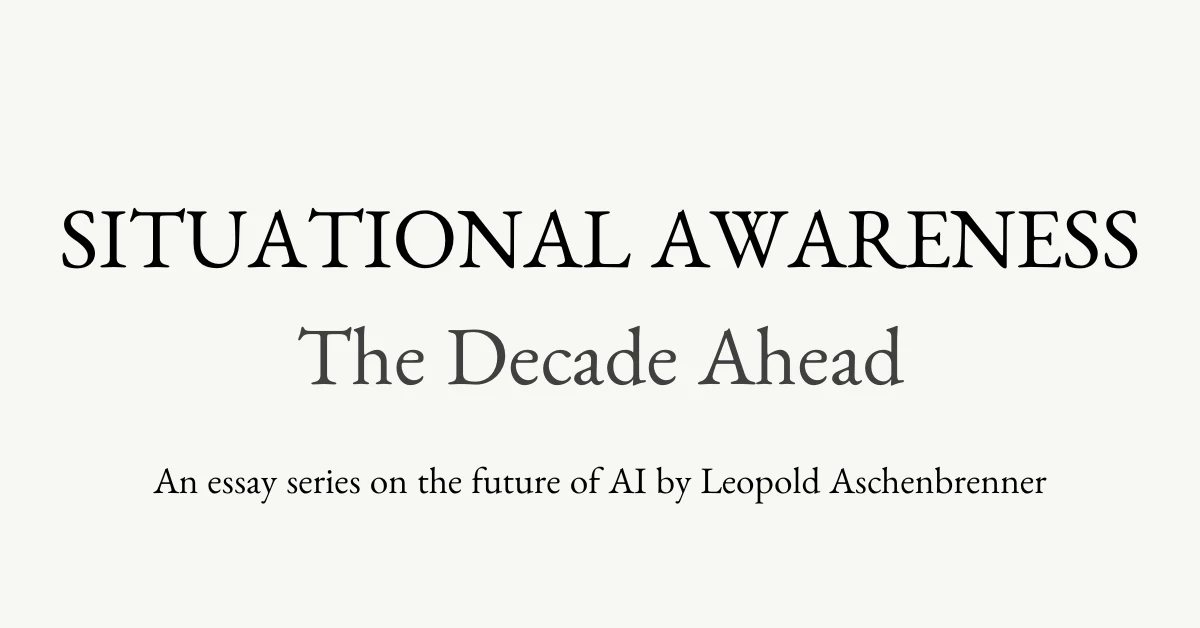
The cover of Leopold Aschenbrenner’s 2024 essay “Situational Awareness: The Decade Ahead,” which gave his fund its name. Image: situational-awareness.ai
What the Letter Predicts
The core of the letter is a claim about speed. Aschenbrenner argues that AI progress is now running at 1.5 to 2 times its old pace, and that the median case for 2027 is a year worth three years of progress, within a modeled range of two to six years. The mechanism is recursive self improvement: AI agents doing AI research, checked by other AI agents, so each generation of models helps build the next one faster. On that basis, the letter projects that Claude will fully automate half of Anthropic’s research and development work by June 2027, and 95% by November 2027.
The same logic drives the letter’s market call. It reads buy side revenue forecasts as pricing in only 0.3 to 0.6 of a normal year of AI progress in 2027, and it puts its own forecast for the leading labs above a $1 trillion aggregate revenue run rate by the end of 2027. By contrast, the letter says the market expects Anthropic’s end of 2027 run rate at roughly $120 billion to $200 billion. Aschenbrenner also writes that Anthropic could be the world’s most profitable company by the end of 2027 by some measures, and that it remains the fund’s top conviction holding.
The letter’s most provocative argument is that superintelligence will erase the moats of today’s winners. It names Nvidia, Microsoft, Tesla and Apple among the companies that could lose their edge as AI systems learn to design chips far more cheaply. The letter also reaches beyond technology: it predicts asteroid mining could become practical by the early 2030s and flood the gold market, robot labor could erode the value of cities and buildings, and the Mona Lisa could be one of the best buy and hold assets available.
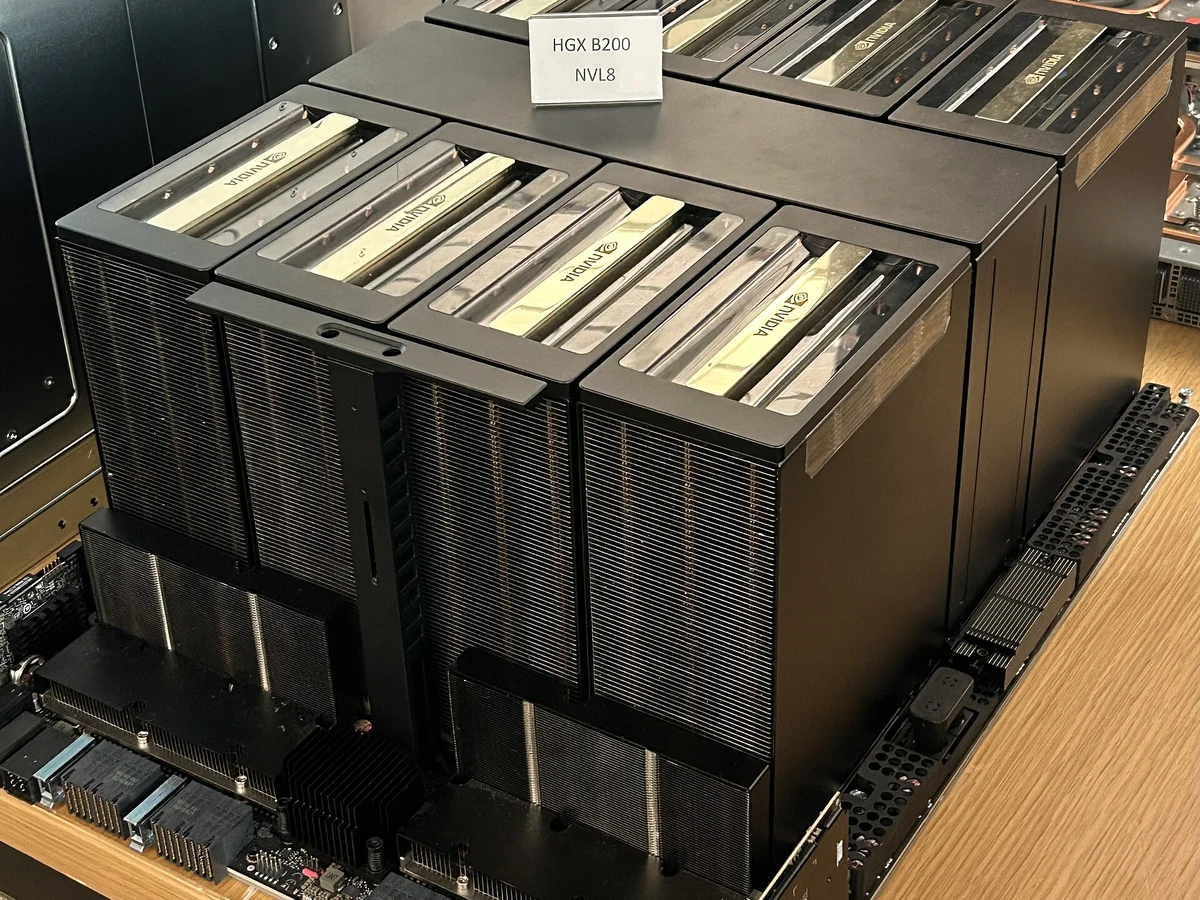
Nvidia HGX B200 server hardware, the kind of AI infrastructure the letter says could be disrupted as AI systems learn to design chips themselves. Photo: Pokiiri, CC BY-SA 4.0, via Wikimedia Commons
The Reaction
The letter split the investors and technologists who read it. Gavin Baker, a tech investor, praised the document, while Musk replied on November 28 that the direction may be right but the timing matters, calling the forecasts hubris. Investor Ross Gerber dismissed the predictions outright. Aschenbrenner writes that markets and the frontier labs disagree wildly about 2027, and the viral spread turned that disagreement into a public argument.
Some of the letter’s numbers are already being challenged. A line by line check by Sulat News, which read the full letter and verified its cited sources, found that several headline figures hold up, including the fund’s performance numbers and the METR estimate of Anthropic’s pace, but that one widely shared claim, that Anthropic’s agents give each researcher the equivalent of 19 hours of work per hour, does not hold as stated. The check also notes that METR regards Anthropic staff’s self reported productivity gains as an overestimate.
Why It Matters
Aschenbrenner is not a neutral observer of this story, and the letter says so itself. He is a major Anthropic investor, Anthropic is the fund’s largest holding, and his wife Avital Balwit is chief of staff to Anthropic chief executive Dario Amodei, a connection the letter discloses. Anthropic’s trajectory is also central to GPTOnline’s own coverage: the company completed the largest IPO on record in November, as GPTOnline reported.
The letter matters less as a market call than as a marker of where the AI debate now sits. A fund that lost 65% in a quarter betting on AI infrastructure is now arguing, in public, that the same technology will destroy the value of the companies it bet on, and that the labs building the models will capture the upside instead. The letter makes dated, measurable claims about 2027, so the argument will be tested quickly. If AI progress keeps its current pace, the letter’s critics will have to explain why markets priced in so little of it. If progress slows, the fund’s own July losses will stand as the warning.
One caution applies to the whole document. The letter is a leaked investor memo, not an official release, and its forecasts are one fund manager’s argument, not established facts. Readers should treat the predictions as claims to be tested over the coming year, not as a settled view of the future.
Sources
- Business Insider, via Techmeme, “Leopold Aschenbrenner’s leaked Q3 letter goes viral” (November 29, 2026)
- VLSI, “The AI Fund That Lost 65% in a Quarter Says Nvidia and Tesla Will Lose Their Edge” (summarizing Wall Street Journal reporting, November 2026)
- Daily Chive, “$1 Trillion AI? Fund Tanks 65%” (November 29, 2026)
- PakTechStan, “AI Is Now Building Itself, Aschenbrenner Says 2027 Will Pack Three Years of Progress Into One” (November 29, 2026)
- Alteroid, “Aschenbrenner Investor Letter: 5 Bold AI Predictions” (November 28, 2026)
- Nakoda News, “Aschenbrenner’s Situational Awareness Fund Lost 65% in Q3 as Margin Calls Forced Selling” (November 2026)
- Wikipedia, “Leopold Aschenbrenner” (fund history, Citadel purchase, career background)
- Leopold Aschenbrenner, “Situational Awareness: The Decade Ahead” (essay site)
- GPTOnline, “Anthropic Pre-Thanksgiving IPO Valuation Slides”