
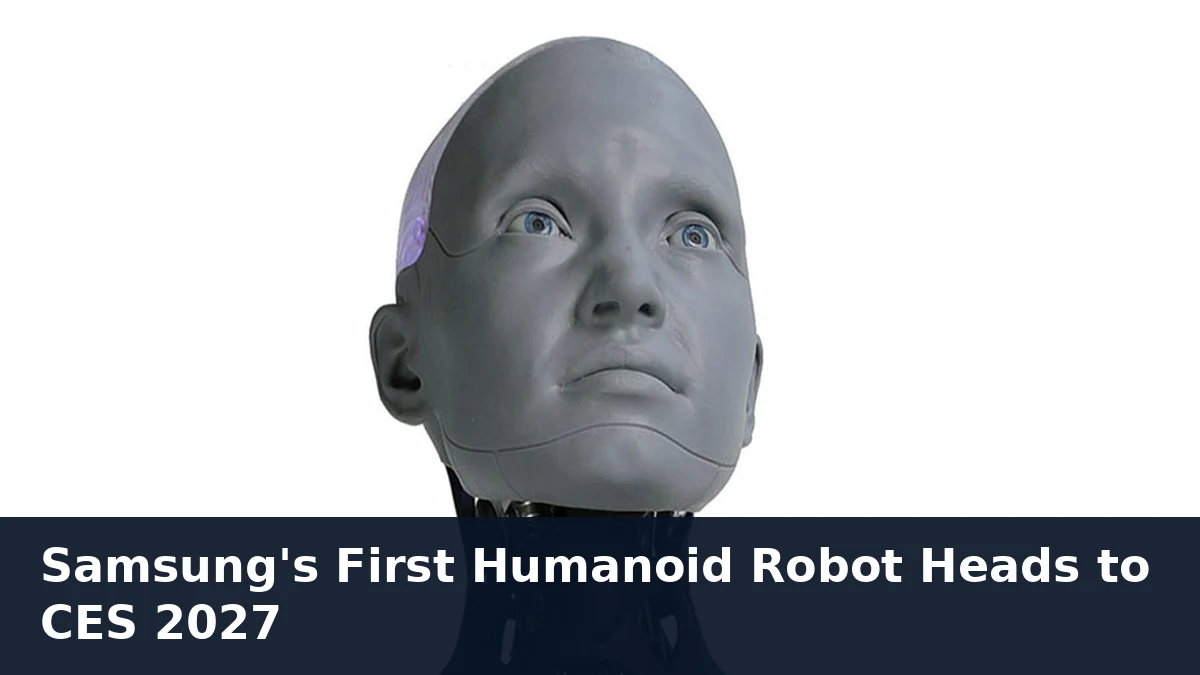
Samsung Electronics presented its first humanoid robot prototype to its board last week and plans to unveil the machine to the public at CES 2027 in Las Vegas, Reuters reported on November 29, citing a person familiar with the matter. The debut would put the world’s largest memory chip and smartphone maker into an increasingly crowded race that already includes Tesla, China’s Unitree and Hyundai Motor’s Boston Dynamics.
According to the report, the demonstration took place on Thursday, November 26, at Samsung’s robotics research hub in Seoul and was attended by co-CEO TM Roh. The demo focused on full-body control and the robot’s ability to pick up and manipulate objects using its arms and hands. Yonhap News Agency, citing industry officials, said Samsung plans to unveil the robot at CES 2027, which runs from January 6 to 9. Samsung declined to comment, and the source spoke on condition of anonymity because the company has yet to unveil the prototype publicly.
What Samsung showed its board
The Samsung humanoid robot is being developed by the company’s Robotics eXperience (RX) unit, which Samsung created in July and placed under the direct oversight of Roh. The unit covers robotics research and development, long-term strategy and commercialization.
Samsung is focusing on hand manipulation, a key challenge for humanoid robots that must reliably grasp, turn and reposition objects to perform factory tasks. Kris Hauser, head of the robotics lab at Samsung’s RX unit, put the bar bluntly in September: “You go to the factory owner and you say that your robot acts with a 99% success rate, they’re still going to laugh because it has to be at a 99.99% success rate for them to actually deploy it on their factory line. This is a very punishing kind of game.”
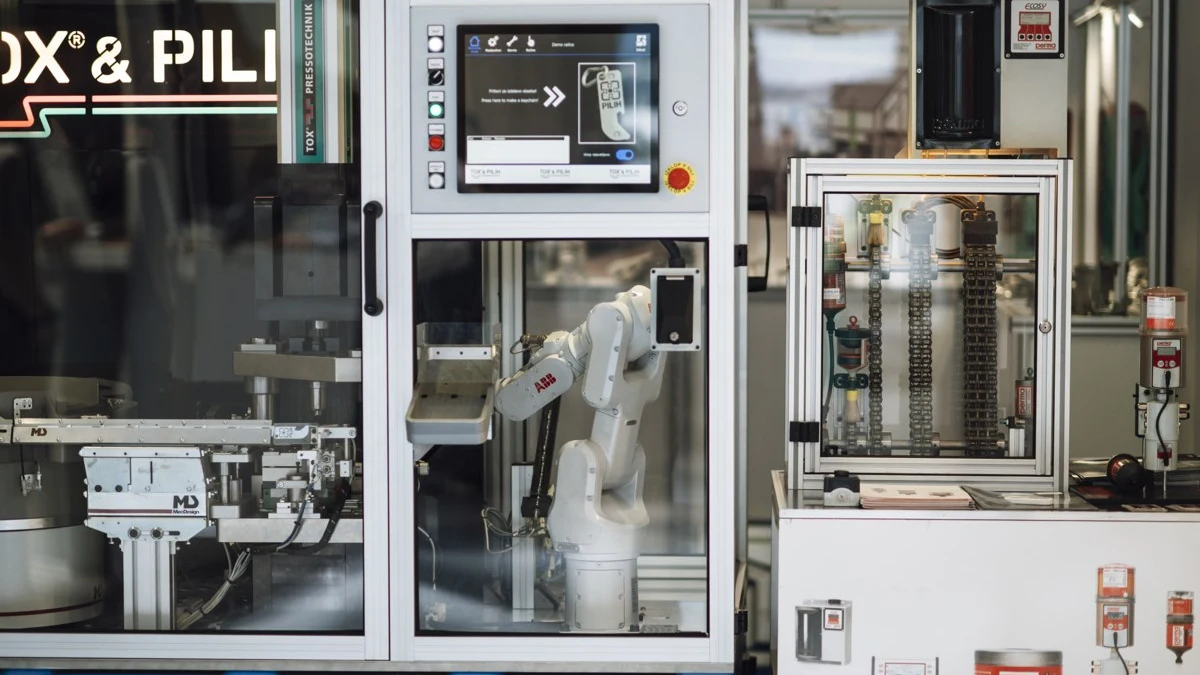
File photo: a robot arm at work inside a factory machine cell. Samsung says its humanoid will focus on factory tasks first. Image: Wikimedia Commons, CC BY 2.0
Korean outlets reporting the same board review added detail on that focus. Chosun Biz reported that the robot’s hands use ultraprecise machining and assembly technology developed through the production of hinges for Galaxy foldable phones, and that Samsung is prioritizing precision work on factory floors over showpiece movements such as walking or dancing. The robot’s specifications, performance figures, product name and deployment timing have not been disclosed.
Factory first, home later
Samsung’s immediate target is its own manufacturing. In March, the company said it aims to turn its factories into AI-driven plants by 2030 and introduce humanoid robots into manufacturing processes. Reuters reported that Samsung plans to build a humanoid robot production line in Gumi, the southeastern South Korean city that is home to its smartphone factories.
The longer-term ambition reaches beyond the factory floor. Hauser said in September that Samsung’s consumer robots could eventually perform household chores and assist older people. The company also has robotics research operations in the United States, China and Japan, and said earlier this year that it would consider investments and acquisitions where necessary to speed up development and commercialization in robotics.
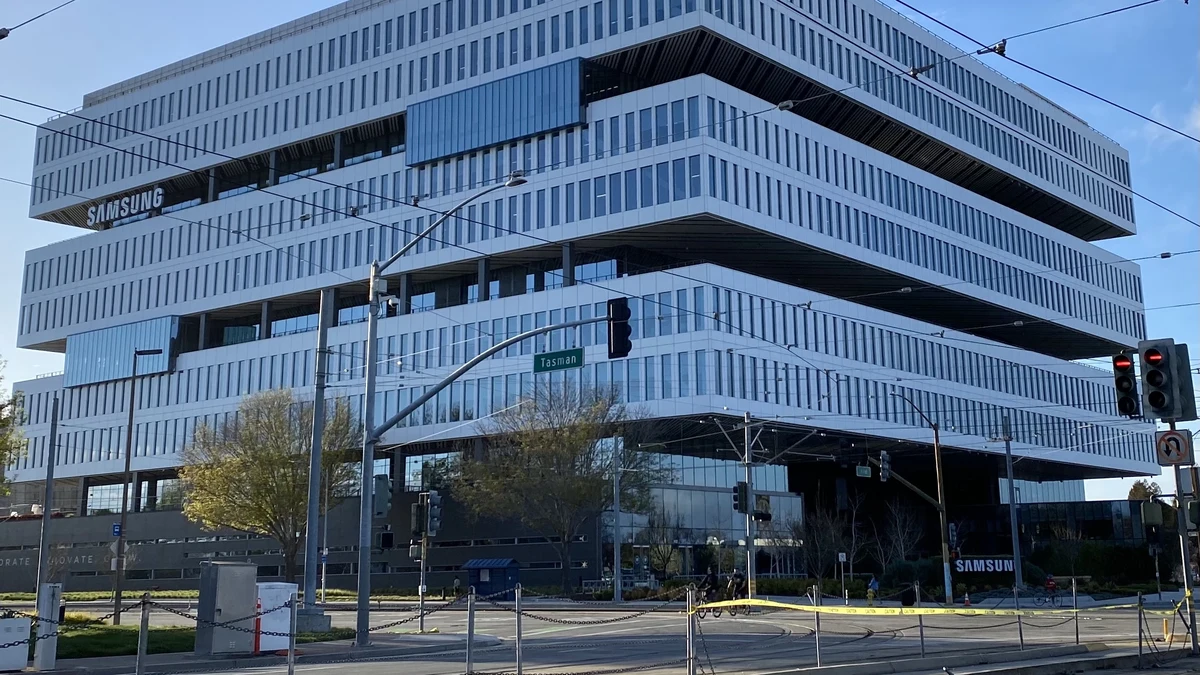
Samsung’s headquarters in Silicon Valley. Image: Cristiano Tomas, CC BY-SA 4.0, via Wikimedia Commons
A crowded race with a manufacturing edge
Samsung enters the field late but with assets its rivals lack. It is one of the world’s largest manufacturers, with deep experience in precision hardware, and in 2024 it became the largest shareholder in South Korean robotics company Rainbow Robotics. That combination of factory know-how and robotics expertise is the core of its pitch: a humanoid built first for real production work, not for the stage.
The competition is moving fast. Tesla is developing its Optimus humanoid, Unitree has shipped humanoids that walk, run and perform, and Boston Dynamics, owned by Hyundai Motor, has spent years refining whole-body control. Samsung’s CES debut will be its first public answer to those rivals, and the first visible result from the RX unit since its creation in July.
Why it matters
For Samsung, the robot is part of a search for new growth drivers beyond memory chips and smartphones, its two largest businesses. A credible humanoid would also give the company a showcase product for the AI-driven factory push it announced in March, and a reason for manufacturers to buy into its broader automation story.
For now, everything rests on sourced reports rather than an official announcement. Samsung has not confirmed the CES plan in a public statement, and no specifications, price or deployment date have been disclosed. If the January unveiling goes ahead as reported, it will be the first time the public can judge whether Samsung’s factory-first approach closes the gap with rivals that have been showing humanoids in public for years.


[…] robotics. Samsung is preparing its first humanoid robot for a debut at CES 2027, as GPTOnline reported, and the field now includes established robot makers, car companies, and AI labs all chasing the […]