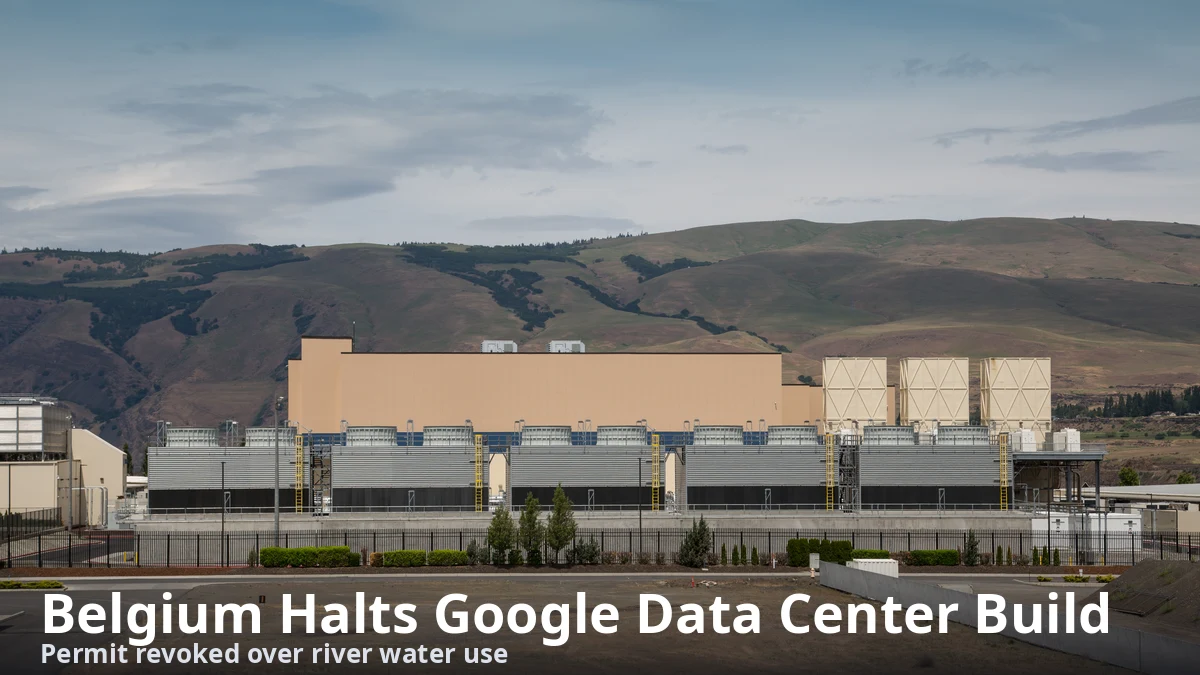
Belgium has ordered Google to stop construction on a 3-hectare data center near Charleroi after inspectors found a nearly finished building going up on a permit that was refused in August. The halt, ordered on Thursday, November 26, is the latest clash between European regulators and the tech giants racing to build the infrastructure behind the AI boom, Agence France-Presse reported.
Inspectors from the Walloon Region visited the site at the Ecopole business park in Aiseau-Presles, in the province of Hainaut, and found a building of 30,000 square metres with its structural shell already closed, even though the permit change it depended on had been refused. About 300 workers on site were told to stop work. A day later, regional spokesperson Nicolas Yernaux told AFP that a report was being sent to public prosecutors, alleging “a major offence: the illegal construction of a building covering three hectares.”
What inspectors found
Raphael Stokis, the regional official who handles planning permits and enforcement in the area, described the visit to Belgian public broadcaster RTBF. “We found that a building of 30,000 square metres, 3 hectares, was almost finished, with the structural shell closed, even though the permit had been refused by the minister,” he said. “There were some 300 workers on site, to whom we gave a verbal order to stop the work.”
The verbal order was to be confirmed to Google in writing. Google’s public response was brief. The company told RTBF it was “committed to maintaining an open and collaborative dialogue with the regional government and experts regarding our investments in Wallonia.” Google did not immediately respond to AFP’s request for comment, according to the wire report.
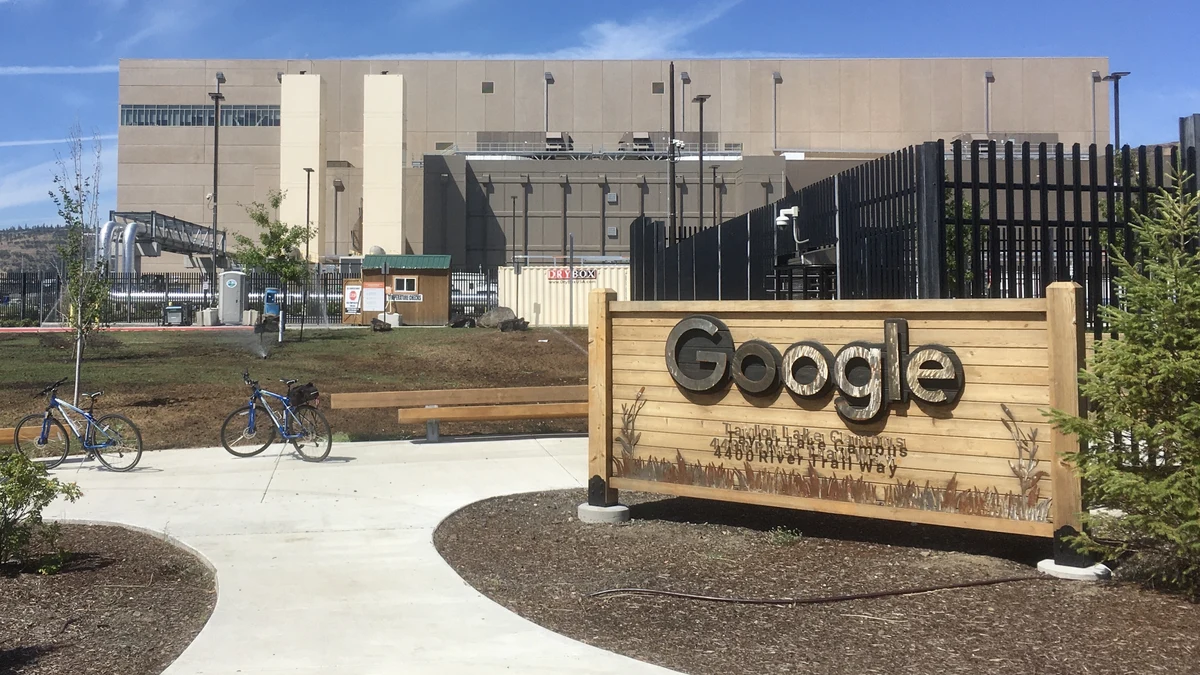
The entrance to a Google data center campus in The Dalles, Oregon. (Photo: Lambtron, CC BY-SA 4.0)
The permit dispute
The dispute turns on the difference between two versions of the same project. Google is building at Ecopole through its European subsidiary Crystal Computing, on a former coal mining site of about 50 hectares spread across Farciennes, Aiseau-Presles and Sambreville, according to a detailed account of the case.
The original permit, granted in 2024, covered three smaller air-cooled data centers. In 2025, Google asked to merge two of them into a single larger building and switch the cooling system to water drawn from the nearby River Sambre. The Walloon administration approved that change in April 2026, but residents appealed, and in August, Walloon minister Francois Desquesnes refused the modification, pointing to the project’s water needs during a historic drought.
The minister’s office stressed that the original 2024 permit remains valid. In practice, that means Google may build the three smaller air-cooled buildings it was first approved for, but not the larger water-cooled version. Google has challenged the refusal before Belgium’s Council of State, its highest administrative court, with a public hearing set for January 7, 2027.
Why water is at the center
The cooling plan was the heart of the dispute. The amended design would have drawn 600 cubic metres of river water per hour from the Sambre, according to The Guardian, with less than a quarter of it returned to the river. The refusal came after a summer of severe drought in Belgium, when local opposition to tapping the river hardened.
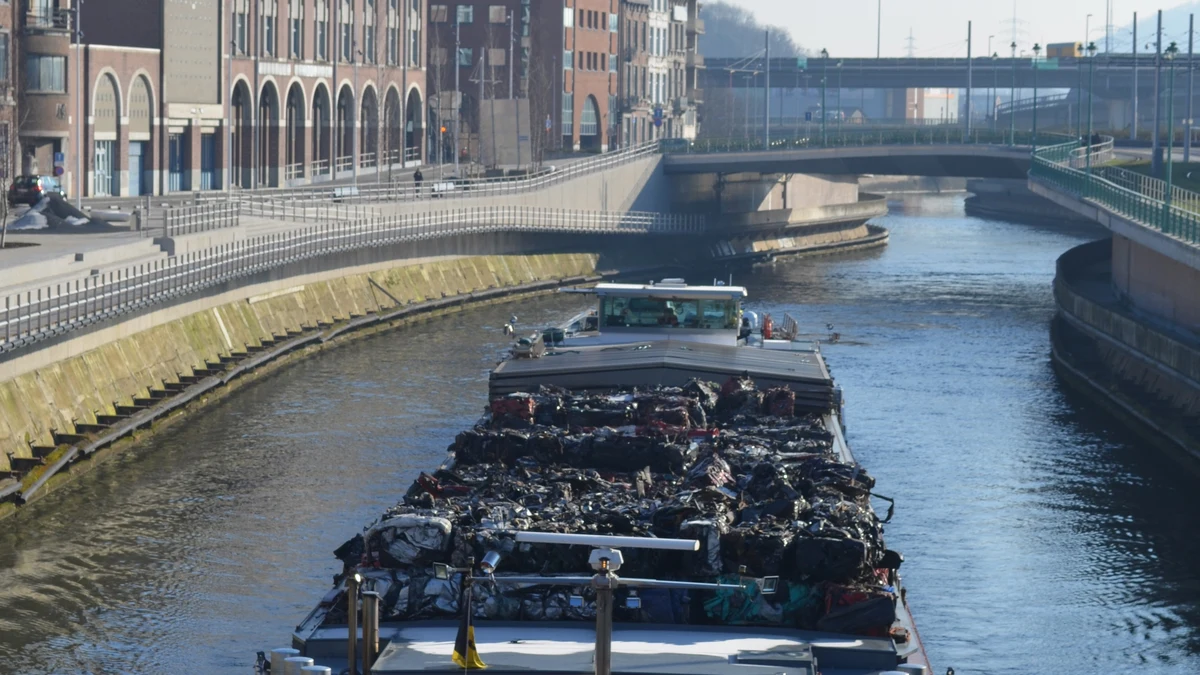
The River Sambre at Charleroi, Belgium, the water source at the center of the permit dispute. (Photo: Jmh2o, CC BY-SA 4.0)
Greenpeace Belgium, which tracked the site with satellite images and drone footage, filed an urgent request with the regional government earlier in the week, arguing that construction had continued for months after the permit was revoked. “Tech giants are not above the law,” said Nadia Cornejo, a spokesperson for Greenpeace Belgium. “We are pleased to learn that the site is now at a standstill.”
The group also pointed to Google’s existing Belgian site at Saint-Ghislain, near Mons, which it says draws 1 billion litres of water a year to cool its data centers, with only a quarter returned. Google has not responded publicly to those figures.
A wider European pattern
Belgium is not the only European country where Google’s building program has run into the permit system this autumn. In October, Finnish authorities ordered work halted at two Google data center sites until mandatory environmental impact assessments could be completed, and Finland opened a criminal investigation into possible breaches of environmental law at a planned site in the country’s rural north.
Wallonia has also moved to tighten the rules. The region announced a framework on November 12 requiring data center projects of at least 25 megawatts to secure a prior partnership agreement with the region, AI Affairs reported.
Why it matters
The halt shows how water and energy have become the binding constraints on the AI infrastructure boom, not just chips and capital. Data centers built to train and run AI models are among the most power and water hungry buildings ever constructed, and regulators in Europe are increasingly willing to stop them mid-build. For Google, the Farciennes site is one of several large investments in Belgium, where the company says it is spending billions of euros and promising hundreds of jobs. The January court hearing will decide whether the larger, water-cooled version of the project can proceed at all.
The episode also fits a wider tension over where AI infrastructure gets built. In the United States, President Trump has threatened a “tremendous tax” on US companies building data centers overseas, while European governments are pressing the same companies over water, energy and planning rules at home.
Sources
- Agence France-Presse, “Google data center construction halted by Belgian authorities” (via Inquirer)
- PPC Land, “Belgian region halts Google data centre over unpermitted 3-hectare building”
- Le Temps, “Belgium forces Google to halt construction of a data centre”
- Crypto Briefing, “Belgian authorities halt Google data center construction over revoked permit”
- AI Affairs, “Wallonia orders Google to stop building a three-hectare datacentre”