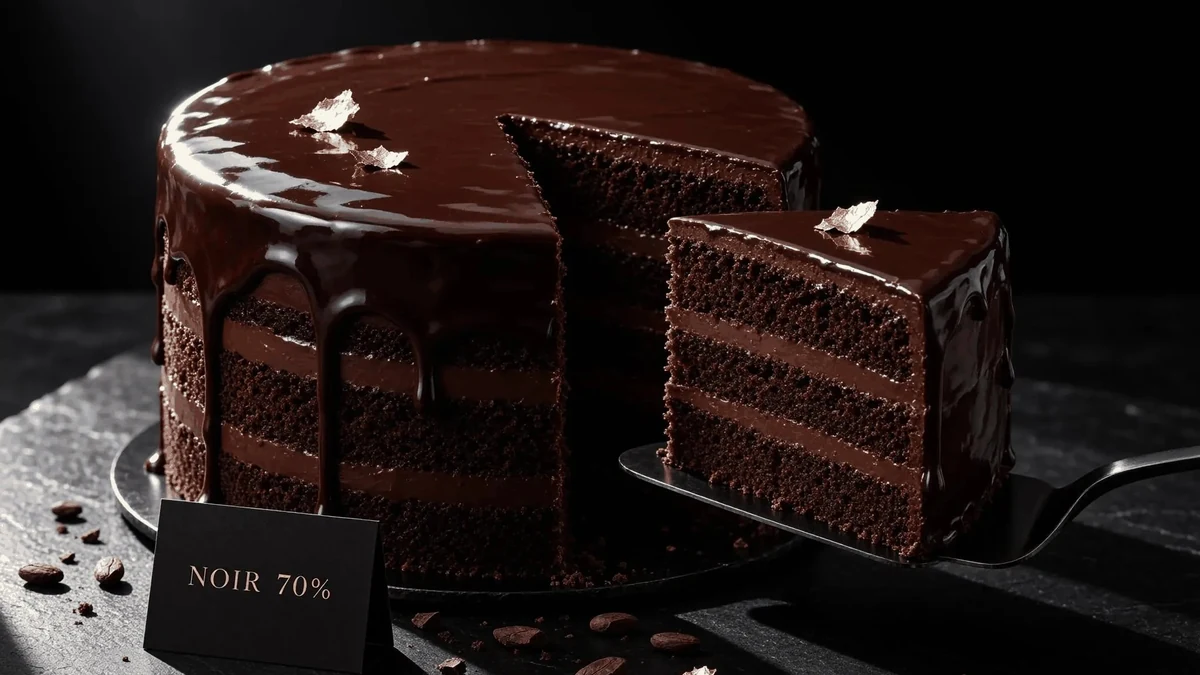
Ant Group’s Bailing team has open-sourced Ming-Image-0.2-Design, a 6 billion parameter image model built for visual design work. Released on November 25, 2026 under the MIT license, the model now sits first among open-weight models on Artificial Analysis’ text-to-image leaderboard, with an Elo score of 1095.
“This release upgrades and open-sources Ming-Image-0.2-Design. The new version improves complex composition, lighting, and text rendering, and can be used to create e-commerce hero images, UI design drafts, and spatial renderings,” the team writes in the official model card.
What Was Announced
Ming-Image-0.2-Design is a design-specialized text-to-image model, not a general-purpose image generator. It targets the visuals designers actually ship: e-commerce hero images, interface drafts and spatial renderings, with an emphasis on clean layouts and legible text. The weights are available now on Hugging Face at inclusionAI/Ming-Image-0.2-Design, with inference code in the Ming-Image repository on GitHub.
The release also refines the line’s layer decomposition feature. The previous generation could already split a design image into transparent layers; this upgrade refines decomposition down to character parts, giving designers editable assets for downstream editing and animation. Paired with Ling-3.2-flash, the model can turn design concepts into interactive pages.
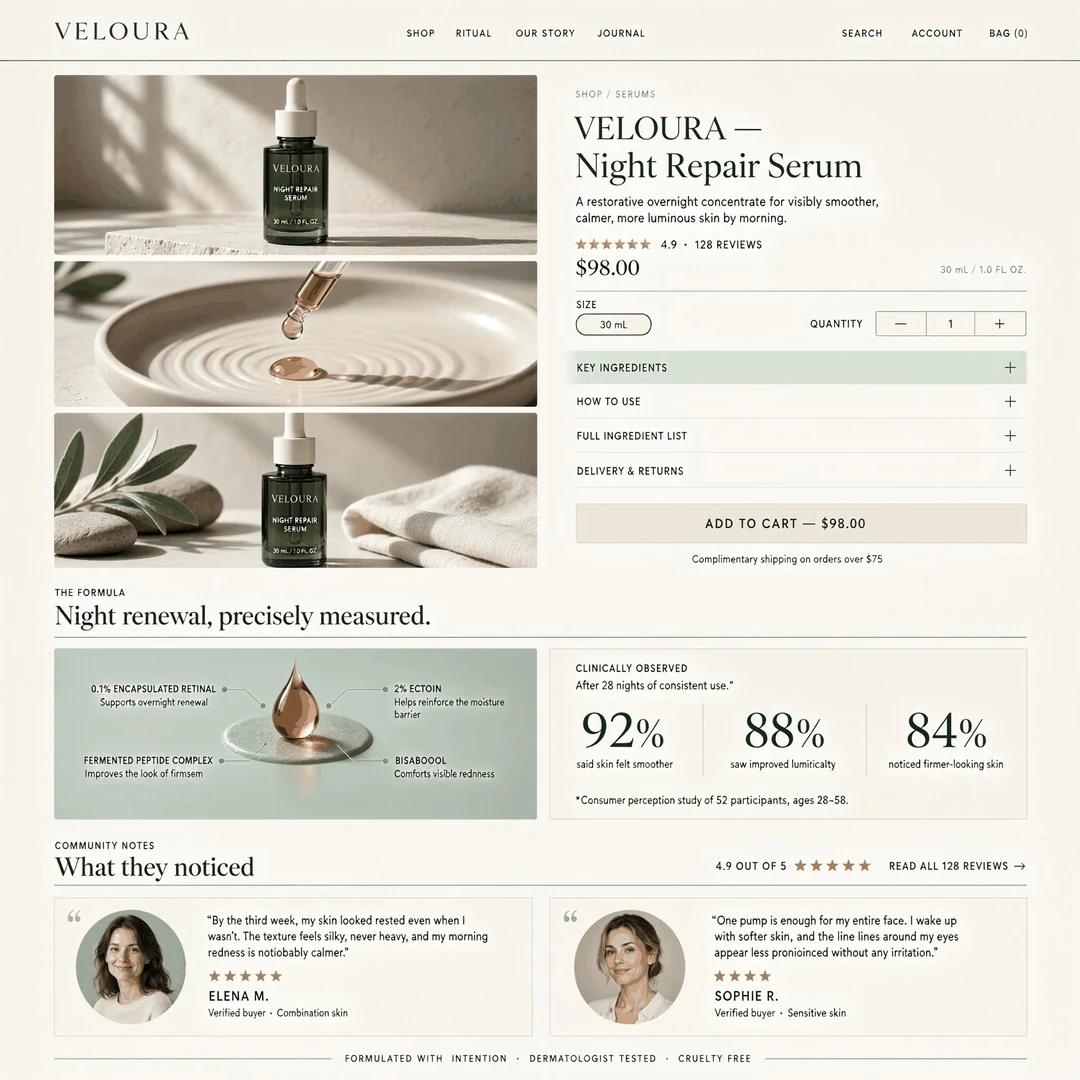
An e-commerce product page designed by Ming-Image-0.2-Design. Image: Ant Group Bailing team / inclusionAI
Benchmark Results
On Artificial Analysis’ AA-Image-T2I v2.1 leaderboard, Ming-Image-0.2-Design scores 1095 Elo from 4,936 human preference votes, ranking 24th overall and first among open-weight models. The next open-weight model, Qwen-Image-3.0-Pro, sits at 1093 Elo, just two points behind. The model card’s own leaderboard snapshot, dated November 25, shows the same first-place open-weight result.
The overall leaderboard is still led by closed models, with OpenAI’s GPT Image 2.6 at 1264 Elo, so the open-weight crown is a narrower claim. But it is a meaningful one: the previous Ming-Image-0.1-Design scored 1001 Elo and led the UI/UX Design category, and the new version has closed much of the gap to the closed frontier in two months.
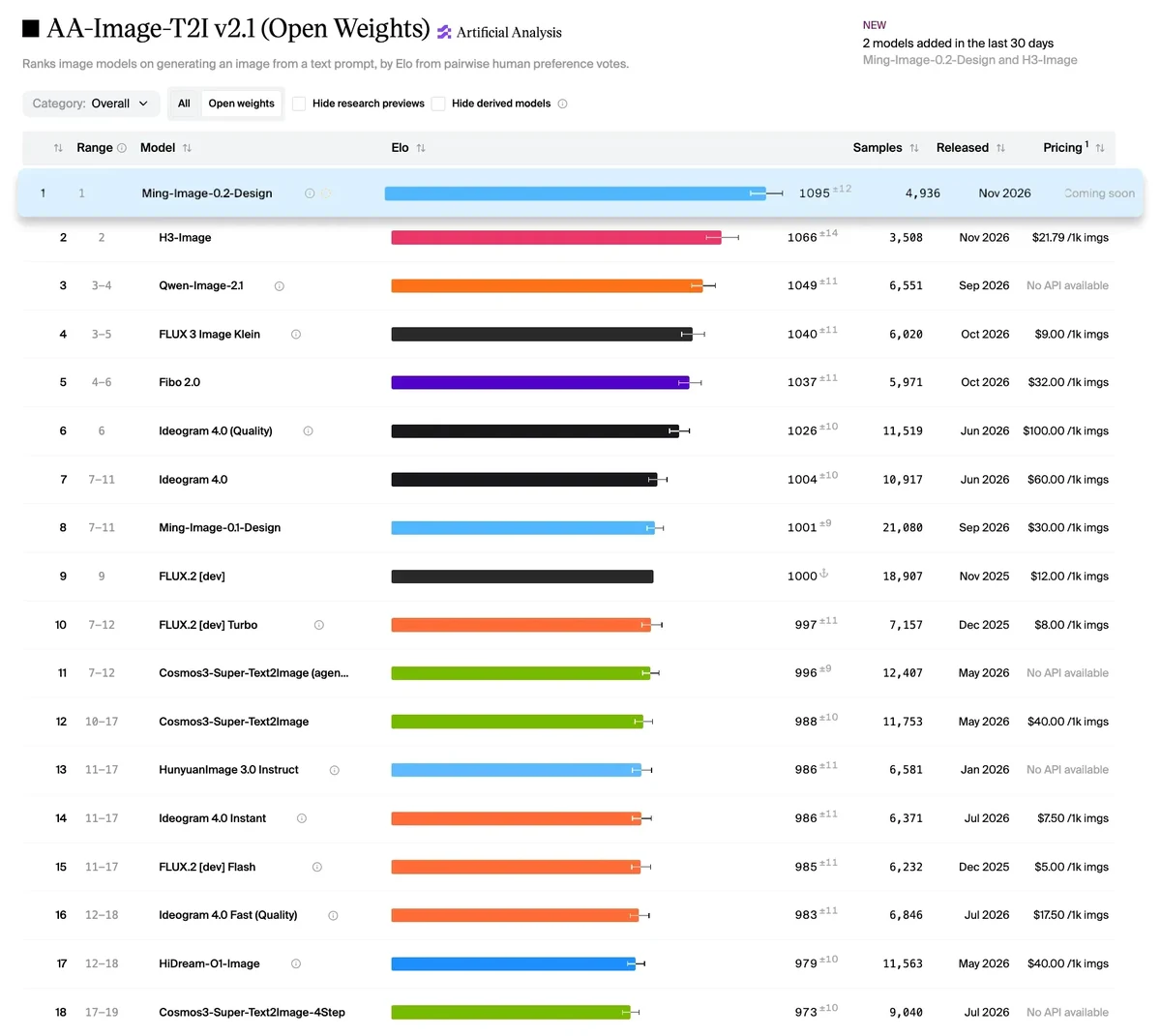
Artificial Analysis open-weights text-to-image leaderboard, with Ming-Image-0.2-Design ranked first at 1095 Elo. Chart: Artificial Analysis
Features and How to Run It
The model is tuned for design workflows. It accepts structured, Figma-style prompts and ships with a prompt enhancer, and the team recommends 2048 by 2048 output by default, with 12 sampling steps, a CFG scale of 1.0 and BF16 precision. The validated setup is a single CUDA GPU with 80 GiB of memory, and vLLM-Omni recipes are provided for serving.
Because the weights are MIT licensed, anyone can download, modify and deploy the model, including commercially. That is a sharp contrast with the closed image models above it on the leaderboard, which are API only and priced per thousand images.
Why It Matters
Design is where image models meet real production work, and it is also where they most often fail: garbled text, broken layouts and unusable layers. A model that renders a clean product page with correct prices, readable reviews and consistent branding is more useful to a working designer than a model that paints prettier pictures. Ming-Image-0.2-Design is built for that job, and its leaderboard result suggests the open-weight field is catching up fast in the category that matters most to commercial users.
For Ant Group, the release also extends the Bailing team’s open portfolio alongside its Ling language models. For the wider open ecosystem, it is another data point that the gap between open and closed image models is now measured in single Elo digits at the top of the open-weight table.