The approval is the first time a US regulator has authorized a constellation designed as data centers in space. It turns a filing SpaceX submitted in January 2026 into a licensed system, with strict deployment deadlines that stretch to 2040.
What the FCC approved
The order, DA 26-1273, was issued by the FCC’s Space Bureau on November 25 and took effect on release. It covers the SpaceX Orbital Data Center System under call sign S00798, and it is marked granted-in-part and deferred-in-part, with conditions attached.
SpaceX may fly up to 1,000,000 satellites in orbital shells 50 km thick at altitudes from 500 km to 1,002 km, using 30-degree and sun-synchronous inclinations. That ceiling is lower than the 2,000 km SpaceX asked for in its original January filing.
The FCC licenses radio links, not the computers themselves, so the order deals mostly with spectrum. Traffic will run primarily over optical laser links to Starlink satellites, while Ka-band radio is cleared only for backup and emergency telemetry, tracking and command. SpaceX must operate those radio links on an unprotected, non-interference basis and coordinate with federal and fixed-satellite operators, and it may only use gateway earth stations already licensed for its Starlink Gen1 and Gen2 systems.
The license runs for 15 years, and its clock starts at 3 a.m. EST on the day SpaceX certifies that the first Starmind satellite is in orbit and fully compliant. SpaceX must also file a final orbital debris mitigation plan before it deploys satellites above 600 km.
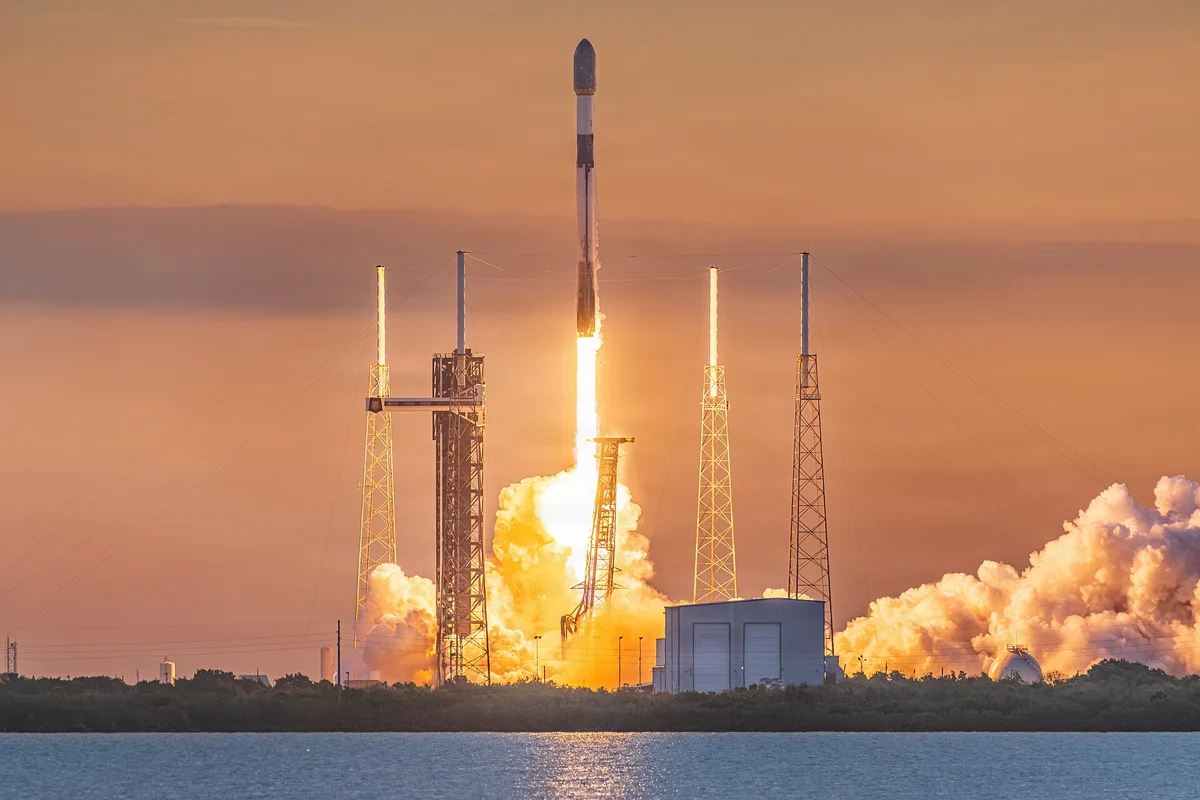
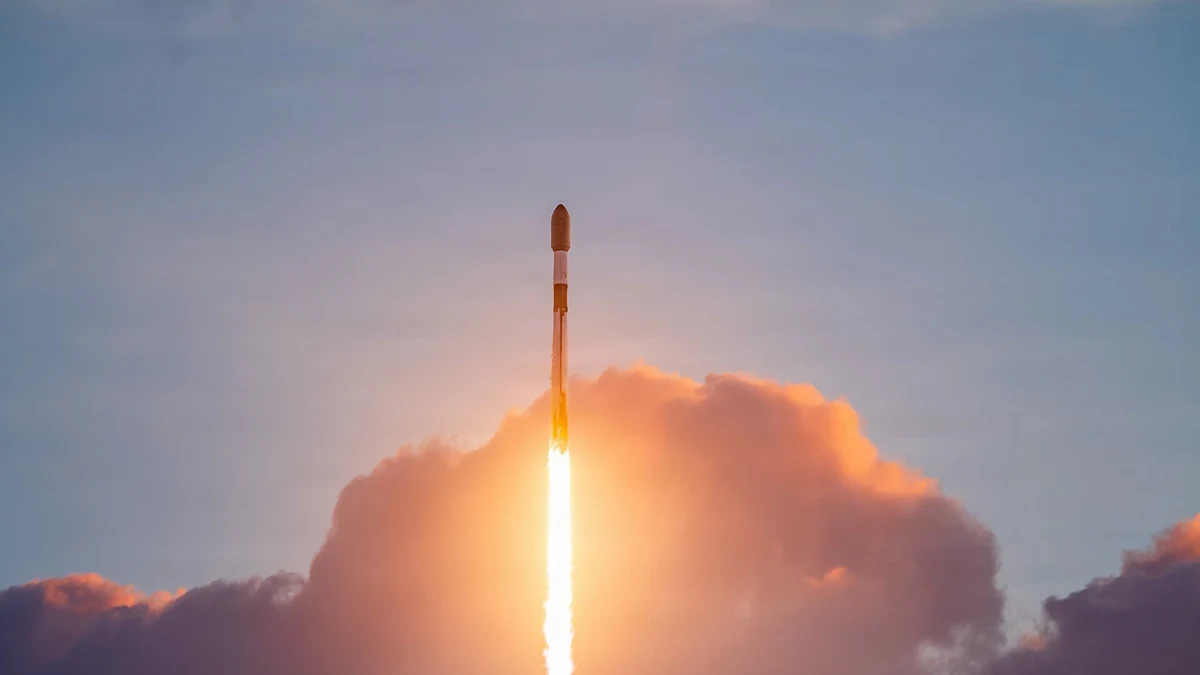
A Falcon 9 rocket carrying Starlink satellites lifts off at sunset. Image: U.S. Space Force (public domain)
A deadline ladder to 2040
The FCC replaced the standard milestone schedule with a longer timeline, but the deadlines are hard. The authorization becomes void if SpaceX misses them:
- November 25, 2033: 1 satellite operating
- November 25, 2035: 100,000 satellites, or 10 percent of the constellation
- November 25, 2038: 500,000 satellites, or 50 percent
- November 25, 2040: 1,000,000 satellites, the full constellation
The agency also denied petitions to deny or defer the filing from Amazon’s Project Kuiper, Viasat and the American Astronomical Society, which had sought to block it.
Why orbit?
Starmind is SpaceX’s plan to move compute infrastructure off the planet. Instead of beaming raw data from satellites down to ground-based data centers for processing, Starmind nodes would process it in orbit and return only the results, using solar power in space. The FCC and SpaceX both frame the idea as a way to sustain US leadership in artificial intelligence as data center construction on Earth strains power grids and water supplies.
There is still a long way from a license to hardware in orbit. No Starmind satellite has flown yet, and launches depend on Starship. Elon Musk said earlier in November that the first Starmind computers could reach orbit in the third quarter of 2027, but he called that date a guess.
Why it matters
A million satellites would dwarf every constellation operating today, and the FCC’s decision gives SpaceX a 15-year runway to try. If the technology works, orbital compute could add a new layer of AI capacity that does not compete for land, grid power or water on Earth. If it stalls, the milestone deadlines give the FCC a way to claw the authorization back, satellite shell by satellite shell.
The approval also sets a precedent. Other companies have filed or announced orbital data center plans, and the FCC has now shown what a license for one looks like: laser links first, radio only as backup, debris rules before high-altitude deployment, and a schedule measured in decades, not years.