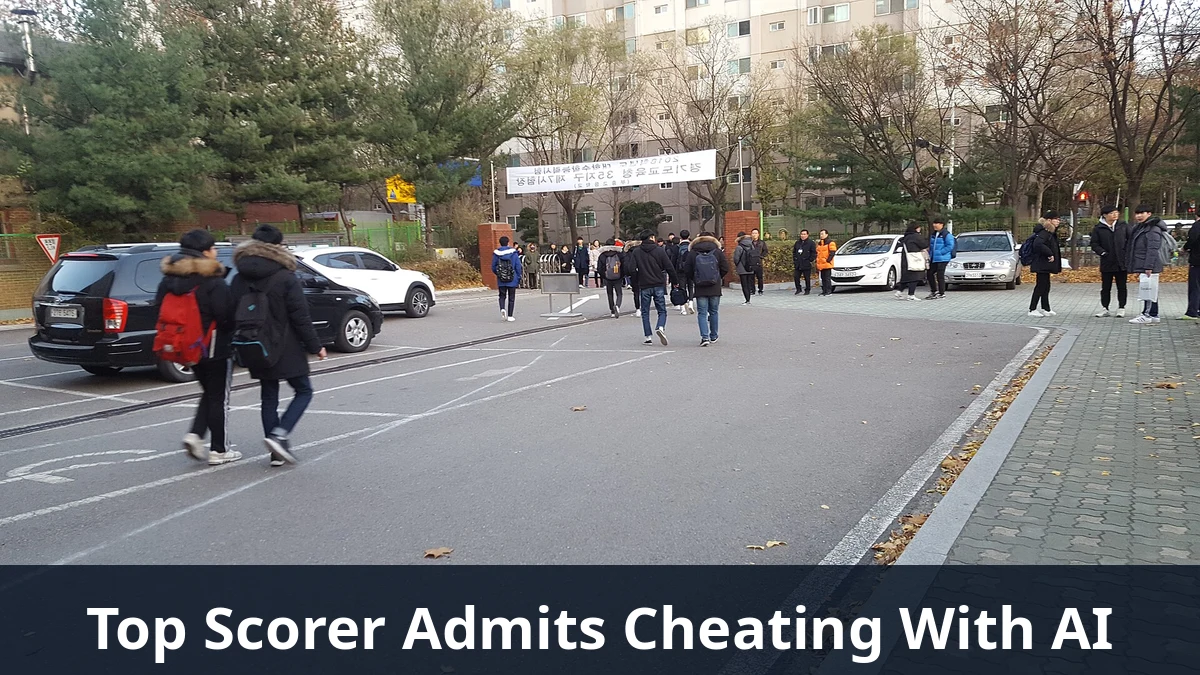
The top scorer on South Korea’s national exam for aspiring tax accountants has confessed to cheating with generative AI, ending months of speculation about results that seemed too good to be true. The confession, made on camera on Sunday, has put fresh pressure on organisers of the country’s high stakes college entrance exam, which takes place this Thursday.
The candidate, identified only by the surname Han, apologised in a video posted on the YouTube channel “Attorney Lee Don-ho”, where he admitted using electronic devices and an AI tool to pass the exam with the top score. Reuters reported the confession on Sunday, November 15.
What Happened?
Han scored near perfect marks on hundreds of questions across two sittings of the national tax accountant exam, taken in April and July this year. The results drew suspicion almost immediately, and speculation about how he achieved them had circulated for months before the confession.
In the video, Han said plainly: “I cheated using electronic devices and generative AI. My passing the exam with the top score was not the result of fair effort.”
Speaking on camera while wearing a face mask, Han added that he had submitted a written confession to Seoul police. A Reuters call to the Seoul Jungbu police station went unanswered on Sunday, so it is not yet clear what action, if any, the police will take.
How the Cheating Worked
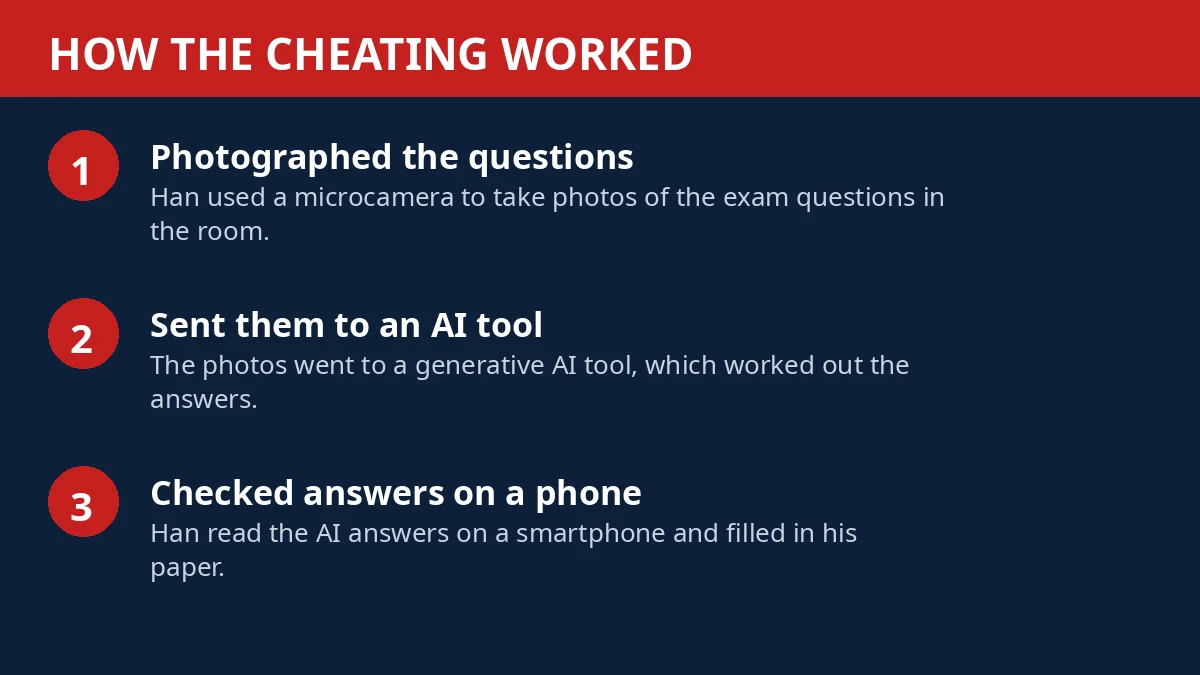
According to Han’s own account, the method was simple and hard to spot in the exam room. He photographed the exam questions with a microcamera, sent the images to a generative AI tool, and then checked the answers on a smartphone.
The setup turned a closed book exam into an open connection to an AI system, with the phone acting as the link between the questions on the paper and the answers the tool produced. Reuters did not name the AI tool involved, and Han did not say in the video how long he had used the method.
Why It Matters
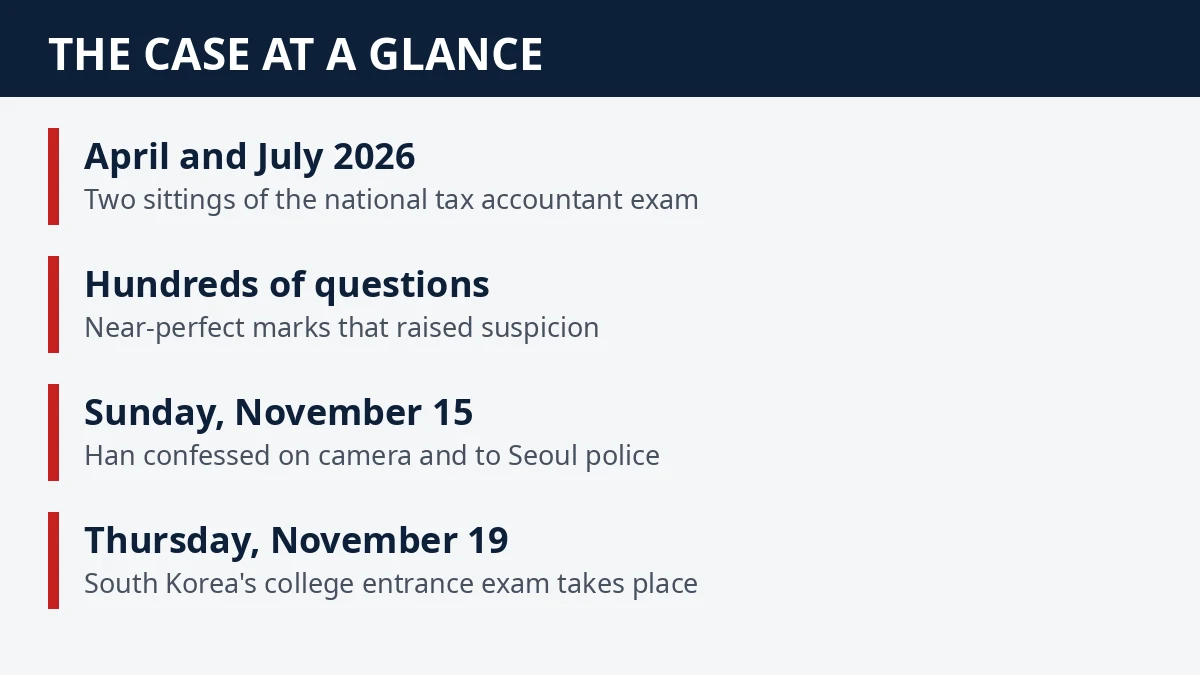
The confession lands days before South Korea’s annual college entrance exam, one of the most high pressure events in the country’s calendar, which many students spend years preparing for. That exam takes place this Thursday, November 19.
Earlier this week, Prime Minister Han Seok-sook acknowledged public concerns about AI cheating ahead of the exam. Her office said the government “will prepare thoroughly in advance and closely oversee the process until the very end to ensure the college entrance exam is conducted fairly and stably.”
The case shows how generative AI has changed the stakes for exam security. Where cheating once meant smuggled notes or a whispered answer, a candidate can now photograph a question, send it to an AI tool, and receive an answer in seconds. For exam organisers, the challenge is no longer only about what candidates bring into the room, but about the devices and connections they can hide.
South Korea is not alone in facing the problem. Schools and exam boards around the world have been tightening rules on phones and wearable devices as AI tools have become faster and easier to use, but the tax exam case is a reminder that determined candidates can still find a way through, and that near perfect scores can themselves be a warning sign.
Whether Han keeps his result or faces charges will now depend on the police and the exam authorities. What is already clear is that the confession has given South Korea’s exam organisers a very public test case, just days before the exam that matters most.