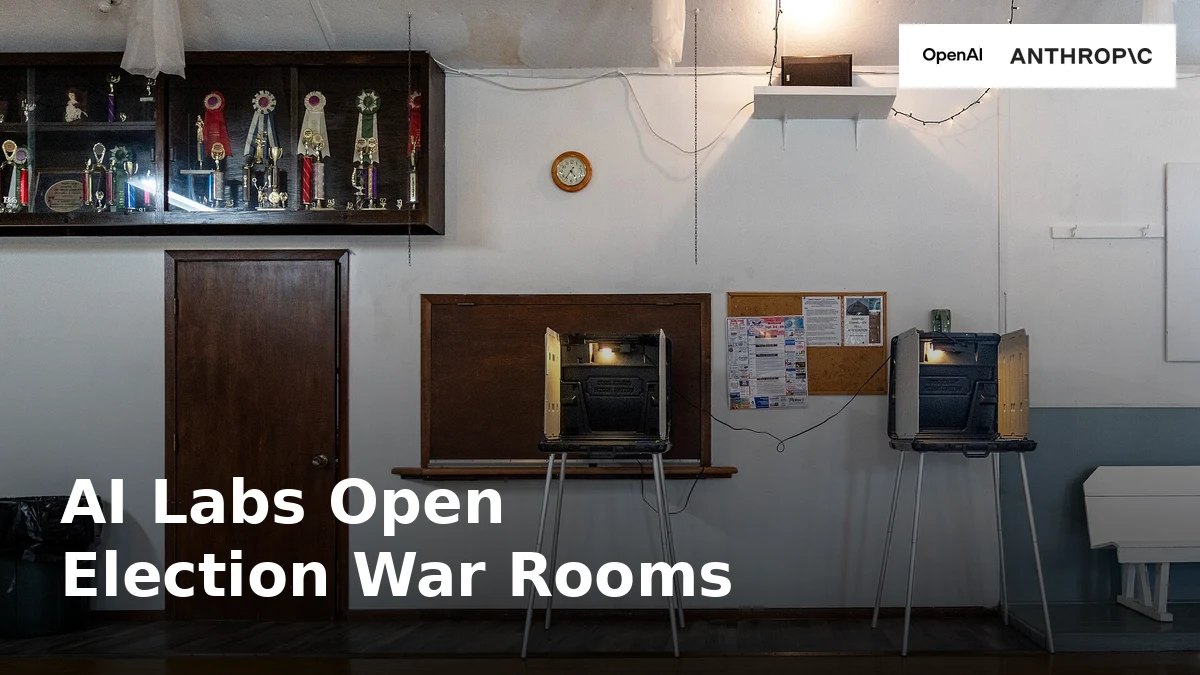
Anthropic has opened its first election “war room” to monitor Claude for misuse during the US midterm elections, joining OpenAI, Google and Meta in an industry-wide push to stop AI-generated disinformation, The New York Times reported on Tuesday.
The companies have set up special operations centers where experts work around the clock to detect attempts to use their tools to spread misinformation, manipulate public opinion and interfere in the electoral process, the Times reported. The threat is no longer just false text: doctored images, videos and cyberattacks are all in scope.
Anthropic’s First War Room
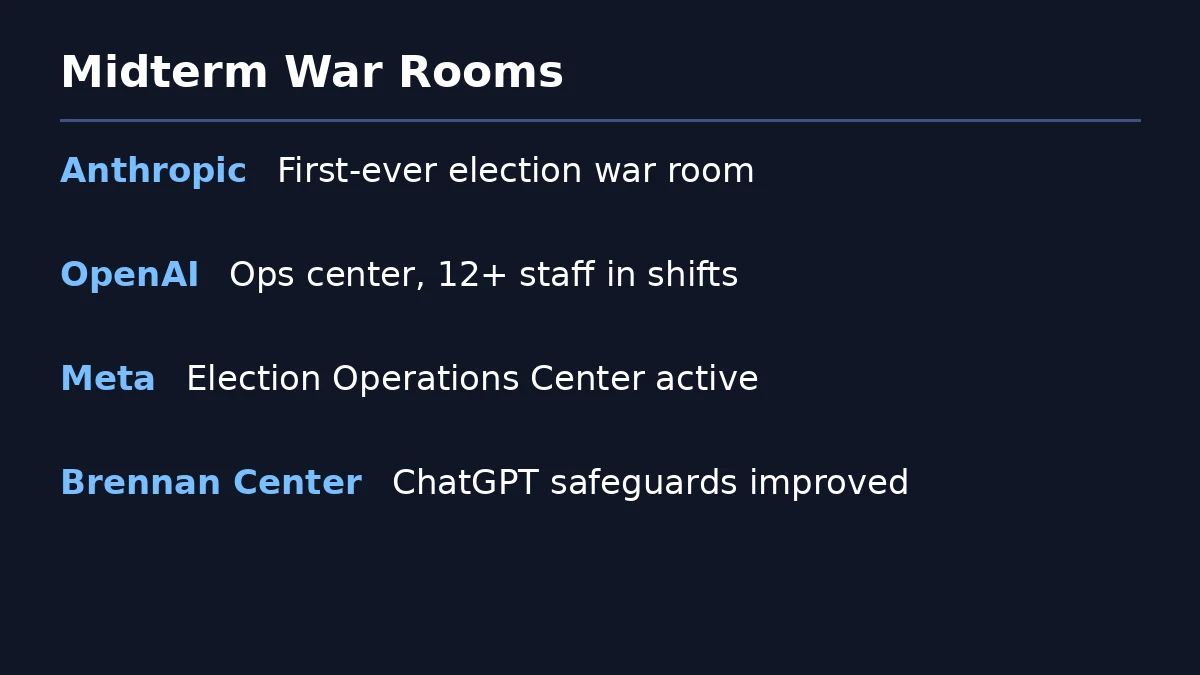
Anthropic has assembled teams of analysts in San Francisco, New York and Washington, DC for its first dedicated election monitoring center, according to the Times. The Anthropic election war room is the company’s first, following a format Meta pioneered in 2018.
“Teams across the company work year-round on strengthening our election-related safeguards and enforcing our policies,” an Anthropic spokesperson told Semafor. “Ahead of the election, we have a dedicated war room monitoring our platform for misuse and ready to quickly respond to any incidents.” The company also deploys automated classifiers trained to detect election-related abuse inside Claude, Nextgov reported.
OpenAI’s Larger Operation
OpenAI’s dedicated center began operations last Thursday at one of its San Francisco offices, with an additional center in Washington, DC, the Times reported. A team of more than a dozen people works in shifts under Josh Lawson, OpenAI’s head of civic and strategic risks.
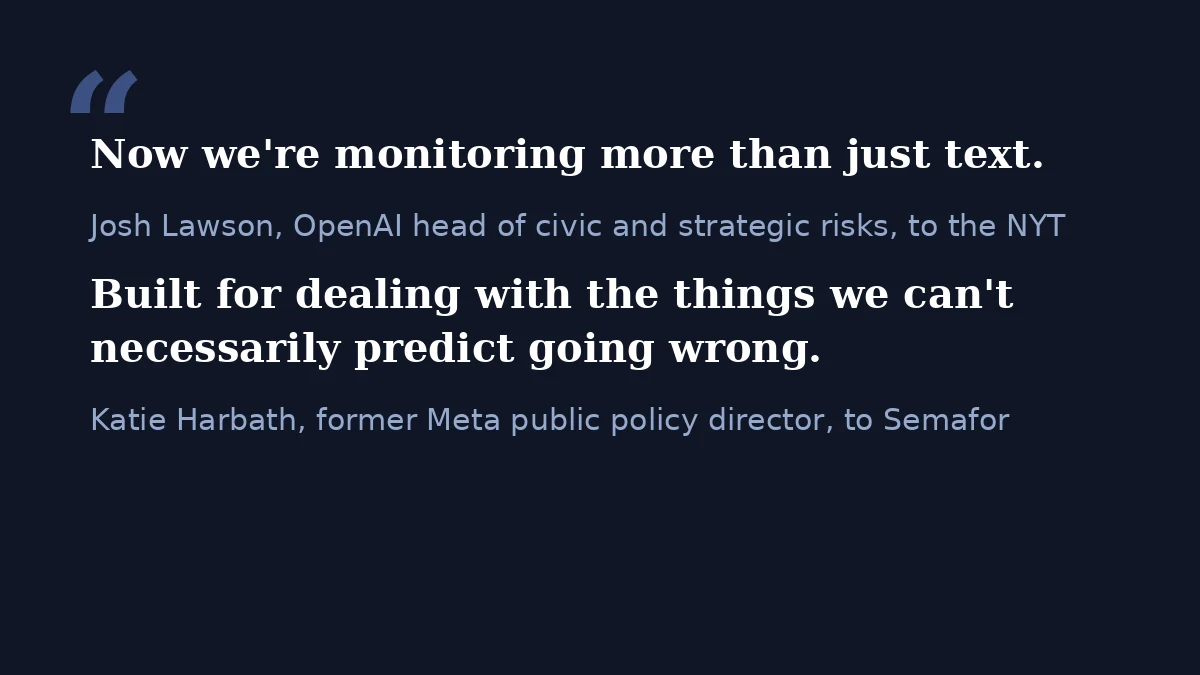
“Now we’re monitoring more than just text,” Lawson told the Times. This year’s operation is significantly larger than the company’s effort ahead of the 2024 presidential election.
OpenAI is also working with Democracy Works to give voters accurate registration and polling information, and with the Associated Press for timely updates, reports said. Last month the company said it had shut down two foreign disinformation campaigns that had tried to use ChatGPT.
Meta and Google
Meta activated its Election Operations Center in the week leading up to Election Day, a system it describes as “a command center we have used for dozens of elections around the world in recent years.” Google did not respond to requests for comment, but last week its AI Mode declined to answer a query about who won the 2020 election; Google said it was working to fix the issue, reports said.
What the Tests Found
An October 22 report from the Brennan Center for Justice at NYU found that ChatGPT had “significantly improved its protections against the creation of election disinformation” since May, but that Google’s Gemini and Meta AI had become more willing to generate convincing fake election images. The study analyzed six image generators: ChatGPT, Gemini, Meta AI, Black Forest Labs’ Flux, Runway and xAI’s Grok.
“It is promising to hear that leading AI technology companies are working hard to ensure their platforms provide accurate information about our midterm elections and immediately detect and interrupt abuse attempts,” Senator Mark Warner, Democrat of Virginia, said in a statement.
Why It Matters
The war rooms are built for surprises. “Built for dealing with the things we can’t necessarily predict going wrong and you need a quick, established process in terms of triaging,” former Meta public policy director Katie Harbath told Semafor. With hundreds of millions of Americans asking chatbots for voting information, the labs are betting that a monitored model is the last line of defense for the vote itself.
Sources
- The New York Times (via UA.NEWS): “OpenAI and Other Tech Giants Have Strengthened Security Against AI-Driven Election Misinformation”
- Nextgov/FCW: “Tech companies brace for AI-driven election misinformation”
- Semafor (via AzerNews): “OpenAI, Anthropic set up first election ‘war rooms'”
- BPDATA: “OpenAI and Anthropic Set Up Election ‘War Rooms’ to Monitor Information Accuracy”
- NewsBytes/Politico: “OpenAI sets up ‘war room’ to monitor US election misinformation”