
More than 400 everyday-looking deepfake apps slipped through the review systems of Apple and Google while hiding tools that generate sexually abusive deepfake images and videos, according to a WIRED investigation published on November 2. The network relied on server-side cloaking to present a benign face to reviewers, then quietly loaded hidden AI features for paying users. All three platforms at the center of the story, Apple, Google and Meta, say they have taken the apps and their ad accounts down.
The report lands at a moment when regulators are already scrutinizing how easily AI-generated abuse material spreads. It is also a rare look at the industrial machinery behind “nudify” apps: not scattered bad actors, but one coordinated, commercially run operation pushing hundreds of disposable apps through official storefronts and tens of thousands of ads.
What WIRED Found
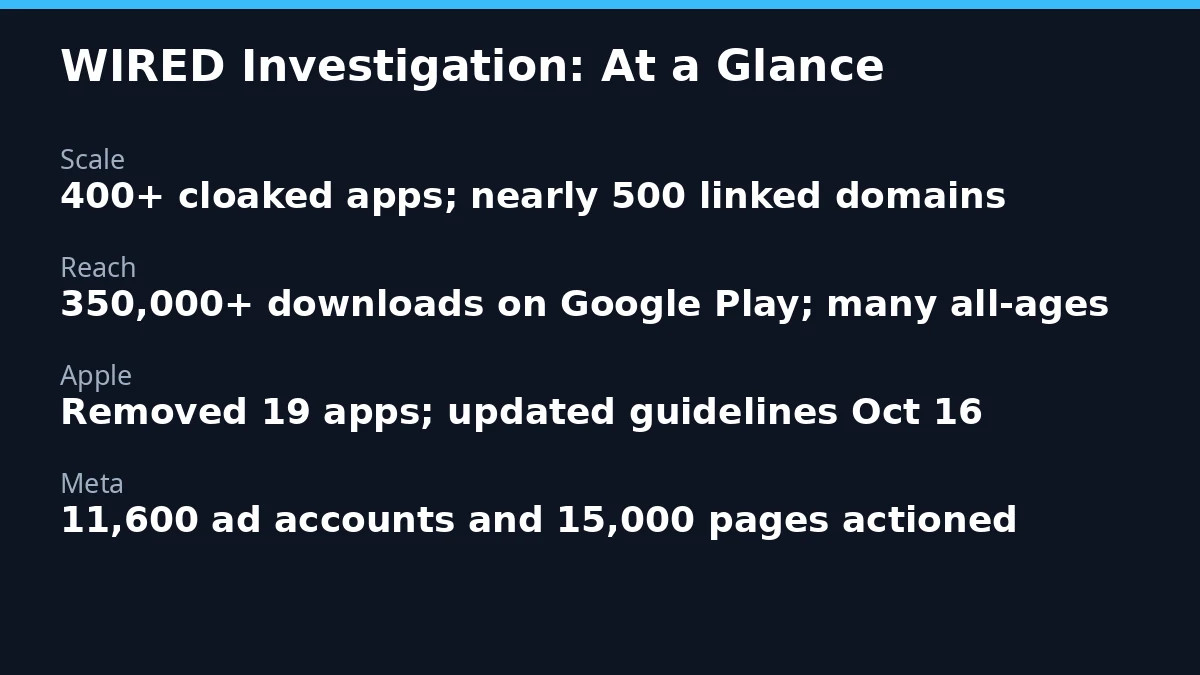
Reporters, working with researchers at the nonprofit AI Forensics and cybersecurity firm Infoblox, identified more than 400 connected apps and web domains that posed as pet portrait generators, language tutors, workout planners and other harmless utilities. Infoblox staff threat researcher Mael Le Touz mapped nearly 500 linked domains, and the apps shared identical JavaScript configurations and cross-referenced encryption keys.
The scale is difficult to overstate. The apps began appearing in late 2025 and at their peak the operators registered around 30 new app and website combinations per week. In September, 27 of the apps were live on Google Play with more than 350,000 combined downloads, many carrying all-ages ratings. One app alone, called DiffAI, logged more than 100,000 installs.

How the Cloaking Worked
The deception was server-side. After installation, the apps contacted remote servers and sent along details such as the user’s language, referral source and a unique identifier. The server then decided whether to display the advertised feature or load a separate web interface that generated sexually explicit and violent AI imagery from photos the user uploaded. Scenes on the hidden interfaces included items named “bedroom rape” and “threatening knife,” WIRED reported.
One example cited in the investigation is Viefur, a pet portrait app that sold 130 coins for about $4 to turn pet photos into “anthropomorphic portraits.” Behind that cover, researchers say, it gave users access to tools for placing real people’s photos into sexually abusive scenarios.
“This is an organized, commercially run operation: one operator behind hundreds of disposable apps and domains, cloaked to pass App Store review and pushed through tens of thousands of Meta ads under fake payer names,” said Paul Bouchaud, a lead researcher at AI Forensics.
The researchers traced the infrastructure to Chinese-language codebases, Chinese hosting services and a Hong Kong-registered entity identified as KeLing Technology Limited, pointing to Chinese comments in the code and watermarks from Chinese video-editing software on promotional materials. The company did not respond to requests for comment.
Apple, Google and Meta Respond
The discovery began with thousands of video ads containing explicit deepfake content published on Facebook and Instagram. Meta, WIRED reported, served thousands of ads promoting the illicit functionality, with some accounts linking directly to listings in Apple’s App Store and Google Play. Users who entered through those funnels could buy generation credits through Apple Pay and Google Pay.
All three companies have now acted:
- Google removed the majority of the flagged titles before WIRED made contact.
- Apple removed 19 apps, including Viefur, after reporters shared their findings. Spokesperson Adam Dema said the submitted apps complied with App Store guidelines during initial review, but the developers later changed the remote websites feeding content to the apps. The company said it has suspended tens of thousands of apps over the past year for similar bait-and-switch behavior and, on October 16, updated its App Review Guidelines to explicitly cover AI-generated nonconsensual intimate imagery and hidden features.
- Meta said it had banned KeLing Technology Limited from advertising in 2025 after it failed to comply with a cease-and-desist letter. Following the researchers’ dossier, the company said it acted against 11,600 ad accounts, roughly 15,000 pages and blocked 209 apps from advertising.
Why It Matters
The investigation builds on earlier WIRED reporting that hundreds of ads for similar apps contained AI-generated child sexual abuse material, including images of real children, and prompted regulatory probes around the world. This new report suggests the pipeline feeding those ads is more organized and more durable than a collection of copycat apps: a single operator, hundreds of storefronts, and a funnel running through the world’s largest advertising and app-distribution platforms.
It also exposes the limits of app review. If an app’s abusive behavior only appears after a remote server decides the coast is clear, static review of the submitted package cannot catch it. Apple’s October guideline update signals that platform owners now treat server-side cloaking as a distinct threat category. Whether review processes can actually detect it remains an open question, and the researchers’ own finding that 350,000 downloads accumulated before removal shows how much damage can happen in the gap.
Sources
- Silicon Report, “Wired finds over 400 domains and apps hid explicit AI features”, November 2, 2026
- AppleInsider, “Hundreds of AI apps were part of a network hiding sexually abusive deepfake tools”, November 2, 2026
- AI Weekly, “WIRED traces 400+ AI apps hiding abusive deepfake tools”, November 2, 2026
- Online Tech Guru, “Hundreds of Mundane AI Apps Are Hiding Sexually Abusive Deepfake Features”, November 2, 2026