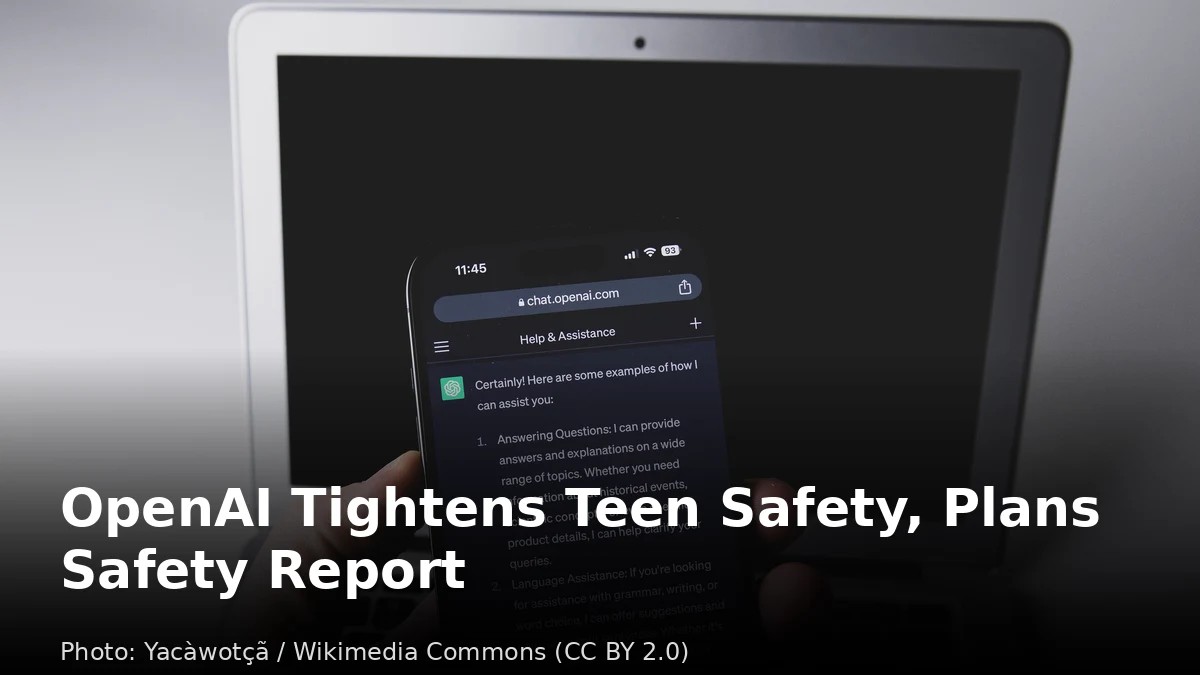
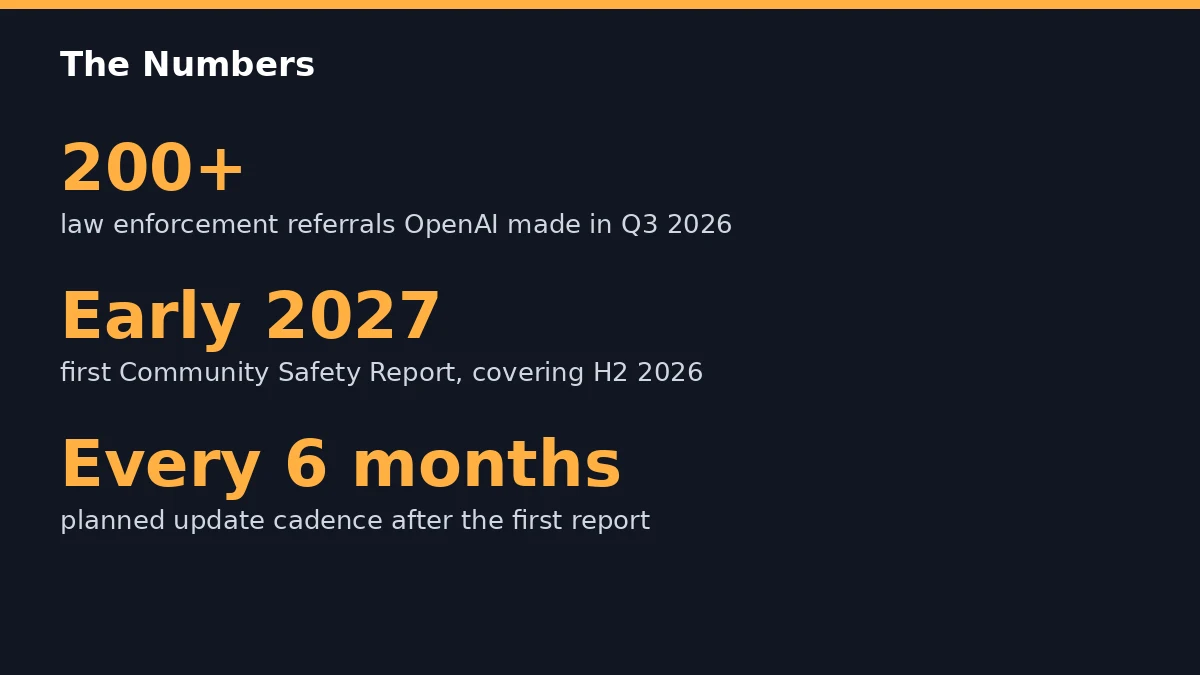
OpenAI announced on October 30, 2026 a new Community Safety Report on violence prevention, alongside tighter ChatGPT limits on weapons-related information for teens and new restrictions on how the chatbot discusses past mass attacks. In the announcement, the company also disclosed that it “made over 200 law enforcement referrals in Q3 2026” over imminent threats of violence spotted on its platform.
The changes, which OpenAI says will begin rolling out over the next few weeks, land amid growing pressure from parents and state officials over how chatbots handle young users and risky conversations.
The New Community Safety Report
OpenAI is committing to a recurring public report covering violence prevention and other community safety issues, plus the effectiveness of its own safeguards. The company said each report will explain how it trains systems to detect, investigate and respond to safety issues, share anonymized examples of how violence-related harm shows up in practice, highlight new mitigations and policy changes, and include supporting data.
“We will publish our first report in early 2027, covering the second half of 2026, with updates every six months thereafter,” the company said. The promise shifts OpenAI from quietly enforcing rules to publishing regular numbers that regulators, parents and researchers can check.
Tighter Boundaries for All Users
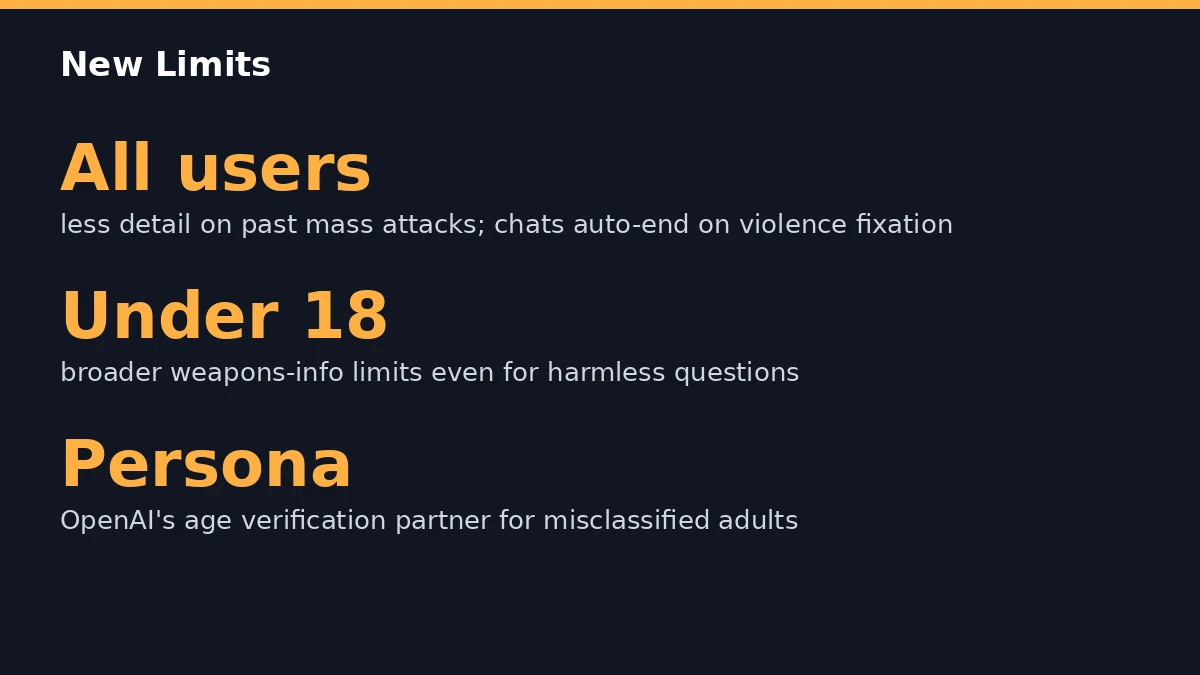
OpenAI said its models are already trained not to give instructions that would help someone plan or carry out violence. The new policy goes further on content about past attacks: ChatGPT will now provide less detailed information about past mass attacks and the people who carried them out, even when that information is available from other online sources.
The tightened rules restrict reconstructions of past mass attacks, including details about the weapons and equipment used and how they were obtained, as well as detailed comparisons on the scale of harm that OpenAI said could amplify an attacker’s notoriety. “These limits apply regardless of a user’s age or reason for asking.”
The company is also building on work it described in May, when ChatGPT began using short, factual summaries of earlier warning signs to respond more carefully in later chats. When recent chats show warning signs of possible violence, ChatGPT will now respond more conservatively when sharing information that could be misused. And when a conversation shows signs that someone is fixating on violence or the idea of seriously harming another person, “ChatGPT will be able to automatically end the chat to interrupt that pattern in the moment.” If the system ends multiple chats for that reason, OpenAI may temporarily pause the account.
More Protections for Teens
For users under 18, OpenAI is extending its existing ban on helping teens find or obtain weapons to cover practical information about weapons and security systems that could be misused to facilitate violence, even when a question appears harmless and shows no sign of violent intent. Teens will still be able to use ChatGPT to help prevent and de-escalate violence, seek support and connect with a trusted adult.
The company said it has strengthened its age prediction system, which analyzes signals such as behavior patterns to estimate whether a user may be under 18, so it can continually reassess users and move them into the under-18 experience when appropriate. Adults incorrectly placed in the teen experience can confirm they are adults through Persona, OpenAI’s age verification partner, and have the extra protections removed.
On parental controls, OpenAI said it is working on a new alert that would notify parents if their teen’s account is paused for repeatedly discussing violence. Linked parent-teen accounts already receive alerts when trained reviewers spot serious self-harm concerns, and since July, when a teen’s account is deactivated for violating violence rules.
Why It Matters
Chatbot makers are under real pressure to show their safeguards work. Earlier this month, eight states sued OpenAI over claims that ChatGPT failed to protect young users, and New York recently passed an AI chatbot law aimed at child safety. A twice-yearly public report would give regulators and researchers something concrete to check, echoing a wider industry shift toward published safety reporting.
The caveat, which OpenAI itself would likely accept, is that these are the company’s own descriptions of its plans. How well age prediction, automatic chat endings and the new refusal boundaries work in practice will only become clear once they roll out and outside groups can test them. The first Community Safety Report, due in early 2027, will be the first chance to judge the numbers against the promises.
Sources
- OpenAI: Community safety report and new protections for teens (Oct 30, 2026)
- AI Parabellum: OpenAI Adds ChatGPT Teen Weapons Limits and a Community Safety Report (Oct 30, 2026)
- Unite.AI: OpenAI Announces Community Safety Report and New Teen Weapons Limits (Oct 30, 2026)
- CNBC-TV18: ChatGPT could now end conversations that show fixation on violence (Oct 30, 2026)