When a message leaves you unsure, a specific question is often more useful than guessing. You can ask for clarification without blaming the other person or apologizing for needing information.
These 48 messages cover everyday plans, instructions and work conversations. Choose one that fits, replace the example details, and ask only the question you need answered. They are starting points—not a promise that every conversation will go smoothly.
Choose a clear, answerable question
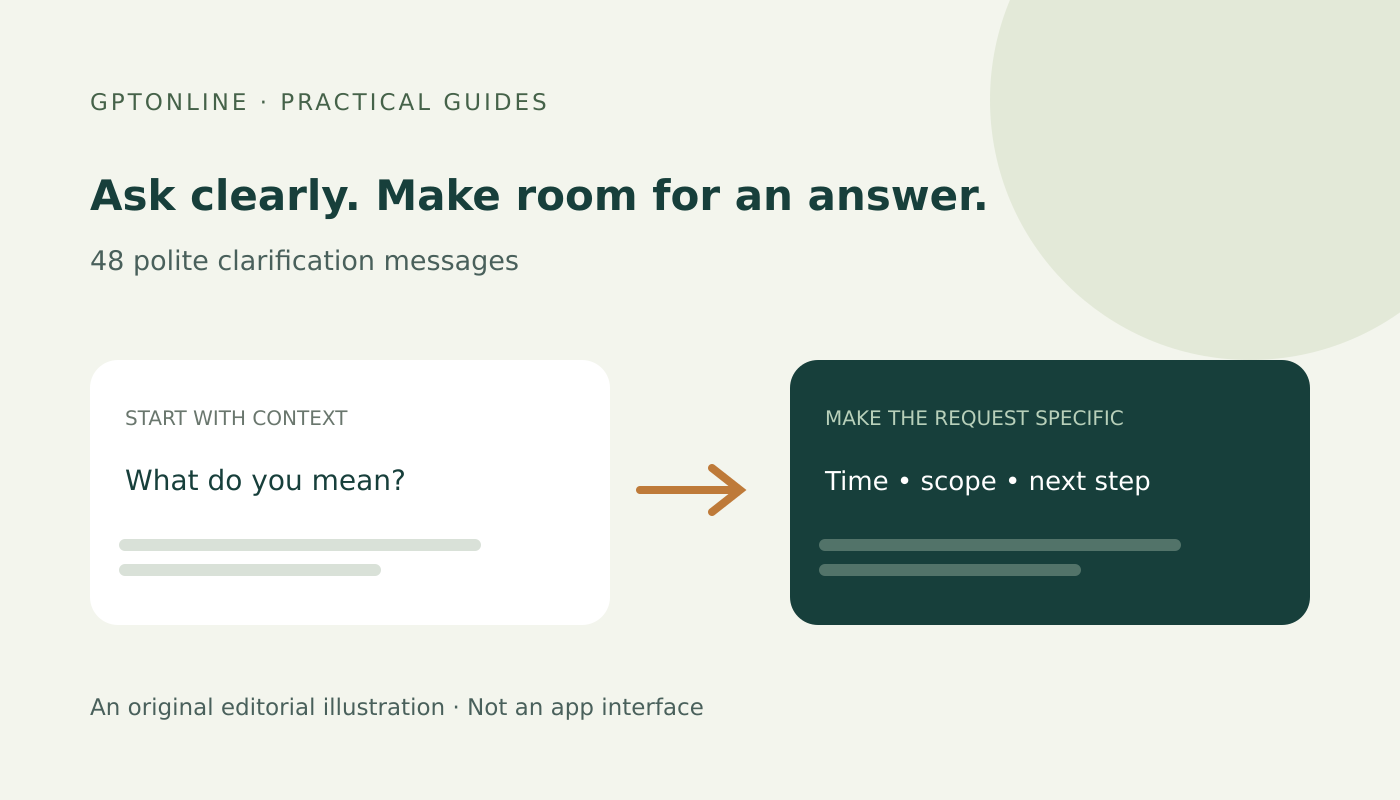
Name the part you understood, then identify the missing detail. “Do you mean the draft or the final version?” is easier to answer than “What do you mean?” If several things are unclear, put the most important question first. Avoid sending a list of guesses that makes the other person do all the work.
When a short message could mean two things
- Just to check, do you mean we should start now or wait until everyone arrives?
- When you say “the first one,” do you mean the first photo or the first option in the message?
- I’m not sure which part you’d like me to change. Could you point me to it?
- Do you mean that the plan has changed, or are you suggesting another option?
- I understood the main point. Could you explain what you mean by “keep it simple” here?
- Are you asking for my opinion, or would you like me to make the final choice?
- Before I reply properly, could you tell me which message you’re referring to?
- I may be reading this differently than you intended. Could you say a little more?
Clarifying a time, place or everyday plan
- Does “after lunch” mean around one, or would later in the afternoon suit you better?
- Which entrance should we meet at? I don’t want us waiting in different places.
- Are we meeting at the café itself or at the station first?
- When you say Friday evening, what time did you have in mind?
- Should I bring something to share, or is everything already covered?
- Is this just for the two of us, or are other people joining?
- Would you like me to book a table, or are we keeping the plan flexible?
- Could you confirm the address? I found two places with the same name.
Understanding instructions before you begin
- I’m ready to start. Which step would you like me to do first?
- Should I follow the written instructions or the changes we discussed today?
- Could you show me one example of what the finished result should look like?
- Am I replacing the existing version or making a separate copy?
- Should I include everything in this folder, or only the files you mentioned?
- I understand the first two steps. What should happen after I finish those?
- Is there a particular format you need, or can I choose one that is easy to read?
- Before I make a change that is hard to undo, could you confirm exactly what should be removed?
Clarifying scope and deadlines at work
- For this deadline, do you need a rough outline or a completed draft?
- Which part is the priority if there isn’t time to finish everything today?
- When you say “end of day,” which time zone and cutoff should I use?
- Should this update cover the whole project or just the work completed this week?
- Who should review this before I share it with the wider group?
- Does this request replace the earlier task, or should I keep both on the list?
- Could you confirm whether the examples belong in the document or in a separate attachment?
- I can prepare the information. Are you also asking me to make a recommendation?
Checking your understanding of feedback
- When you say the introduction feels too long, is there a section you would shorten first?
- Would a more direct tone help, or is the main issue the amount of detail?
- Could you give me an example of the wording you found unclear?
- I want to address your feedback accurately. Is your concern the idea itself or how I explained it?
- Should I keep the structure and revise the examples, or rethink the order as well?
- What would make this more useful for the person reading it?
- Of the changes you mentioned, which one matters most for the next version?
- Let me check I understood: keep the main message, but make the request more specific. Is that right?
When you need another explanation
- Thanks for explaining. I’m still unsure about the last part—could we go through that once more?
- I follow the example, but I’m not sure how it applies to this situation. Could you connect the two?
- Could you put that another way? I don’t want to agree before I understand it.
- I think I missed a step between those two points. What happens in the middle?
- Would it help if I described how I’m understanding this so you can correct anything I’ve missed?
- I’m getting stuck on that term. What does it mean in this particular context?
- Could we narrow this down to the one decision we need to make now?
- I understand it better now. Before we move on, can I check one remaining detail?
Before you send
Remove unnecessary apologies, keep the question neutral, and give the other person enough context to answer. If the message concerns a sensitive disagreement, a short conversation may be clearer than a long exchange of texts. Do not use these examples to pressure someone into explaining a personal boundary.
If the detail is already settled and you only need a final check, use our messages to confirm plans without pressure. If you are asking someone to do extra work rather than explain an existing request, try a clear, considerate favor request.