China has cleared DeepSeek and MiniMax to deploy their AI models overseas, according to a Chinese state media account, the first public signal that Beijing’s new export-control rules will not choke off its open-source AI industry’s global expansion. The news landed days after the government proposed tightening oversight on AI technology transfers, a move that had rattled observers of China’s fast-growing open-weight ecosystem.
The disclosure came from Yuyuan Tantian, an influential social media account affiliated with state broadcaster CCTV, which reported on Thursday evening that the two companies had completed the required export registrations and proceeded with open-source releases and overseas licensing activities. Bloomberg carried the same report, noting the approvals cover a wave of homegrown AI technologies Beijing will allow to operate globally.
What Was Announced?
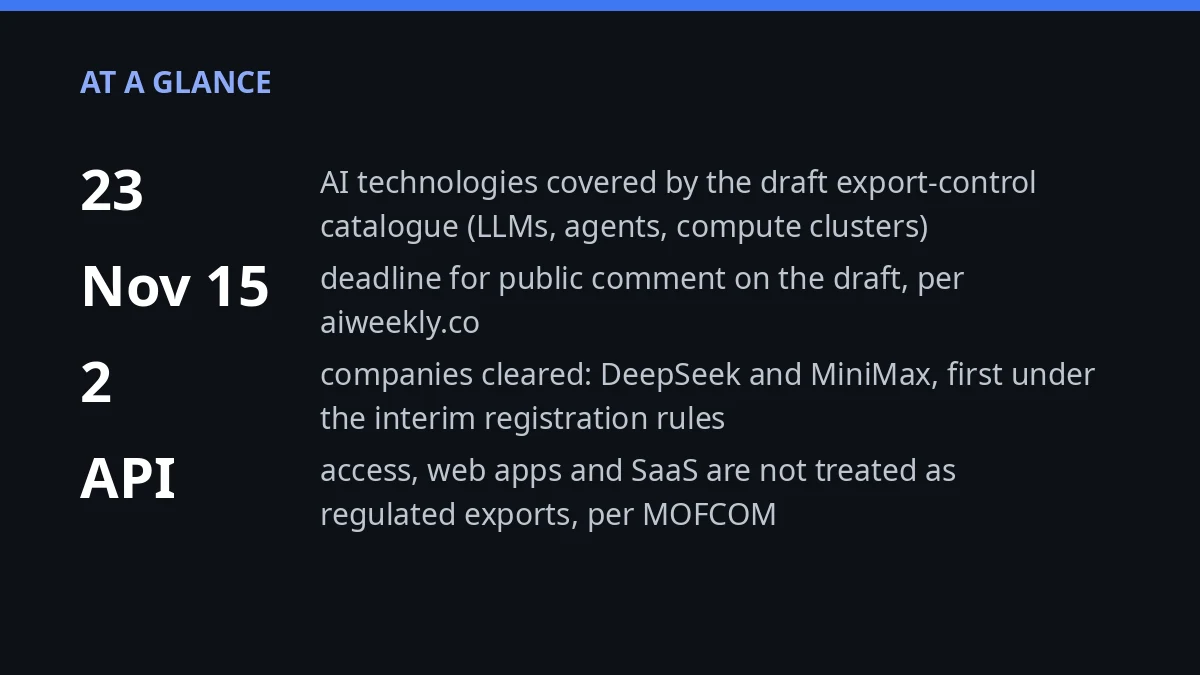
Last week, China’s Ministry of Commerce (MOFCOM) and Ministry of Science and Technology proposed adding export control restrictions and prohibitions to 23 AI-related registration for covered technologies, which raised fears that Chinese AI companies could be cut off from overseas markets just as their open-weight models were gaining international adoption.
Yuyuan Tantian said DeepSeek and MiniMax had since completed the registration process, as well as the procedures for open-sourcing and authorising overseas use. The post addressed the speculation head-on: “Since the policy was announced, leading companies DeepSeek and MiniMax have successfully completed the registration process, as well as the procedures for open-sourcing and authorising overseas use,” it said, adding that “AI companies can continue their commercialisation efforts as usual.”
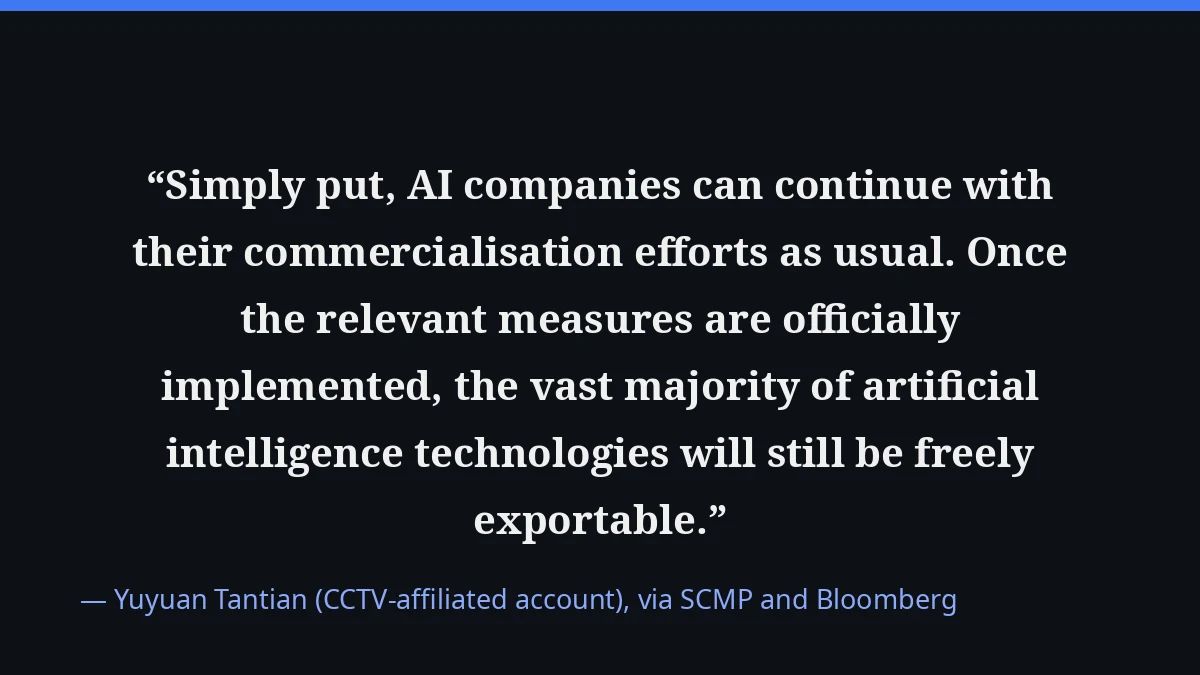
The account stressed that the measures are intended to set clearer regulatory boundaries, not to close the door on exports: “Simply put, AI companies can continue with their commercialisation efforts as usual. Once the relevant measures are officially implemented, the vast majority of artificial intelligence technologies will still be freely exportable.”
Graphic: GPTOnline, using DeepSeek and MiniMax assets
How the Rules Draw the Line
A MOFCOM spokesperson said last week that overseas access to Chinese AI models through application programming interfaces, official websites and mobile applications would not be covered by the proposed controls. For open-sourcing AI technologies, the spokesperson said expedited “automatic licensing” would apply, as fast as “immediate reporting and export”.
What is covered are transfers of technology ownership, overseas licensing arrangements and changes in ownership or control involving foreign entities. Companies must register such transactions with MOFCOM before proceeding. The draft catalogue remains open for public comment through November 15, according to AI Weekly.
The distinction matters: Beijing is separating the service (which it will continue to encourage abroad) from the underlying technology transfer (which it wants to control for national security). Yuyuan Tantian drew a deliberate contrast with Washington’s approach, claiming China “is not taking the path” of using export controls to isolate competitors and maintain technological leadership.
Why It Matters
Both companies have moved quickly on open releases in recent days. Hangzhou-based DeepSeek upgraded its V4.1 Flash model and open-sourced DeepInfer, its in-house large-scale inference framework, while Shanghai-based MiniMax open-sourced its M3.1 model, the SCMP reported. The registrations give those releases regulatory cover at home.
The timing is charged. On Tuesday, the US Department of Homeland Security ordered all US federal civilian agencies to remove DeepSeek and third-party tools built on it, a move Beijing called discriminatory. Days later, Bloomberg reported DeepSeek had raised roughly $15 billion, one of China’s largest-ever funding rounds, with investors including CATL and Tencent. MiniMax, which went public in Hong Kong in January, remains one of China’s most prominent open-model players.
A word of caution from careful observers: the approvals rest on the state-affiliated account’s report, which has been carried by Bloomberg and the SCMP but has not been confirmed in a formal company or ministry announcement. Registration also should not be read as a blanket export approval for every future technology. But the message Beijing is projecting is unmistakable: it wants its labs competing globally, under rules it writes.
Graphic: GPTOnline, using DeepSeek and MiniMax assets
Sources
- South China Morning Post: DeepSeek, MiniMax secure open-source licences days after new China export rules
- Bloomberg (via The Edge Malaysia): DeepSeek, MiniMax win approval for global use, state media says
- AI Weekly: China Clears DeepSeek and MiniMax as First AI Vendors Approved to Open-Source and License Models Overseas
- AI Affairs: DeepSeek and MiniMax complete registration under China’s draft AI export rules