European Union leaders held their first dedicated summit on artificial intelligence in Dublin on Friday, November 13, hearing briefings from Mistral chief executive Arthur Mensch and Nobel laureate Geoffrey Hinton on how Europe can catch up with the United States and China. The informal meeting produced no formal conclusions, but European Council President António Costa said leaders will return to the topic at a meeting in Alden Biesen on February 5, 2027.
“Today, the European Leaders had their first in-depth discussion on Artificial Intelligence. AI is the most important technology of our time,” Costa said in remarks published after the meeting. “Europe must make the most of its benefits, from higher productivity to better public services. We must also manage the risks effectively.”
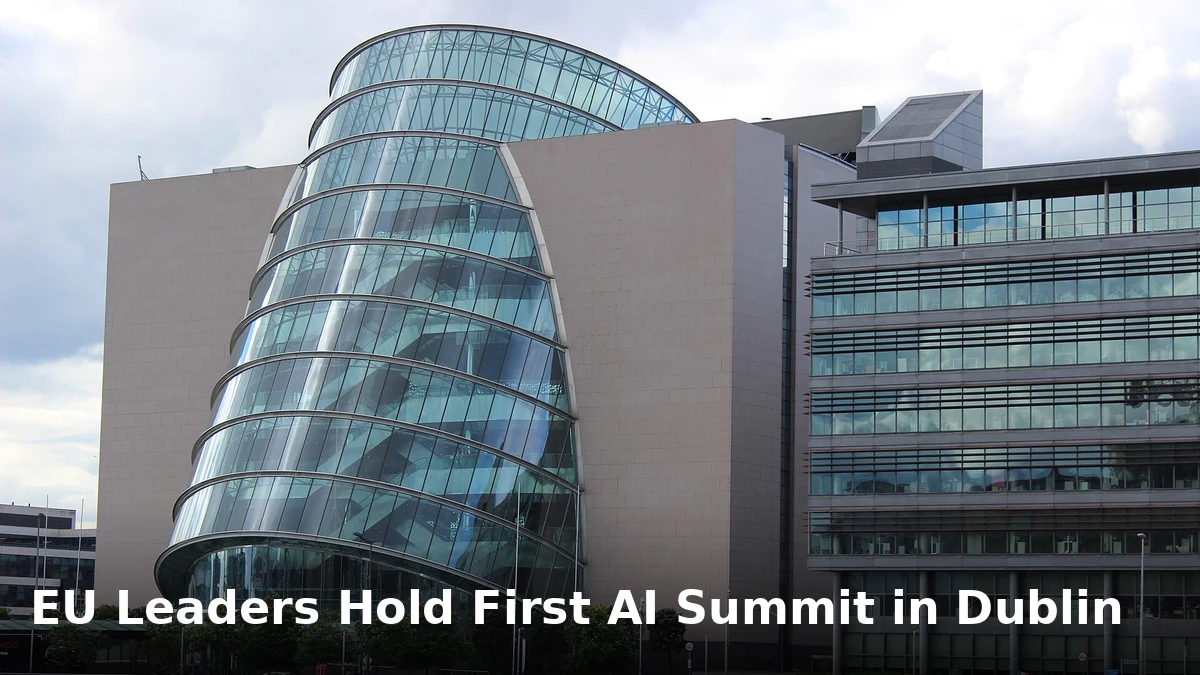
The meeting, hosted by Irish Taoiseach Micheál Martin at the Convention Centre Dublin, brought together the heads of state or government of all 27 member states. It followed the European Political Community summit held at the same venue the day before, and it was the first time EU leaders had devoted a summit entirely to artificial intelligence.
Two strands: competitiveness and safety
Costa said the discussion ran along two lines. The first was how artificial intelligence can boost Europe’s competitiveness and make the bloc a leading and sovereign player in key areas of the AI value chain. The second was the far-reaching impact of AI on societies, including how to keep the technology safe and accountable.
“Europe has real strengths: we have skilled talent, world class research and a dynamic start up scene,” Costa said. “Now is the time to translate them into real advantages. That will depend on the choices we make,” above all on investment in competitive AI models, secure value chains and access to affordable and clean energy.
On safety, Costa was blunt about the stakes. “Clear oversight for managing the risks and challenges of AI is a pre-condition for public trust. Without trust, AI strategy cannot succeed.” He noted that the European Union is the first region in the world with an AI governance framework, and said the bloc should use that experience to shape global standards in the G7, the G20 and the United Nations.
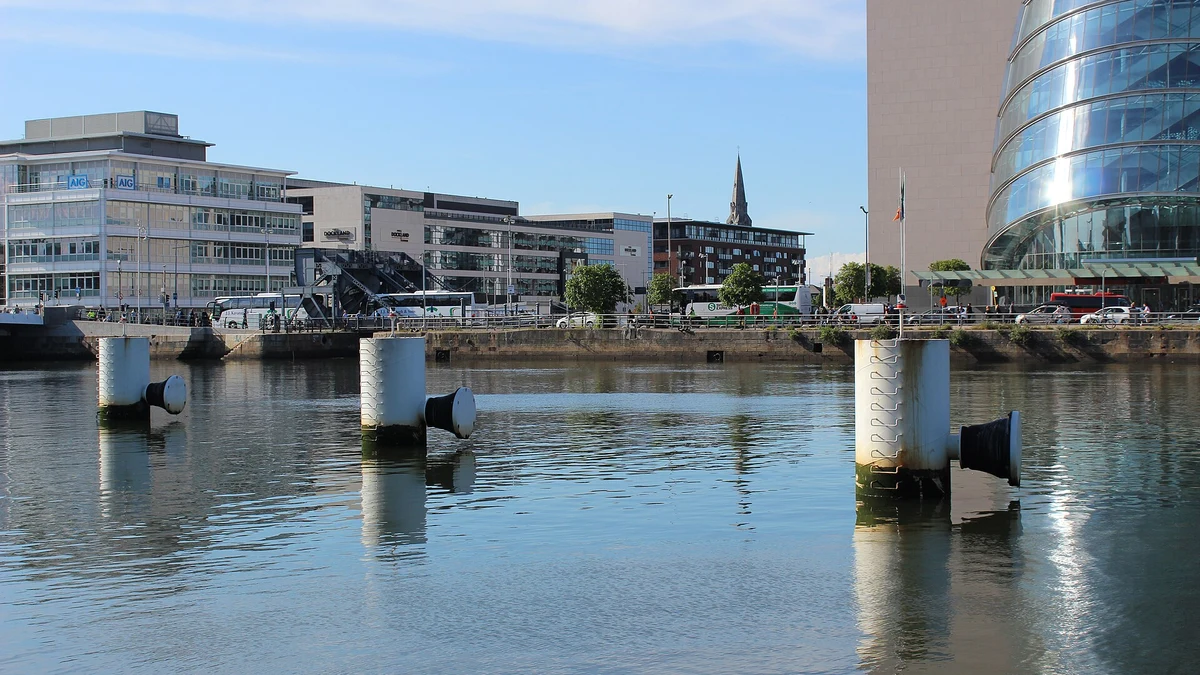
The Convention Centre Dublin, on the right, hosted the informal European Council meeting on artificial intelligence. Photo: Wikimedia Commons (CC BY 2.0).
The funding gap behind the talk
The summit took place against a difficult backdrop for European AI ambitions. The European Commission’s InvestAI programme promised to mobilise 200 billion euros, including 20 billion euros for seven planned AI gigafactories, but the gigafactory plan has stalled amid member-state fights over competitiveness spending in the 2028 to 2034 EU budget, according to reporting on the summit.
Costa pointed to the next long-term EU budget as the decisive instrument, saying the new European Competitiveness Fund “will play a decisive role” in closing the funding gap with global peers. The Commission’s Apply AI Summit follows in Brussels on November 17, where the focus shifts from strategy to adoption of AI across European industry.
What happens next
“This was our first in-depth exchange on AI, but it won’t be the last one,” Costa said. “The European Council will come back to the topic in the coming months, in our meeting in Alden Biesen on 5 February 2027.”
Leaders also agreed to make AI and its impacts on societies the central theme of the Social Summit in 2027, where the EU will mark 10 years of the European Pillar of Social Rights. The next European Council, on November 26 and 27, will turn to Ukraine’s financing needs for next year and beyond, after leaders spent part of the Dublin meeting discussing the war and the peace process. “Europe’s security begins with Ukraine’s security,” Costa said.
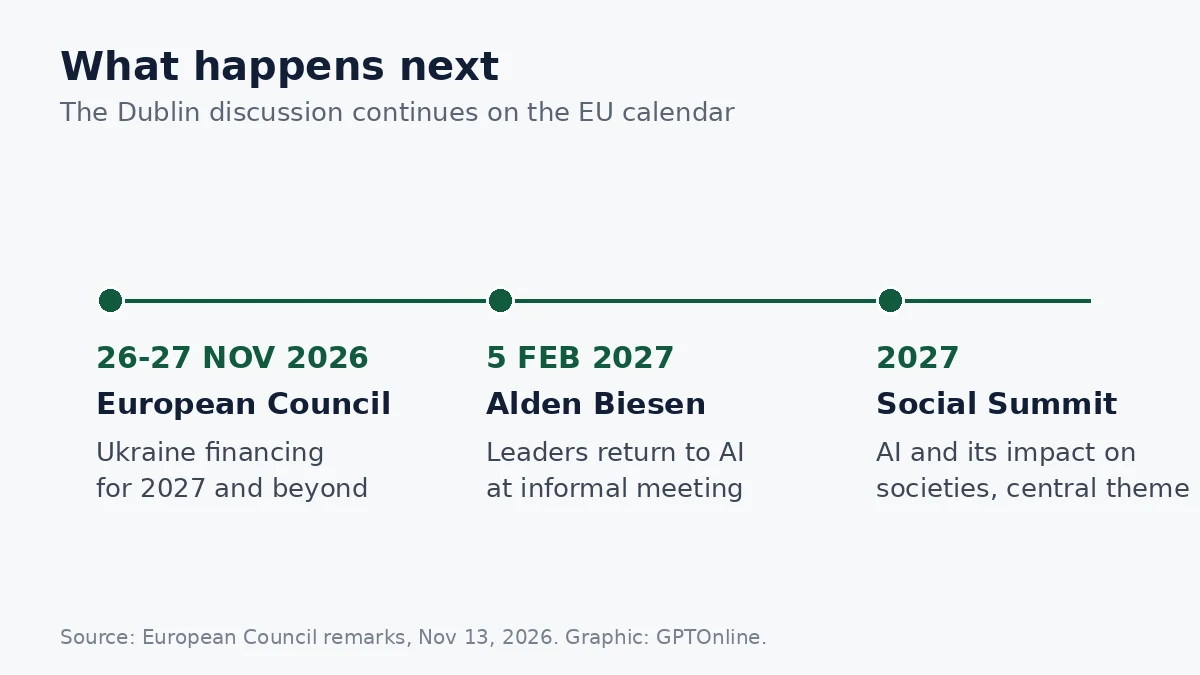
The Dublin discussion continues on the EU calendar, with AI returning to the leaders’ agenda in February 2027. Source: European Council remarks. Graphic: GPTOnline.
The EU AI summit produced no decisions, and as an informal meeting it was never expected to. Its significance is that AI has now reached the top of the EU’s political agenda, with leaders, not just ministers and regulators, owning the debate. Whether the February meeting produces concrete commitments on funding and gigafactories is the test Costa set for his own follow-up.
Sources
- European Council: Remarks by President António Costa at the press conference following the informal meeting of Heads of State or Government of 13 November 2026
- Reuters, via Founder News: Rogue AI agents and Nvidia turmoil push Europe into first-ever leaders summit
- AI Weekly: EU Holds First Leaders’ AI Summit in Dublin as InvestAI Stalls (originally reported by The Next Web)
- DW, via Briefly: EU leaders urged to ‘act now’ to stay AI competitive